 PlantFun
Plant Needs
Sunlight
Requires full sun for optimal fruit production and healthy growth.
Watering
Requires consistent moisture, especially during fruit set, but cannot tolerate waterlogged roots.
Temperature
Thrives in warm climates; requires low chill hours (200-300 hours below 7°C) to set fruit.
Characteristics
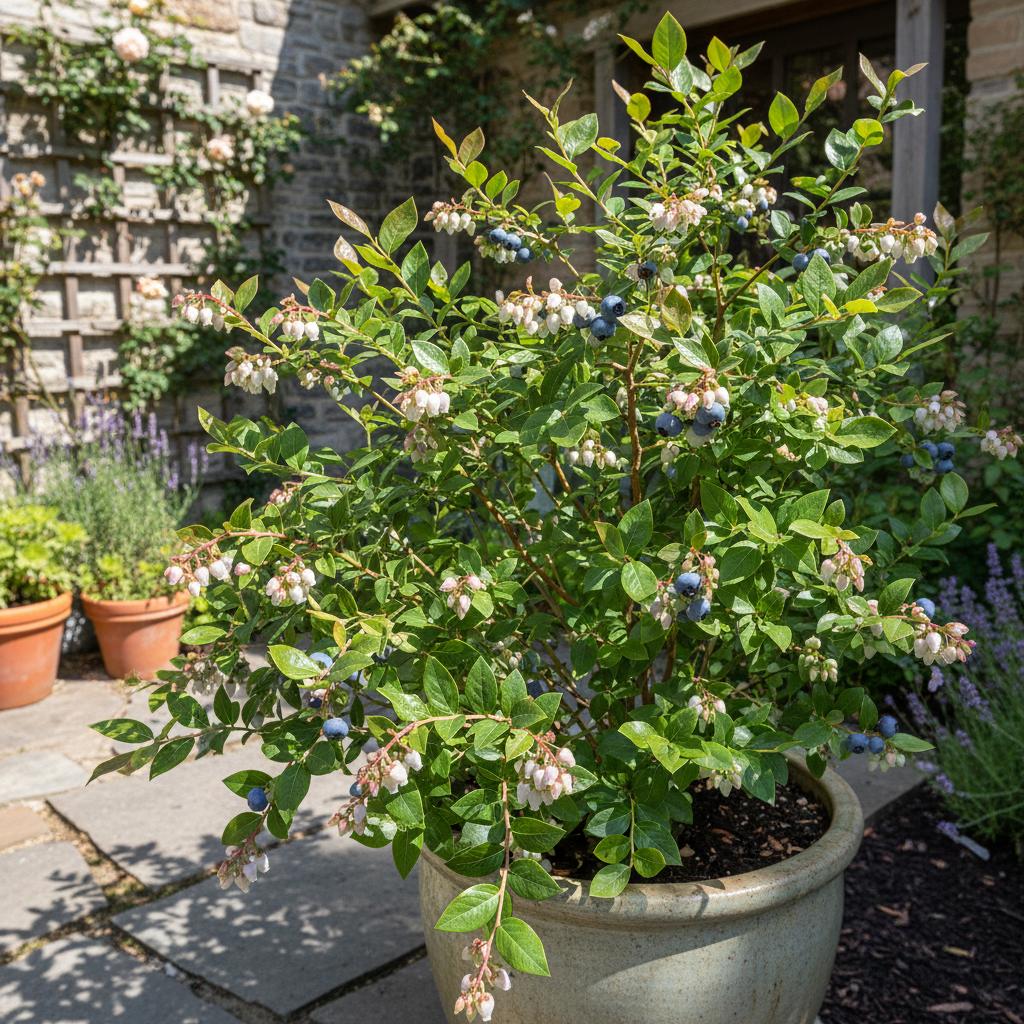
- Leaves: Ovate to elliptic, alternate, glossy green, turning reddish-purple in autumn;
- Flowers: Urceolate (bell-shaped), white to pale pink, borne in pendulous clusters;
- Fruit: Medium to large, firm, light blue berries with a distinctive sweet flavor and crisp texture;
- Stems: Upright, multi-stemmed, bushy growth habit with reddish-brown bark on younger shoots.
Care Guide
Watering
Keep soil consistently moist during flowering and fruiting stages.
Fertilization
Apply an acid-forming fertilizer just before bud break.. Use fertilizers formulated for acid-loving plants (like azaleas or rhododendrons).
Coffee Grounds Soil Amendment:Sprinkle used, cooled coffee grounds lightly around the base of the plant and scratch into the topsoil. This helps maintain soil acidity and adds organic matter. Avoid thick layers to prevent mold.Pruning
- Prune in late winter while the plant is dormant;
- Remove dead, diseased, or crossing branches to improve air circulation;
- Thin out older canes (older than 4-5 years) to the ground to encourage vigorous new growth;
- Remove low-growing branches that touch the soil.
Toxicity
Warning: this plant may be toxic.
Pets & Humans
Pets: Non-toxic per ASPCA.
Humans: Fruits are highly nutritious and safe for human consumption.
Garden Uses & Culture
Culture: Blueberries are native to North America and hold deep cultural significance for Indigenous peoples, often viewed as a gift from the Great Spirit to relieve hunger during times of famine.
Usage: Cultivated for commercial fruit production, home orchards, and edible landscaping.