 PlantFun
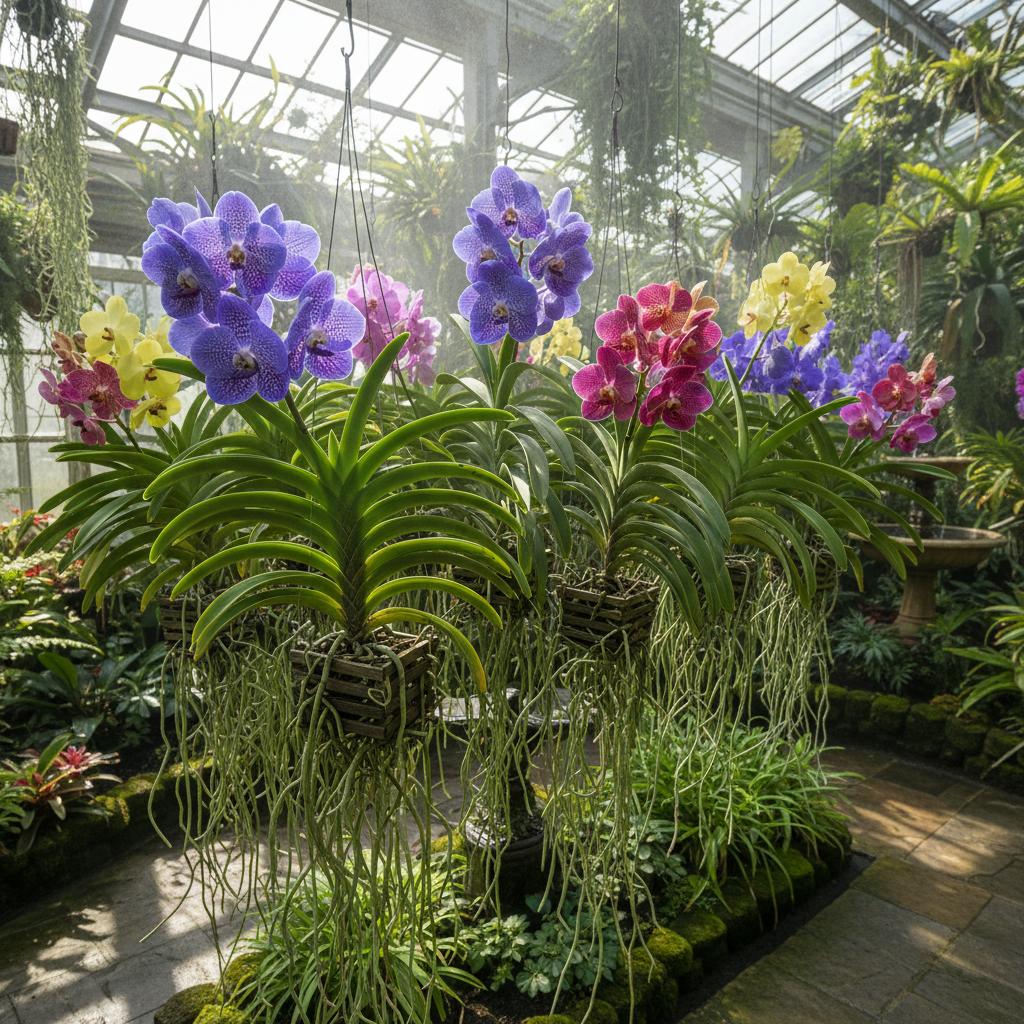
Plant Needs
Characteristics
- Leaves: Leathery, strap-shaped or terete leaves arranged alternately in a monopodial (single-stem) growth habit;
- Flowers: Large, flat, often tessellated (checkered) or brightly colored blooms (including rare blues) borne on axillary racemes;
- Roots: Thick, fleshy aerial roots covered in a silvery, spongy epidermis called velamen, designed to absorb atmospheric moisture.
Care Guide
Water thoroughly every morning, ensuring roots turn from silvery to dark green.
Apply a balanced, water-soluble fertilizer weekly at quarter or half strength.. Vandas are heavy feeders; regular fertilization is crucial for blooming.
Aquarium Water:Use untreated, fresh water from routine aquarium changes to soak the aerial roots. It provides a gentle, natural source of nitrogen. Avoid if the tank has been treated with medications or high salts.- Flower Spikes: Cut spent flower spikes near the base of the stem using sterilized tools;
- Roots: Never trim healthy, firm aerial roots, even if they are long and unruly;
- Dead Tissue: Only remove roots that are completely dry, papery, or mushy and brown.
Toxicity
Warning: this plant may be toxic.
Pets: Non-toxic to cats per ASPCA guidelines for the Orchidaceae family.
Humans: Generally considered non-toxic to humans.
Garden Uses & Culture
Culture: In Western orchid societies and exhibitions, Vandas are highly prized for their spectacular, large blooms and are frequently showcased in hanging displays to highlight their impressive aerial root systems.
Usage: Cultivated extensively as premium ornamental greenhouse plants and highly valued in the florist trade for long-lasting cut flowers and corsages.