 PlantFun
Plant Needs
Sunlight
Requires bright, indirect sunlight; morning sun is ideal, but must be protected from harsh midday rays to prevent leaf scorch.
Watering
Requires high humidity and frequent watering; bare-root plants should be watered daily until roots turn dark green.
Temperature
Thrives in warm to hot conditions; cannot tolerate frost or prolonged temperatures below 10°C.
Characteristics
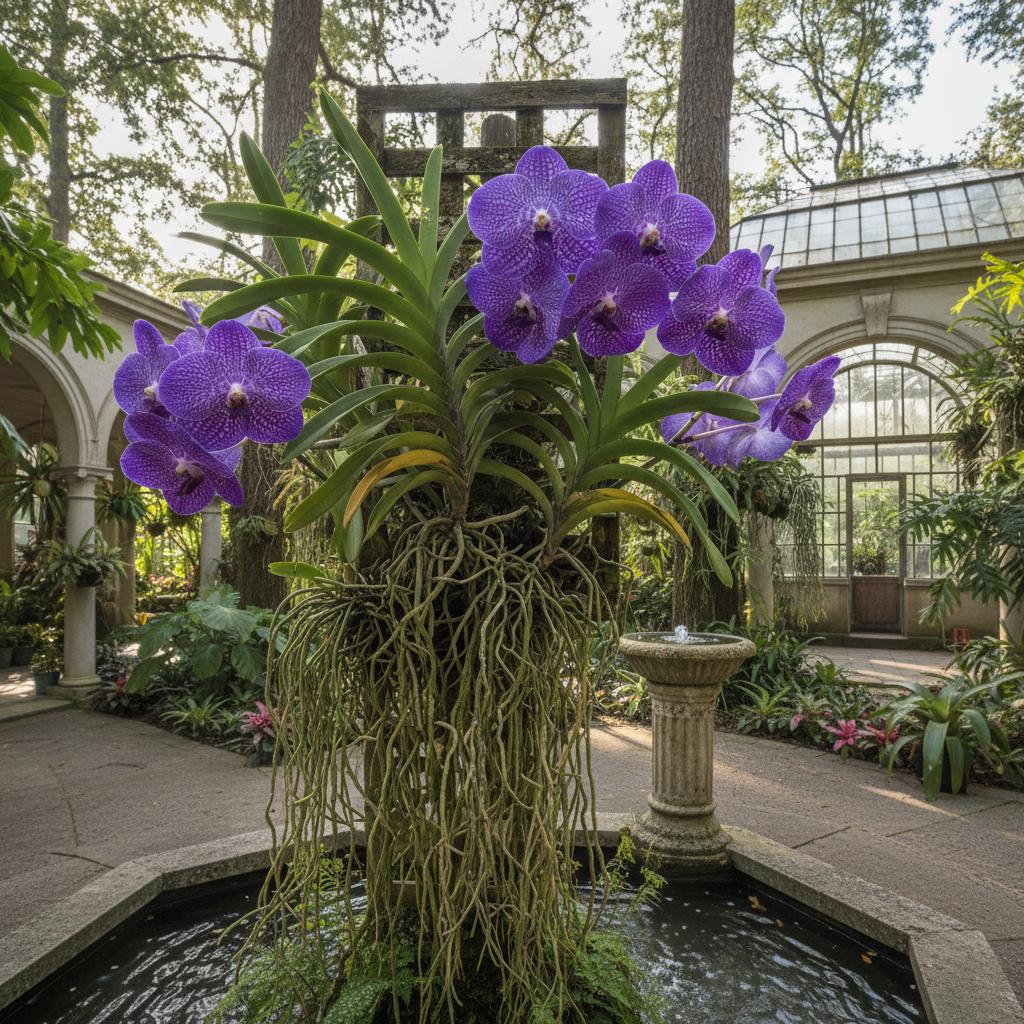
- Leaves: Leathery, strap-shaped, distichous (arranged in two opposite rows), with an unequally bilobed apex, 15-25 cm long;
- Flowers: Large, long-lasting, 5-10 cm across, pale to dark blue with prominent darker blue tessellations (checkerboard pattern), borne on an erect inflorescence;
- Roots: Thick, fleshy aerial roots covered in a silvery-white velamen layer, adapted for clinging to tree bark and rapidly absorbing atmospheric moisture.
Care Guide
Watering
Water heavily daily, ensuring the aerial roots are thoroughly saturated and turn green.
Fertilization
Apply a balanced, water-soluble orchid fertilizer weekly at quarter-strength.. Heavy feeders during the active growing season; flush roots with plain water monthly to prevent salt buildup.
Banana Peel Tea:Soak chopped banana peels in water for 48 hours, strain well, and dilute 1:1 with fresh water. Spray lightly onto aerial roots to encourage blooming. Avoid leaving residue on leaves to prevent fungal issues.Pruning
- Remove spent flower spikes by cutting them near the base with sterilized secateurs;
- Trim dead, papery, or rotting brown roots to maintain plant hygiene;
- Never cut healthy green or silvery aerial roots, even if they grow wildly outside the container.
Toxicity
Warning: this plant may be toxic.
Pets & Humans
Pets: Non-toxic to cats (per ASPCA).
Humans: Non-toxic to humans; safe to handle.
Garden Uses & Culture
Culture: Highly prized in Western orchid cultivation since the Victorian era, it sparked a frenzy among European collectors for its rare blue pigment and has been extensively used in hybridization.
Usage: Cultivated as a premium ornamental plant in greenhouses, used in high-end floral arrangements, and grown by orchid enthusiasts in hanging baskets.