 PlantFun
Plant Needs
Characteristics
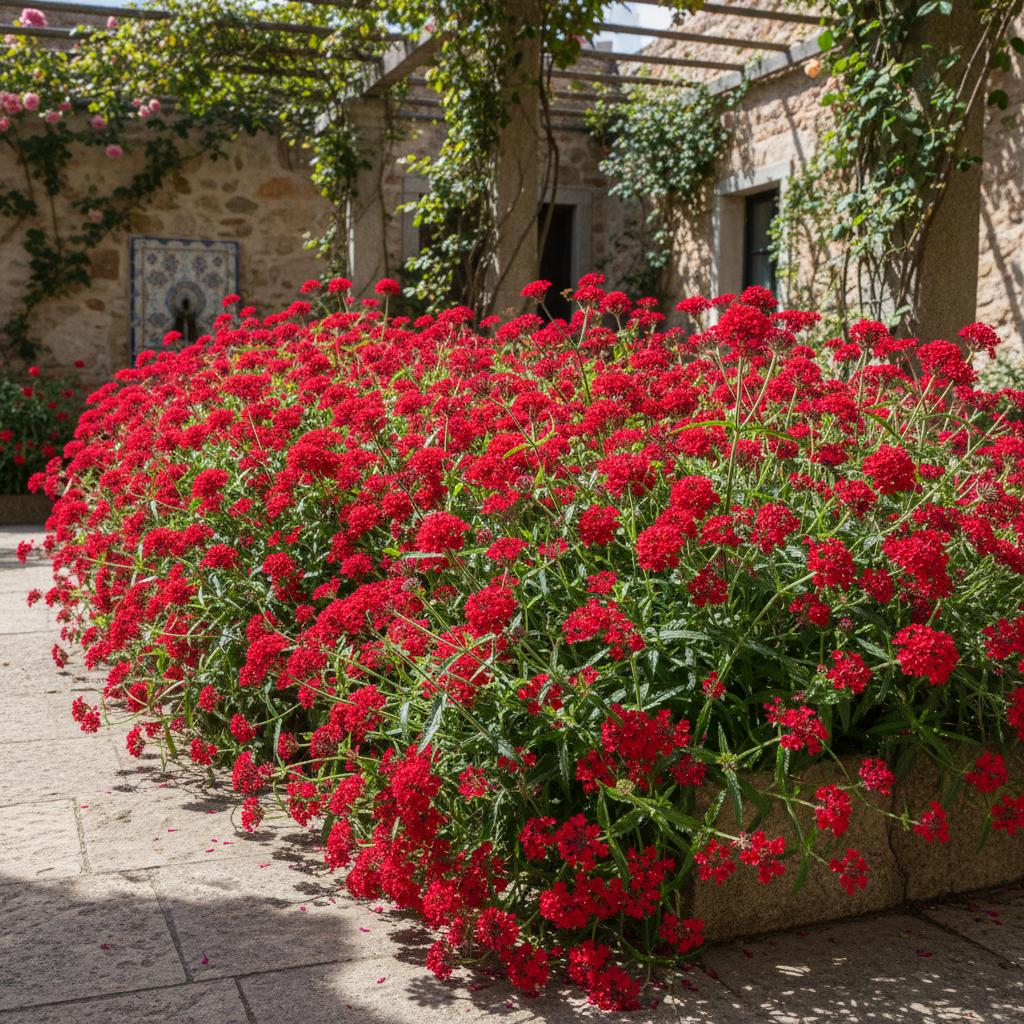
- Leaves: Opposite, ovate to oblong, deeply lobed or toothed margins, dark green, and covered with fine hairs (pubescent).
- Flowers: Small, five-petaled, tubular at the base, arranged in dense, flattened corymbs or umbel-like clusters; vibrant red in this variety.
- Stems: Square-shaped, trailing or mounding habit, often rooting at the nodes when touching the soil.
Care Guide
Water deeply when the top inch of soil feels dry, usually once a week depending on heat.
Apply a balanced, water-soluble fertilizer to encourage new growth and buds.. Avoid over-fertilizing, which can promote leafy growth at the expense of flowers.
Banana Peel Tea:Soak chopped banana peels in a jar of water for 24-48 hours. Strain the liquid and dilute 1:1 with water to feed the plant. Potassium promotes vibrant red blooms and overall plant vigor. Discard the used peels in an outdoor compost bin to avoid attracting fruit flies indoors.- Deadheading: Regularly remove spent flower clusters to encourage continuous blooming throughout the season.
- Mid-season Trim: If the plant becomes leggy or blooming slows in midsummer, trim back the entire plant by about one-third to promote dense, bushy regrowth.
- Air Circulation: Thin out dense patches to improve airflow and reduce the risk of powdery mildew.
Toxicity
Warning: this plant may be toxic.
Pets: Non-toxic to cats per ASPCA.
Humans: Non-toxic to humans; safe to handle.
Garden Uses & Culture
Culture: In Victorian floriography, the verbena flower symbolizes romance, sweet memories, and sensibility. It was often included in bouquets to convey genuine affection.
Usage: - **Ornamental**: Excellent for hanging baskets, window boxes, containers, and as a vibrant ground cover in garden beds. - **Ecological**: Highly attractive to pollinators, including butterflies, bees, and hummingbirds.