 PlantFun
Plant Needs
Sunlight
Prefers partial to full sun, thriving in bright but not overly scorching conditions.
Watering
Requires moderate watering, allowing the top inch of soil to dry out between waterings.
Temperature
Tolerates cool to moderate temperatures; hardy in temperate climates.
Characteristics
- Leaves: Opposite, elliptical to obovate, 1.5-5 cm long, hairy, with finely serrated margins;
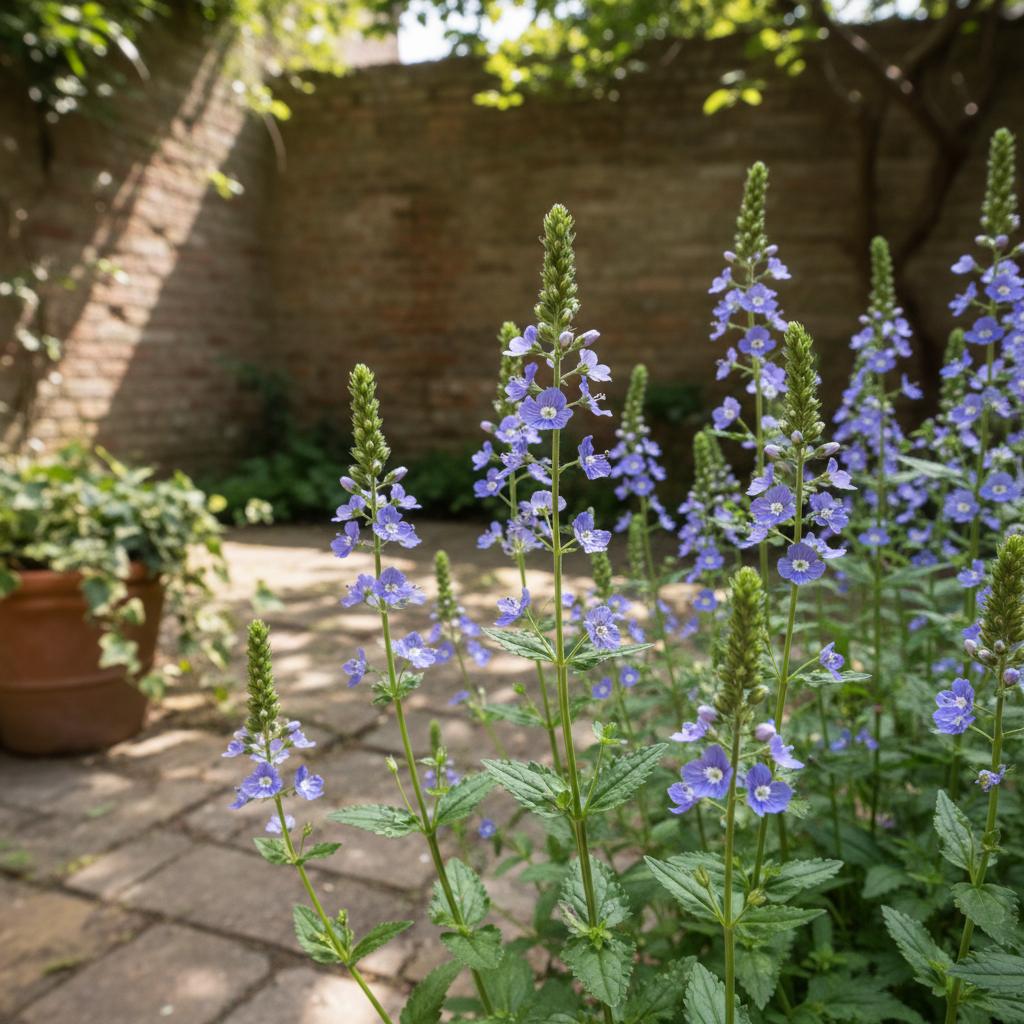
- Flowers: Small, pale blue to lilac with darker stripes, four-lobed corolla, borne in axillary racemes;
- Stem: Creeping, rooting at nodes, densely pubescent, forming low mats.
Care Guide
Watering
Water consistently to keep the soil evenly moist but not waterlogged.
Fertilization
Apply a light layer of compost or a balanced organic feed as new growth appears.. Speedwells are generally light feeders and do not require heavy fertilization.
Banana Peel Tea:Steep chopped banana peels in water for 24-48 hours. Strain and use the liquid to water the plant to support healthy root growth and blooming. Discard the peels in compost to avoid attracting pests.Pruning
- Shear back lightly after the first flush of blooms to encourage a second blooming period;
- Remove dead or damaged stems in early spring;
- Trim edges if the creeping stems spread beyond their desired boundary.
Toxicity
Warning: this plant may be toxic.
Pets & Humans
Pets: Non-toxic to cats per ASPCA guidelines.
Humans: Generally considered safe and historically consumed as a herbal tea.
Garden Uses & Culture
Culture: In European folklore, the flower was often given to travelers to "speed them well" on their journeys, symbolizing good luck and safe travels.
Usage: Commonly used as a ground cover, in rock gardens, and historically brewed as a traditional European herbal tea known as "thé d'Europe".