 PlantFun
Plant Needs
Sunlight
Bright, indirect light; avoid harsh direct sun which can scorch the leaves.
Watering
Keep the central cup filled with fresh water; keep soil slightly moist but never soggy.
Temperature
Prefers warm tropical temperatures; protect from frost and cold drafts.
Characteristics
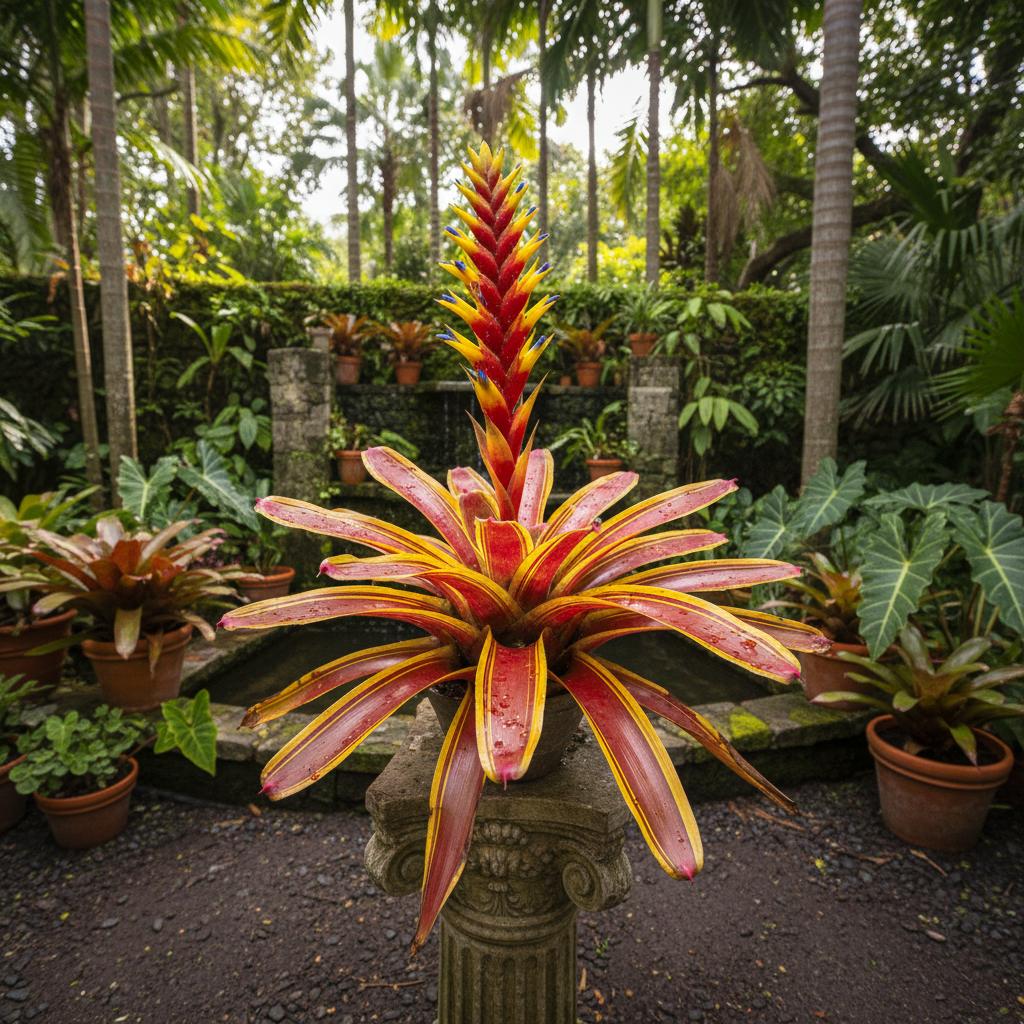
- Leaves: Smooth, strap-like, arching green leaves forming a central rosette or "tank" designed to collect and hold water;
- Flowers: Striking, flattened, branched inflorescence with brightly colored (usually red, orange, or yellow) bracts; true flowers are small, tubular, and emerge from the bracts;
- Roots: Shallow root system primarily functioning as an anchor to tree bark rather than for water absorption.
Care Guide
Watering
Keep central tank filled with distilled or rain water, flush weekly. Water soil lightly.
Fertilization
Apply half-strength liquid fertilizer to the soil or lightly mist leaves.. Bromeliads require very little fertilizer; over-fertilizing can cause the plant to lose its color.
Banana Peel Tea:Steep banana peels in water for 24 hours. Dilute 1:1 with water and apply to the soil (avoid pouring directly into the central tank to prevent rot). Do not use raw peels.Pruning
- Remove the flower spike at the base once it turns brown and dies back;
- Trim any brown or damaged leaf tips with sterilized scissors, following the natural curve of the leaf;
- After blooming, the mother plant will slowly die; leave pups until they are 1/3 the size of the mother before separating.
Toxicity
Warning: this plant may be toxic.
Pets & Humans
Pets: Non-toxic to cats (per ASPCA).
Humans: Non-toxic to humans.
Garden Uses & Culture
Culture: In Western interior design, bromeliads became highly prized in the mid-20th century for their architectural shapes and vibrant, long-lasting colors, symbolizing exotic hospitality and modern tropical aesthetics.
Usage: Popular indoor ornamental plant, office desk plant, and tropical landscape accent in frost-free climates.