 PlantFun
Plant Needs
Characteristics
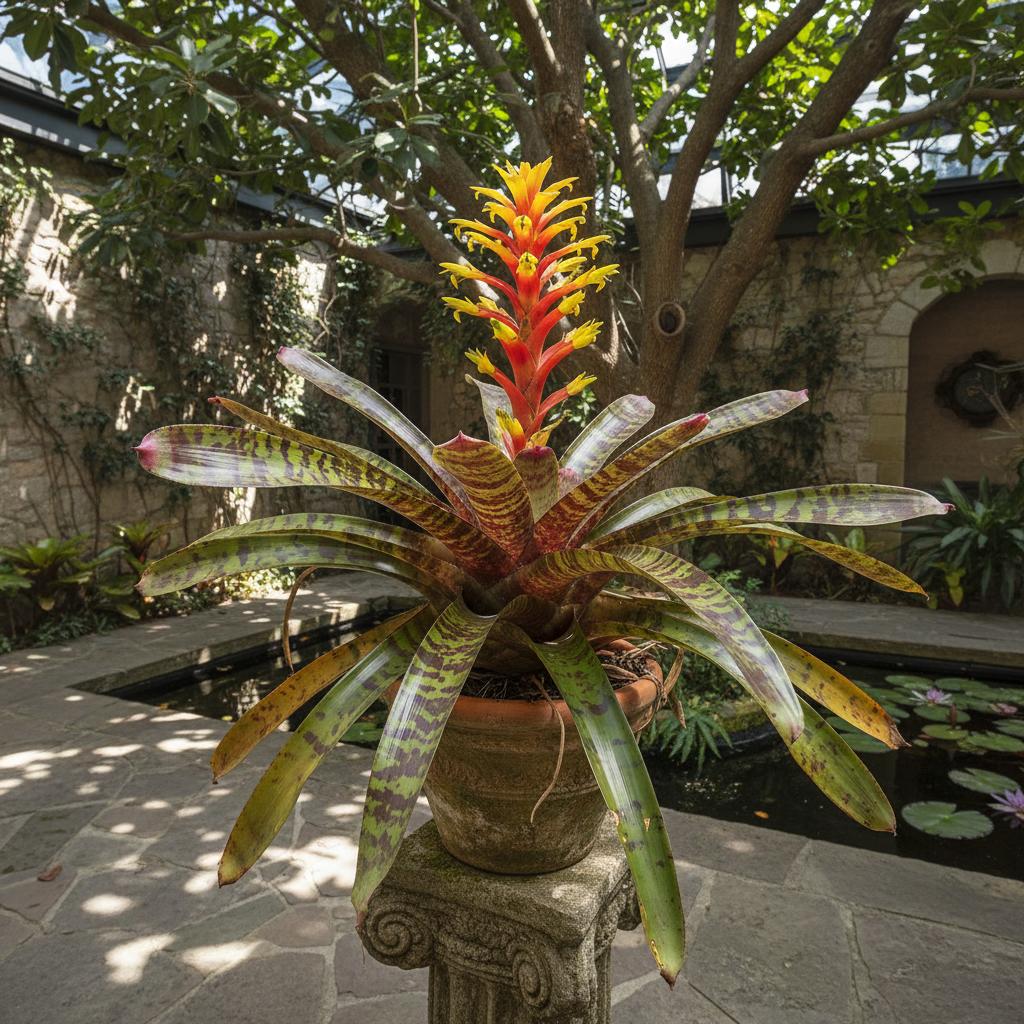
- Leaves: Rosette-forming, strap-like, leathery, light green with distinct dark green to maroon irregular spots and mottling resembling a leopard's coat.
- Flowers: Tall, flattened spike inflorescence emerging from the center, featuring brightly colored bracts and small tubular flowers.
- Roots: Small, wiry, and primarily function as holdfasts to anchor the plant to trees or rocks in its natural habitat.
Care Guide
Keep the central cup filled with water, flushing it out weekly to prevent stagnation. Mist leaves frequently.
Apply a highly diluted liquid fertilizer directly into the central cup or as a foliar spray.. Bromeliads require very little fertilizer; over-fertilizing can cause the plant to lose its vibrant colors.
Aquarium Water:Use fresh water from a freshwater aquarium change (ensure no salt or medications are present). Pour a small amount into the central cup or over the soil to provide gentle, natural nutrients without burning the sensitive trichomes.- Flower Spikes: Cut the spent flower spike as close to the base as possible once it turns brown and dries up.
- Foliage: Trim away any dead, brown, or damaged outer leaves at the base using sterilized shears.
- Pups: After the mother plant blooms and begins to decline, allow the offsets (pups) to grow to about one-third the size of the parent before separating them.
Toxicity
Warning: this plant may be toxic.
Pets: Non-toxic to cats per ASPCA guidelines for Bromeliaceae.
Humans: Non-toxic to humans; safe to handle.
Garden Uses & Culture
Culture: Highly valued in Western interior design and conservatory collections for its architectural rosette shape and striking patterned foliage, often used to create modern, tropical aesthetics.
Usage: Excellent as an indoor potted plant, in heated terrariums, or mounted on cork bark and driftwood in tropical displays.