 PlantFun
Plant Needs
Characteristics
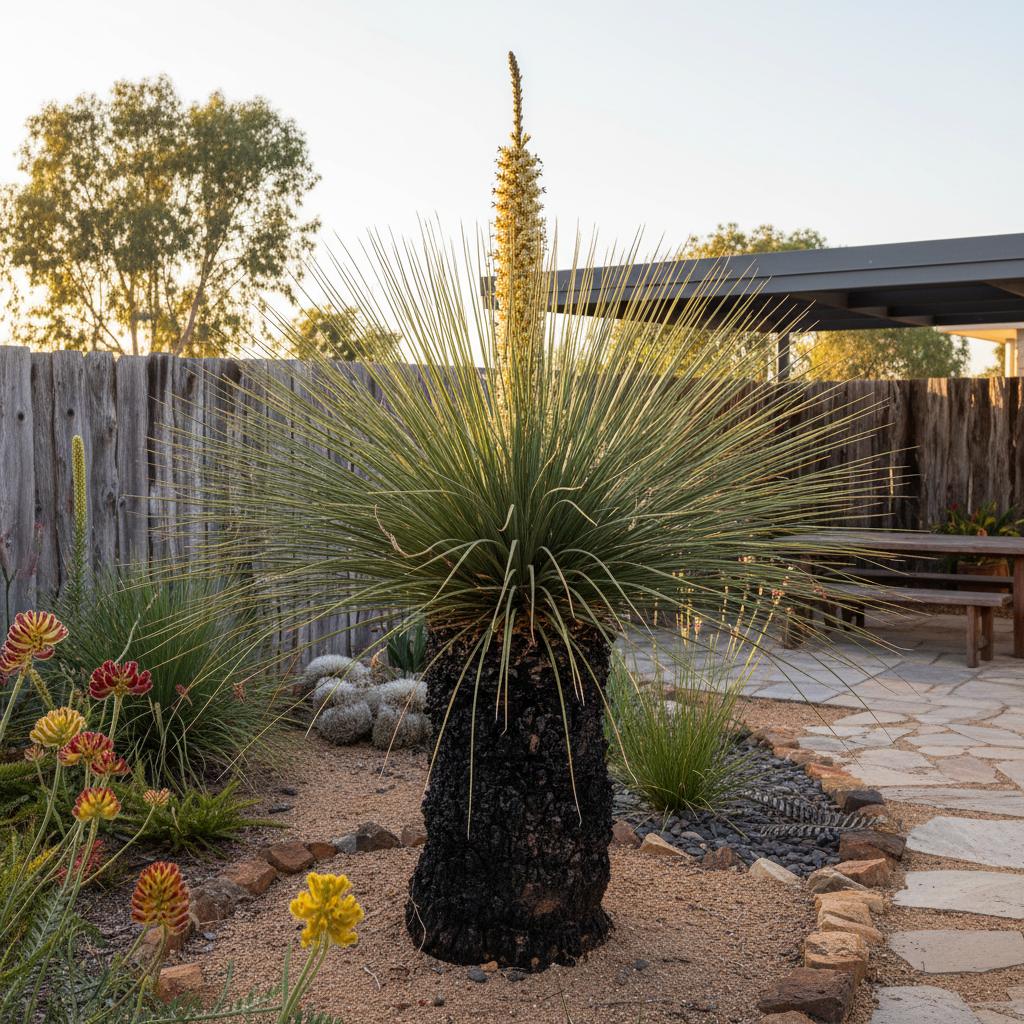
- Leaves: Long, rigid, linear, grass-like leaves (up to 1 meter long) radiating in a dense spherical crown from the top of the trunk;
- Flowers: Tiny, densely packed white to cream flowers borne on a massive, spear-like woody spike (scape) that can reach 2-3 meters above the foliage;
- Trunk: Thick, rough, unbranched or rarely branched pseudotrunk, often blackened by bushfires, formed from accumulated old leaf bases held together by natural resin;
- Roots: Fleshy, contractile roots that are highly sensitive to disturbance and rely on mycorrhizal fungi.
Care Guide
Water deeply but very infrequently, allowing the soil to dry out completely between waterings.
Apply a very light dose of low-phosphorus organic matter if soil is completely barren.. Requires minimal to no fertilization; highly sensitive to phosphorus.
Eggshell Powder:Crush dried, rinsed eggshells into a fine powder and sprinkle very sparingly around the drip line. Avoid any high-phosphorus household scraps (like banana peels) as native roots are extremely sensitive to phosphorus toxicity.- Skirt removal: Old, brown leaves form a natural protective "skirt" around the trunk; these can be carefully trimmed back to the trunk for a neat landscape appearance if desired;
- Flower spikes: Remove spent flower spikes at the base once they have completely dried and dropped their seeds;
- Root protection: Never prune or disturb the roots when transplanting, as this can easily kill the plant.
Toxicity
Warning: this plant may be toxic.
Pets: Non-toxic to cats (per ASPCA guidelines for the genus).
Humans: Non-toxic; the nectar and resin have historical edible and practical uses.
Garden Uses & Culture
Culture: Introduced to European botanical gardens and conservatories in the 19th century as a prized, slow-growing exotic curiosity, symbolizing the rugged, untamed landscapes of the antipodes.
Usage: - **Ornamental**: Highly valued as a dramatic architectural focal point in xeriscapes and dry gravel gardens; - **Historical**: Resin was traditionally used as a powerful adhesive and waterproofing agent, while the tall flower spikes were used for spear shafts.