 PlantFun
Plant Needs
Sunlight
Prefers bright, indirect light to full sun; can tolerate lower light but growth will slow significantly.
Watering
Highly drought-tolerant; allow the top 50-75% of the soil to dry out completely before watering.
Temperature
Thrives in warm temperatures but can tolerate brief drops to near freezing if kept dry.
Characteristics
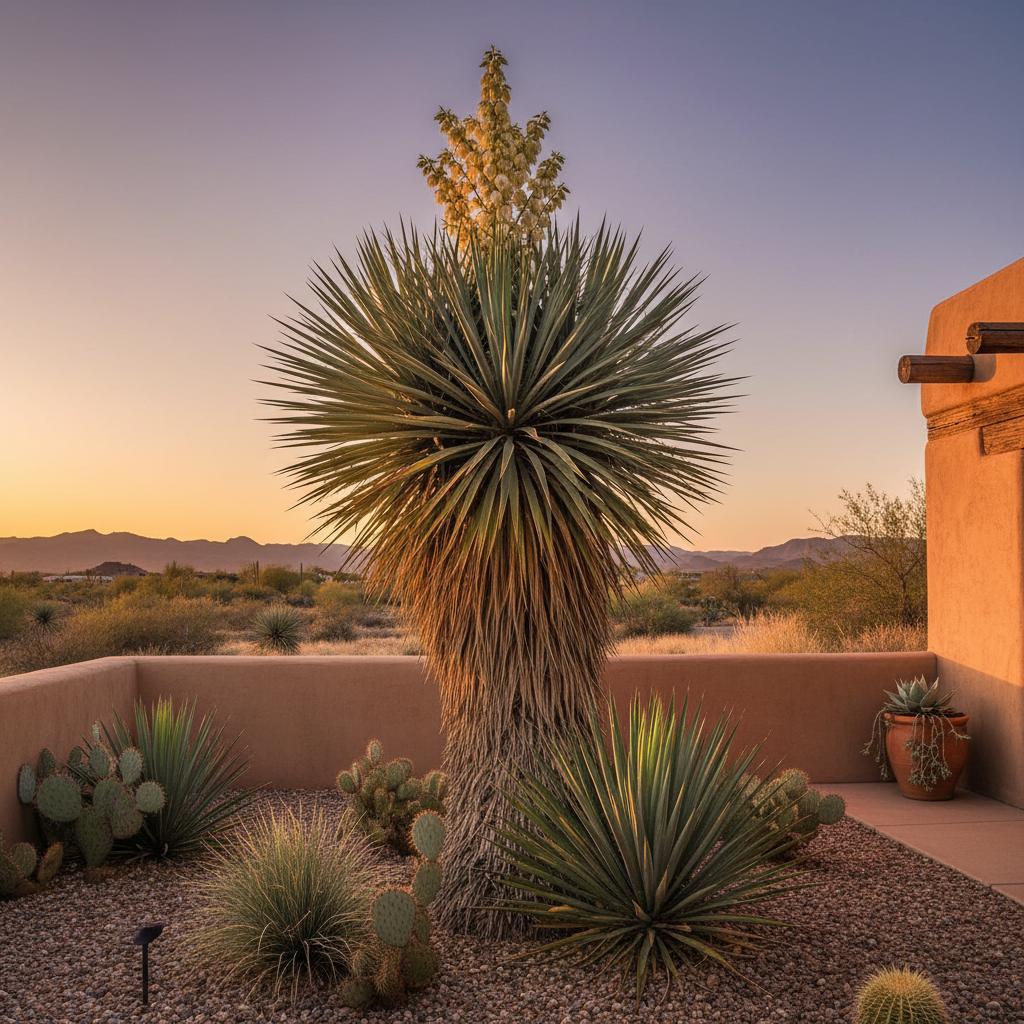
- Leaves: Sword-shaped, spineless, leathery, dark green, up to 1.2 m long, arranged in a rosette at the stem apex;
- Flowers: Bell-shaped, creamy white, borne on tall, erect panicles (rarely blooms indoors);
- Trunk: Thick, woody, often branching, with a swollen, elephant-foot-like base in mature specimens;
- Roots: Thick, fleshy rhizomes adapted for water storage.
Care Guide
Watering
Water thoroughly when soil is mostly dry
Fertilization
Apply a balanced, diluted fertilizer. Feed sparingly during the active growing season; do not fertilize in winter.
Banana peel water:Soak chopped banana peels in water for 24 hours, strain, and dilute 1:1 with water. Apply to the soil to support root strength. Discard solids in compost to avoid attracting pests.Pruning
- Remove dead or yellowing lower leaves by pulling them downward or cutting close to the trunk; cut back the main stem if the plant grows too tall, which will encourage new branching.
Toxicity
Warning: this plant may be toxic.
Pets & Humans
Pets: Toxic per ASPCA; contains saponins causing gastrointestinal irritation.
Humans: Saponins in the plant can cause mild gastrointestinal upset if ingested in large quantities.
Garden Uses & Culture
Culture: Native American tribes of the American Southwest and Mexico historically utilized the strong fibers of the yucca leaves to weave baskets, ropes, and sandals.
Usage: Widely used as an architectural indoor houseplant, landscape focal point in arid climates, and historically for fiber production.