 PlantFun
Plant Needs
Characteristics
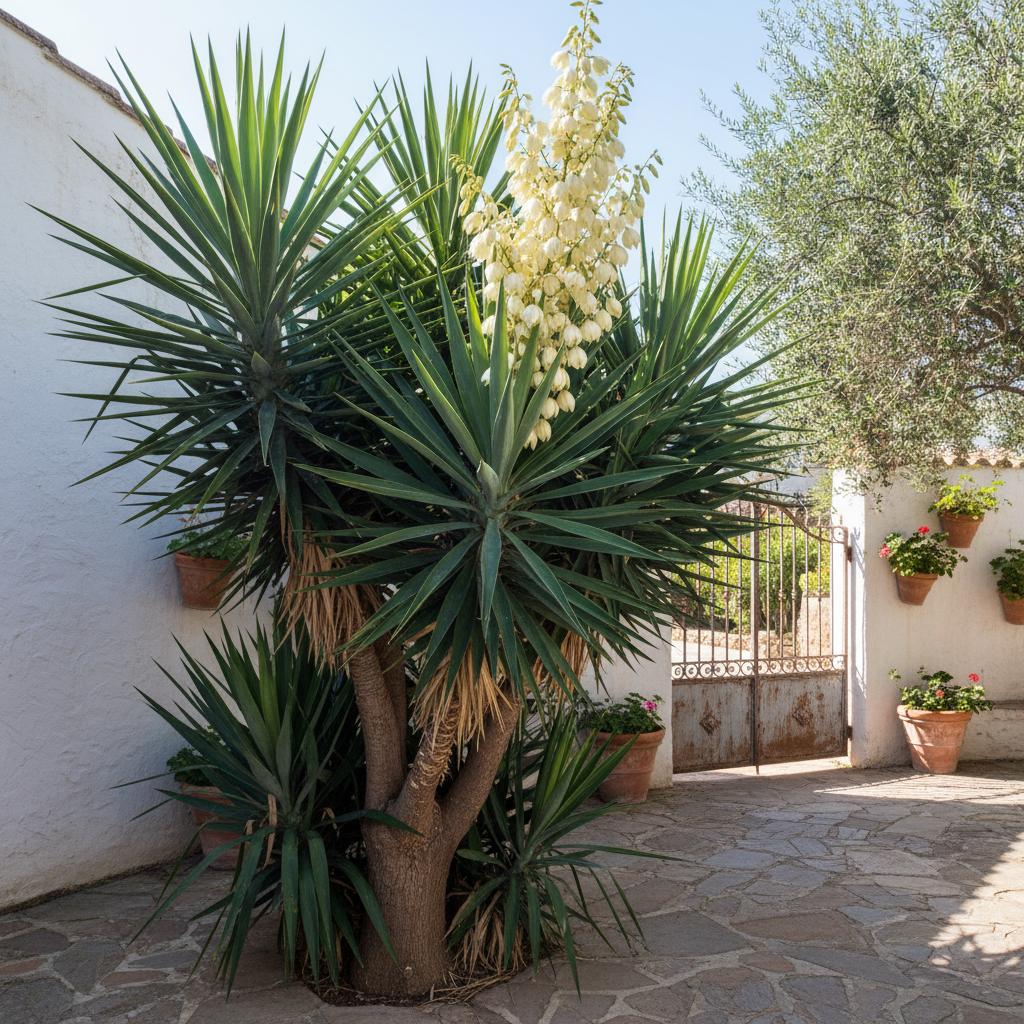
- Leaves: Basal rosette of rigid, sword-shaped, blue-green leaves with curly white threads (filaments) along the margins, ending in a sharp spine;
- Flowers: Tall, erect panicles bearing numerous nodding, bell-shaped, creamy-white flowers;
- Stem: Acaulescent or with a very short, mostly subterranean woody stem.
Care Guide
Water deeply but infrequently, allowing the soil to dry out completely between waterings.
Apply a light, balanced fertilizer once at the beginning of the growing season.. Requires very little fertilization; excess nutrients can harm the plant and reduce flowering.
Banana Peel Tea:Steep chopped banana peels in water for 24 hours, strain, and use the liquid to water the plant. Discard peels in compost to avoid attracting pests. Use sparingly.- Remove spent flower stalks at the base after blooming finishes;
- Carefully trim off dead or damaged lower leaves to maintain a tidy appearance;
- Wear thick gloves and eye protection when pruning to avoid injury from sharp leaf spines.
Toxicity
Warning: this plant may be toxic.
Pets: Toxic per ASPCA. Ingestion can cause vomiting and diarrhea due to saponins.
Humans: Sharp leaf tips can cause mechanical injury; ingestion of raw plant parts may cause mild stomach upset due to saponins.
Garden Uses & Culture
Culture: In Western landscaping, it symbolizes resilience and protection, often planted as a structural focal point in xeriscapes and modern gardens.
Usage: Ornamental landscaping, xeriscaping, barrier planting, and historically used for fiber production from its tough leaves.