 PlantFun
Plant Needs
Sunlight
Requires full sun during the day to ensure vigorous growth and prolific evening blooming.
Watering
Prefers evenly moist, well-draining soil; do not allow the soil to dry out completely or become waterlogged.
Temperature
Thrives in moderate summer temperatures; grown as a half-hardy annual in cooler climates and will not survive frost.
Characteristics
- Leaves: Narrow, linear to lanceolate, slightly toothed margins, covered in fine hairs that give a slightly sticky texture;
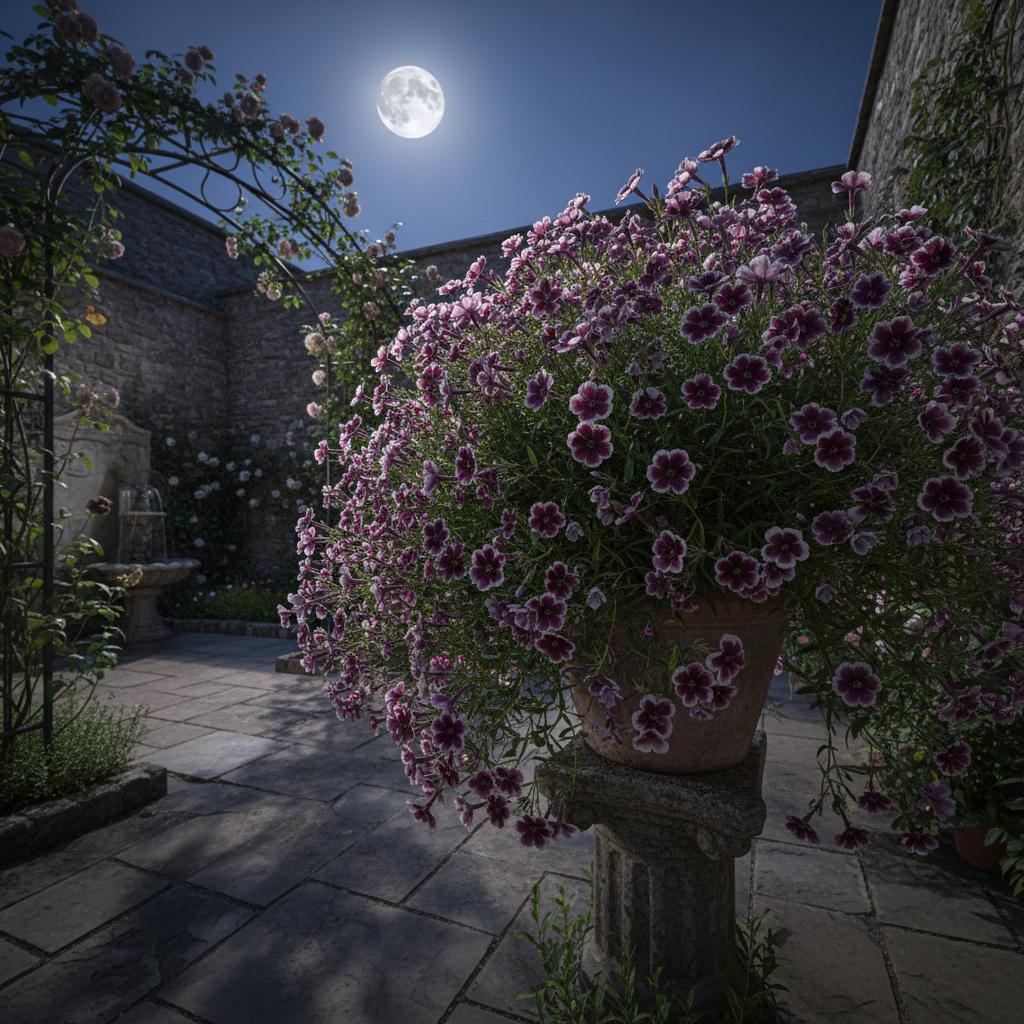
- Flowers: Tubular blossoms with deeply lobed petals, dark maroon to deep purple on the outside and bright white on the inside, remaining tightly rolled during the day and opening at dusk;
- Stem: Slender, branching, and slightly pubescent, forming a bushy, compact mound.
Care Guide
Watering
Water regularly to keep the soil evenly moist, especially during hot, dry spells.
Fertilization
Apply a balanced liquid fertilizer to encourage leafy growth.. Feed every 3 to 4 weeks during the active growing season.
Banana Peel Tea:Steep chopped banana peels in water for 24-48 hours. Dilute 1:1 with water and apply to the soil to promote prolific evening blooms. Discard peels in compost to avoid attracting fruit flies.Pruning
- Pinching: Pinch back the growing tips of young plants to encourage a bushier habit and more flower stems;
- Deadheading: Regularly remove spent flowers to prevent seed formation and prolong the blooming period;
- Tidying: Trim away any yellowing or dead foliage at the base to improve air circulation.
Toxicity
Warning: this plant may be toxic.
Pets & Humans
Pets: Non-toxic to cats; no known poisoning hazards reported.
Humans: Generally considered non-toxic to humans, though not intended for consumption.
Garden Uses & Culture
Culture: A beloved staple of Victorian-era "moon gardens" in Europe and America, planted specifically near patios and open windows to be enjoyed during evening strolls when its vanilla-honey scent is most potent.
Usage: Excellent for container gardening, window boxes, patio planters, and sensory or moon gardens where its evening fragrance can be fully appreciated.