 PlantFun
Plant Needs
Sunlight
Prefers dappled sunlight or partial shade; protect from harsh afternoon sun.
Watering
Water thoroughly when the top 2-3 inches of soil become dry; ensure excellent drainage.
Temperature
Thrives in warm, tropical conditions; protect from frost and freezing temperatures.
Characteristics
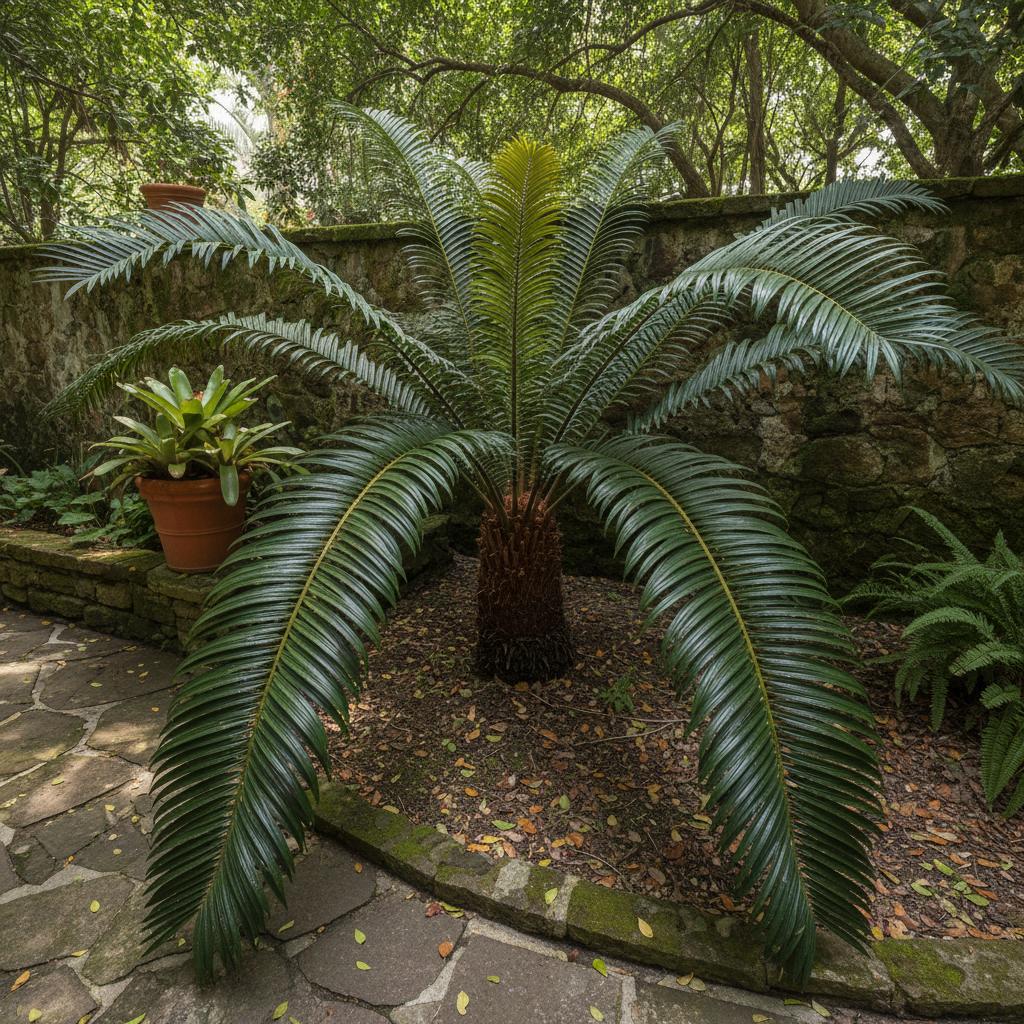
- Leaves: Pinnately compound, arching, with numerous lanceolate to elliptic leaflets featuring slightly serrate margins;
- Stem: Mostly subterranean or forming a short, stout, partially emergent trunk;
- Cones: Dioecious; male cones slender and cylindrical, female cones thicker, ovoid, producing seeds with a fleshy red to orange outer layer.
Care Guide
Watering
Water thoroughly once the topsoil dries out.
Fertilization
Apply a slow-release palm/cycad fertilizer.. Feed lightly during the active growing season.
Coffee Grounds Compost:Sprinkle a small amount of used, cooled coffee grounds on the soil surface to provide gentle nitrogen and maintain slight acidity. Avoid thick layers to prevent mold.Pruning
- Remove only completely dead, brown fronds at the base;
- Do not cut green or yellowing leaves, as the plant still draws nutrients from them;
- Use sterilized pruning shears to prevent disease transmission.
Toxicity
Warning: this plant may be toxic.
Pets & Humans
Pets: Toxic per ASPCA. Ingestion of any part, especially seeds, causes severe liver failure, coagulopathy, and death.
Humans: Highly toxic if ingested; contains cycasin and BMAA which can cause severe liver and neurological damage.
Garden Uses & Culture
Culture: Cycads are revered in Western horticulture as "living fossils," representing ancient botanical lineages that predated the dinosaurs.
Usage: Cultivated as a rare specimen plant in botanical gardens and specialized private collections for conservation and ornamental value.