 PlantFun
Plant Needs
Characteristics
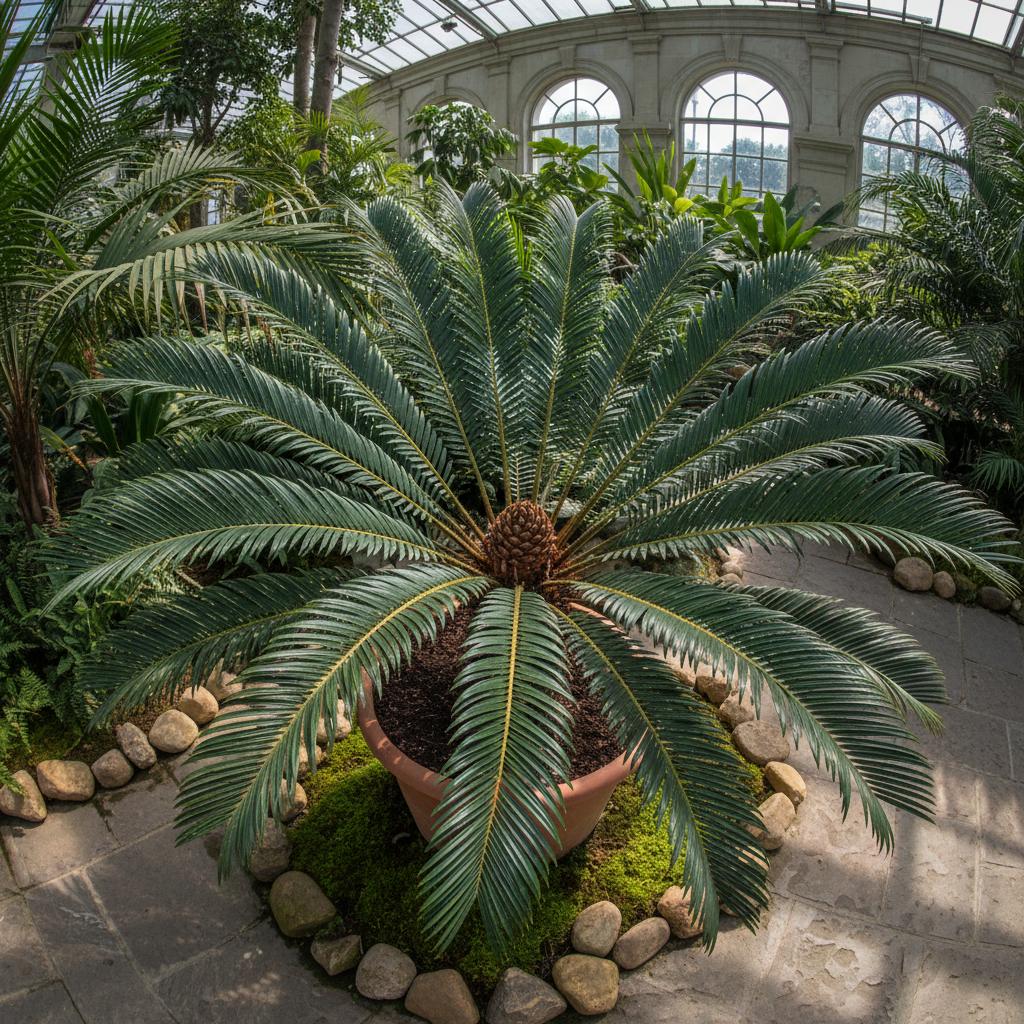
- Leaves: Pinnately compound, thick, leathery, and slightly fuzzy, resembling cardboard; leaflets are oval to obovate with slightly serrated margins near the tips.
- Stem: Short, subterranean or slightly emergent, fleshy trunk that serves as a water storage organ.
- Cones: Dioecious; male cones are slender and cylindrical, while female cones are stout, egg-shaped, and produce bright red, fleshy seeds when mature.
- Roots: Thick, tuberous taproot system with specialized coralloid roots that host nitrogen-fixing cyanobacteria.
Care Guide
Water deeply when the top 2-3 inches of soil are completely dry.
Apply a balanced, slow-release fertilizer at the start of the growing season.. Requires minimal feeding; avoid over-fertilizing which can burn the roots.
Eggshell Powder:Wash, dry, and finely crush eggshells into a powder. Sprinkle sparingly around the base to provide slow-release calcium, which supports stiff leaf structure. Avoid applying in thick layers.- Remove only completely dead, brown fronds at the base of the plant.
- Never cut the central growing tip (apex), as this will halt growth or kill the plant.
- Wear gloves when pruning to avoid contact with the slightly sharp leaflet edges.
Toxicity
Warning: this plant may be toxic.
Pets: Toxic per ASPCA; ingestion of any part (especially seeds) causes vomiting, hemorrhagic gastroenteritis, liver damage, liver failure, and potential death.
Humans: Highly toxic if ingested; contains cycasin which can cause severe gastrointestinal distress and liver failure.
Garden Uses & Culture
Culture: Widely utilized in tropical and subtropical landscaping across the Americas, valued for its architectural, modern appearance and extreme drought tolerance.
Usage: Excellent as a specimen plant, in xeriscaping, rock gardens, or as a long-lived container patio plant.