 PlantFun
Plant Needs
Characteristics
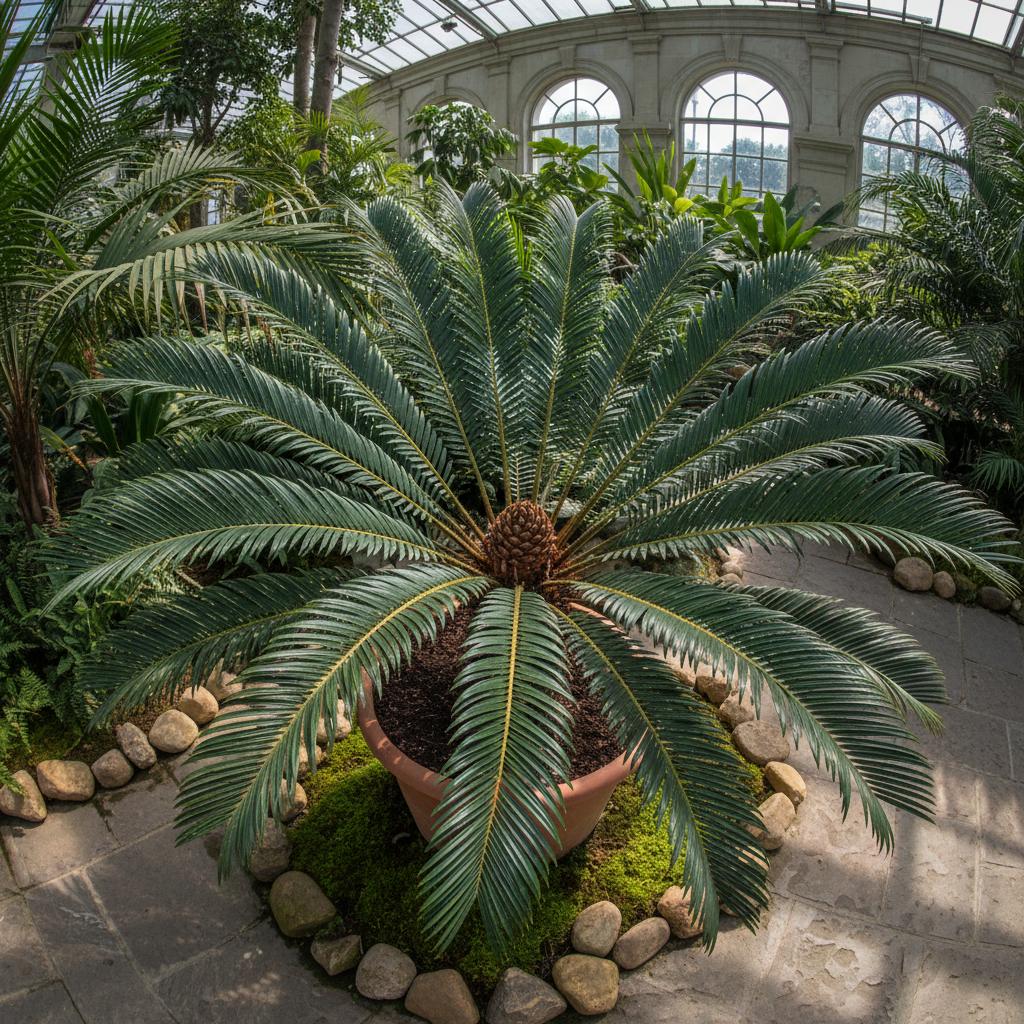
- Leaves: Pinnately compound, growing in a dense rosette; leaflets are thick, leathery, slightly fuzzy, and feel remarkably like cardboard, with slightly serrated margins near the tips.
- Cones: Dioecious (separate male and female plants); male cones are slender and cylindrical, while female cones are thicker, barrel-shaped, and produce fleshy, bright red seeds when mature.
- Stem: Features a short, thick, subterranean or partially emergent tuberous trunk that stores water.
Care Guide
Water thoroughly when the entire top half of the soil volume is dry.
Apply a gentle, balanced feed as new growth begins.. Cycads are slow growers and require minimal feeding; avoid over-fertilizing.
Coffee Grounds and Eggshell Mix:Mix a small amount of washed, thoroughly dried, and crushed eggshells with a sprinkle of used coffee grounds into the topsoil. This provides gentle nitrogen and calcium. Avoid over-application to prevent soil acidity buildup and mold.- Remove dead, yellowing, or severely damaged fronds at the base using sterilized pruning shears.
- Do not remove healthy green leaves, as cycads grow very slowly and rely on them for energy.
- Wear thick gloves when pruning to avoid contact with the stiff, sharp leaflets and toxic sap.
Toxicity
Warning: this plant may be toxic.
Pets: Highly toxic per ASPCA. Ingestion of any part, especially seeds, can lead to fatal liver failure.
Humans: Highly toxic. All parts, especially the fleshy seeds and fleshy roots, contain cycasin, a potent hepatotoxin and carcinogen.
Garden Uses & Culture
Culture: Cycads are ancient plants, often referred to as "living fossils," having existed since the time of the dinosaurs. In Western horticultural traditions, they symbolize resilience, endurance, and architectural beauty.
Usage: Popular as an architectural landscape plant in tropical and subtropical regions, and widely cultivated as a striking, low-maintenance indoor specimen plant.