 PlantFun
Plant Needs
Characteristics
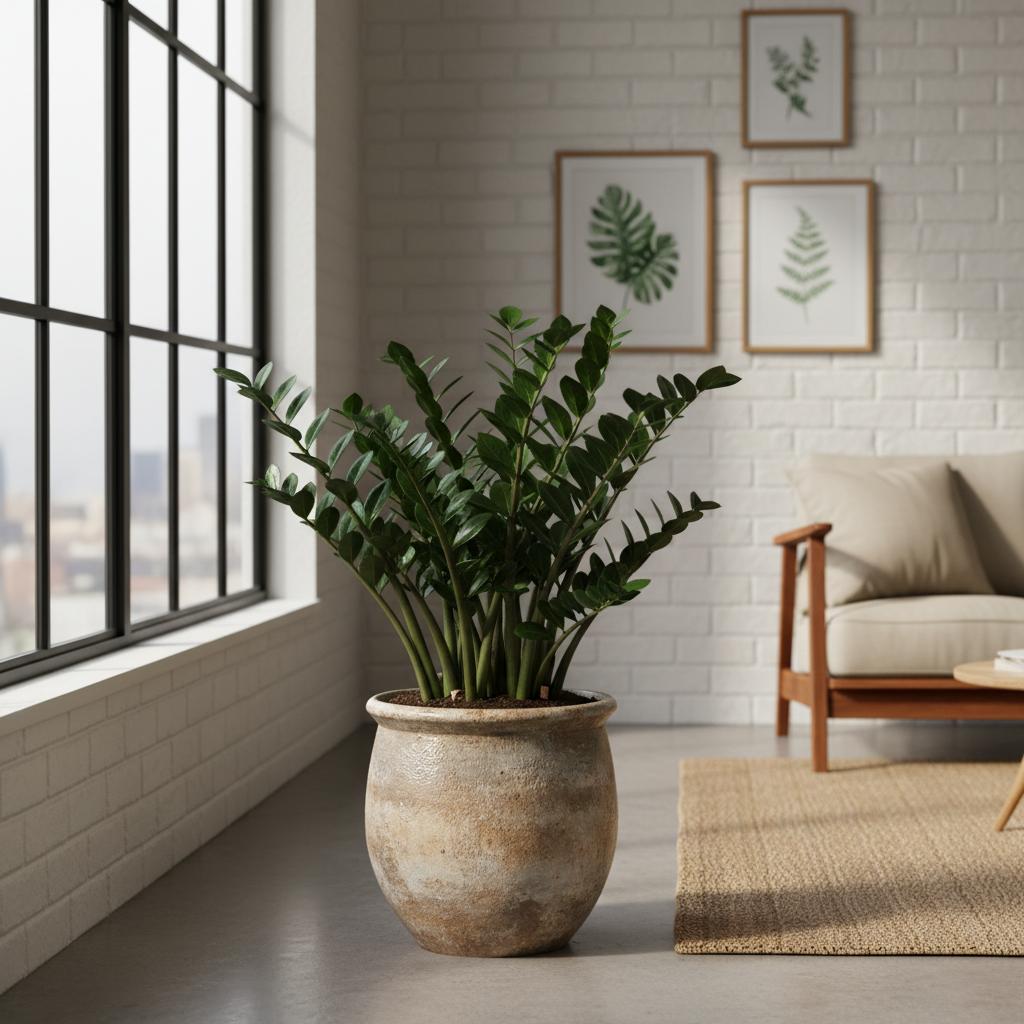
- Leaves: Dark green, highly glossy, pinnately compound leaves closely spaced on thick stems, with leaflets characteristically curled or cupped downward;
- Stems: Thick, fleshy, and swollen at the base to store water, growing in a dense, compact, and slightly arching habit;
- Rhizomes: Subterranean, potato-like rhizomes that serve as primary water reservoirs, enabling extreme drought tolerance.
Care Guide
Water thoroughly when the potting mix is completely dry.
Apply a light dose of fertilizer.. Fertilize sparingly during the active growing season; no fertilizer is needed in winter.
Aquarium Water:Use diluted, dirty aquarium water when watering. Ensure it is at room temperature and free of added aquarium salts or medications to prevent root burn.- Remove any yellowing or dead stems by cutting them cleanly at the soil line;
- Wipe leaves with a damp cloth occasionally to remove dust and restore their natural shine;
- Do not prune healthy leaves, as the plant grows slowly and relies on them for energy.
Toxicity
Warning: this plant may be toxic.
Pets: Toxic to cats per ASPCA. Chewing leaves releases calcium oxalate crystals causing oral irritation, excessive drooling, vomiting, and difficulty swallowing.
Humans: Contains calcium oxalate crystals which can cause irritation, swelling, and burning of the mouth and throat if chewed or ingested.
Garden Uses & Culture
Culture: Highly prized in modern Western interior design for its architectural shape and nearly indestructible nature, making it a staple in offices and homes across Europe and the Americas.
Usage: Primarily used as a low-maintenance indoor ornamental plant; known to help purify indoor air.