 PlantFun
Plant Needs
Characteristics
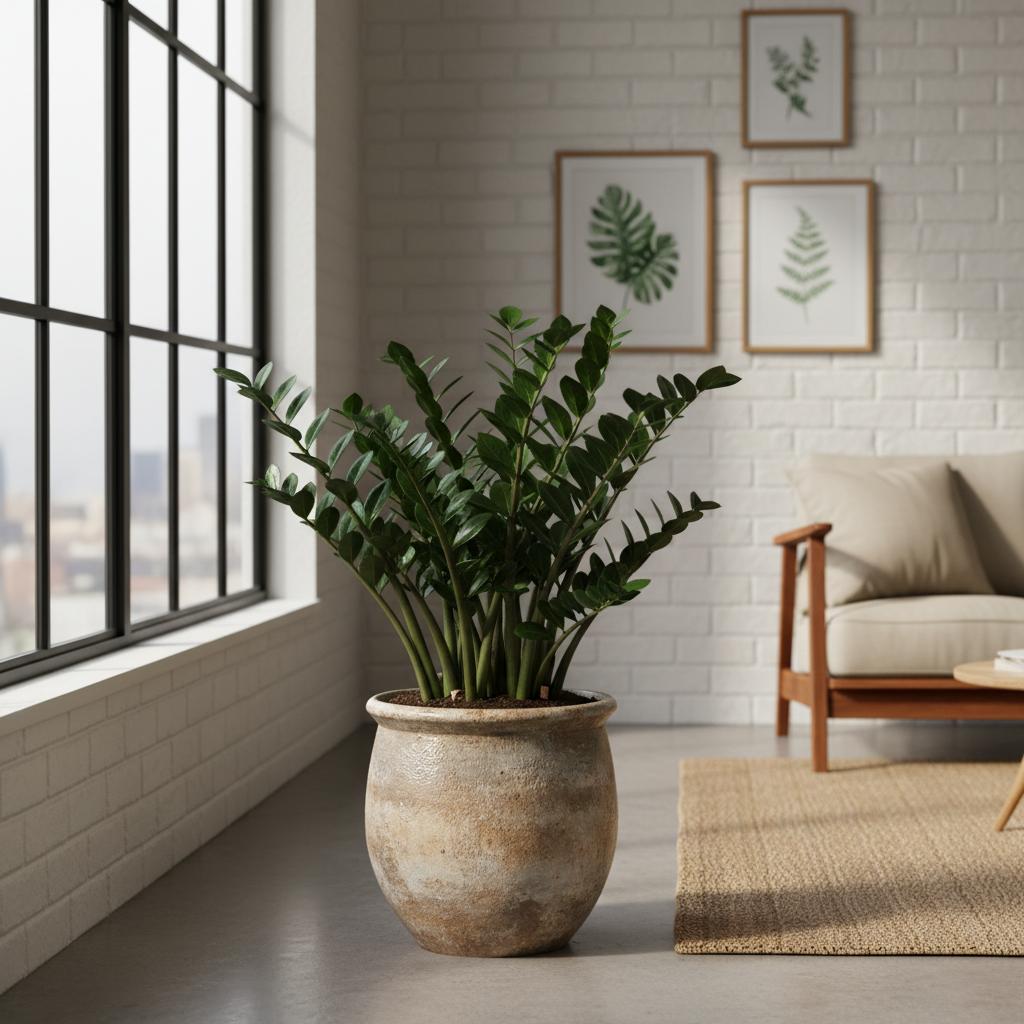
- Leaves: Pinnately compound, very dark green, glossy, and closely spaced on thick rachises; leaflets are slightly curled or cupped downward.
- Stems: Thick, fleshy, and swollen at the base, growing in a dense, compact, and upright habit.
- Roots: Tuberous, potato-like rhizomes that store significant amounts of water.
- Flowers: Produces a small, pale green to white spadix surrounded by a spathe, typically hidden near the base of the plant.
Care Guide
Water thoroughly when the soil is completely dry, ensuring excess water drains away.
Apply a balanced liquid houseplant fertilizer diluted to half strength.. Requires very little feeding; do not fertilize in autumn and winter.
Banana Peel Tea:Steep chopped banana peels in water for 24 hours. Strain the liquid and dilute 1:1 with water before applying to the soil. Discard the solid peels in the compost to avoid attracting fungus gnats. Use only during the active growing season.- Sanitation: Wipe the glossy leaves periodically with a damp cloth to remove dust and restore their natural shine.
- Maintenance: Remove any yellowing, mushy, or dead stems by cutting them away at the soil line with sterile shears.
- Form: Do not top-prune the stems; if a stem is damaged or too tall, remove the entire stalk from the base.
Toxicity
Warning: this plant may be toxic.
Pets: Toxic to cats per ASPCA; insoluble calcium oxalates cause oral irritation, pain, and swelling.
Humans: Contains calcium oxalate crystals; ingestion can cause irritation of the mouth, lips, and throat, and sap may cause contact dermatitis.
Garden Uses & Culture
Culture: Popularized in late 20th-century European and American interior design, the ZZ plant has become a staple of modern office and home decor, celebrated for its architectural silhouette and symbolization of resilience and steady, unbothered growth.
Usage: Excellent tabletop or desk plant, interior landscaping, and recognized for its air-purifying qualities.