 PlantFun
Plant Needs
Sunlight
Requires full sun to partial shade for optimal blooming.
Watering
Keep soil evenly moist during the growing season; reduce watering during dormancy.
Temperature
Thrives in warm climates; bulbs must be protected from hard freezes.
Characteristics
- Leaves: Basal, narrow, grass-like, fleshy, glossy dark green, 15 - 30 cm long, resembling chives;
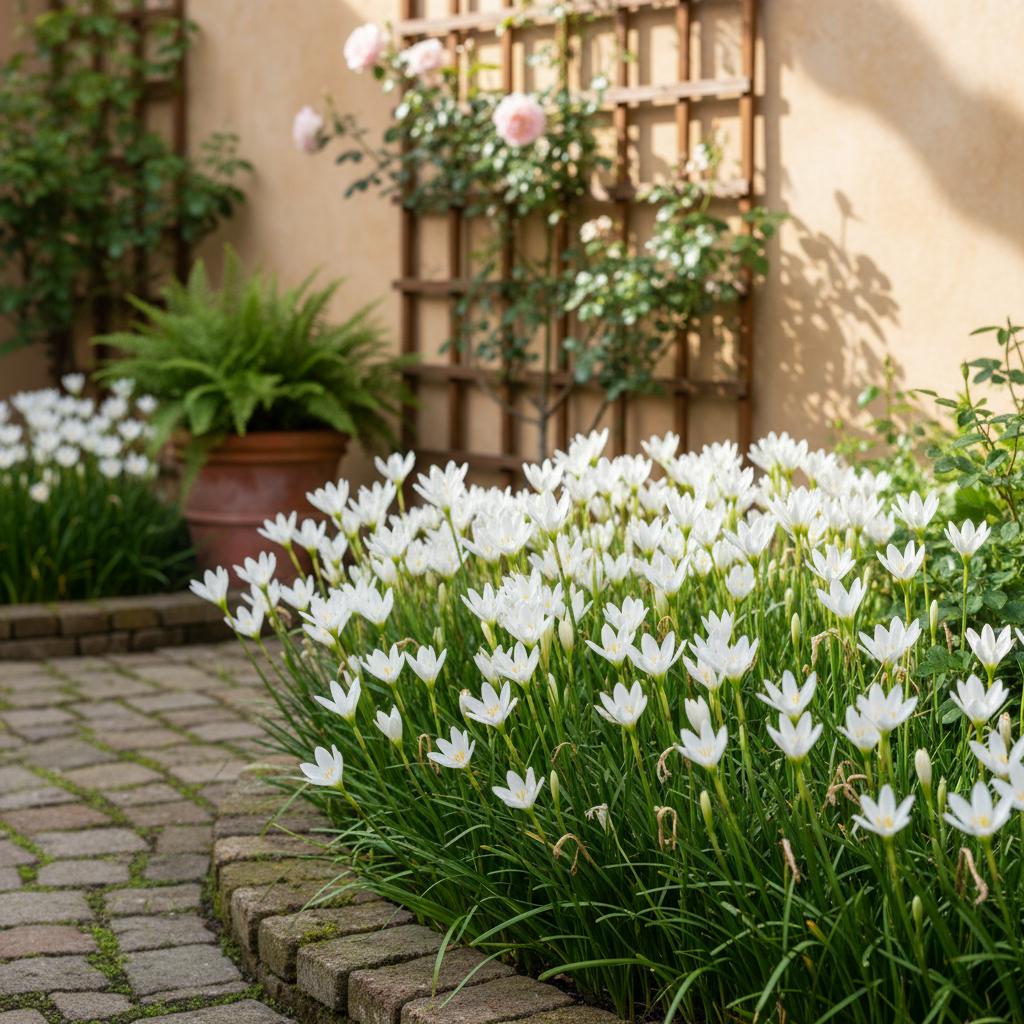
- Flowers: Solitary, erect, funnel-shaped to star-shaped, featuring 6 white tepals (sometimes tinged pink outside) and prominent yellow stamens;
- Bulbs: Small, tunicate bulbs, 1 - 2 cm in diameter, covered with dark brown papery tunics;
- Stems: Leafless scapes (flower stalks) that emerge rapidly after heavy rainfall.
Care Guide
Watering
Water regularly to keep the soil consistently moist, especially before and during the blooming period.
Fertilization
Apply a balanced liquid fertilizer once as new growth appears.. Avoid over-fertilizing, which can promote foliage growth at the expense of flowers.
Banana Peel Tea:Soak chopped banana peels in water for 24-48 hours. Strain and dilute 1:1 with water. Apply to the soil to promote blooming. Discard solids in compost to avoid attracting pests. Do not use raw peels directly on soil.Pruning
- Remove spent flowers (deadheading) to prevent seed formation and conserve bulb energy;
- Cut back yellowed or dead foliage only after it has completely died back naturally;
- Divide overcrowded bulb clumps every 3 to 4 years during the dormant season to maintain vigor.
Toxicity
Warning: this plant may be toxic.
Pets & Humans
Pets: Toxic per ASPCA; ingestion can cause severe vomiting, diarrhea, respiratory depression, and cardiac arrhythmias.
Humans: Contains lycorine and other amaryllidaceae alkaloids; ingestion causes gastrointestinal distress.
Garden Uses & Culture
Culture: In Victorian flower language, the rain lily symbolizes expectation and new beginnings, often associated with the cleansing and renewing power of rain.
Usage: Excellent for rock gardens, borders, pathway edging, and container planting.