 PlantFun
Plant Needs
Sunlight
Bright, indirect light; avoid direct midday sun to prevent leaf scorch.
Watering
Keep evenly moist during active growth; do not allow the potting medium to dry out completely.
Temperature
Prefers cool to intermediate temperatures with a noticeable day-night temperature drop.
Characteristics
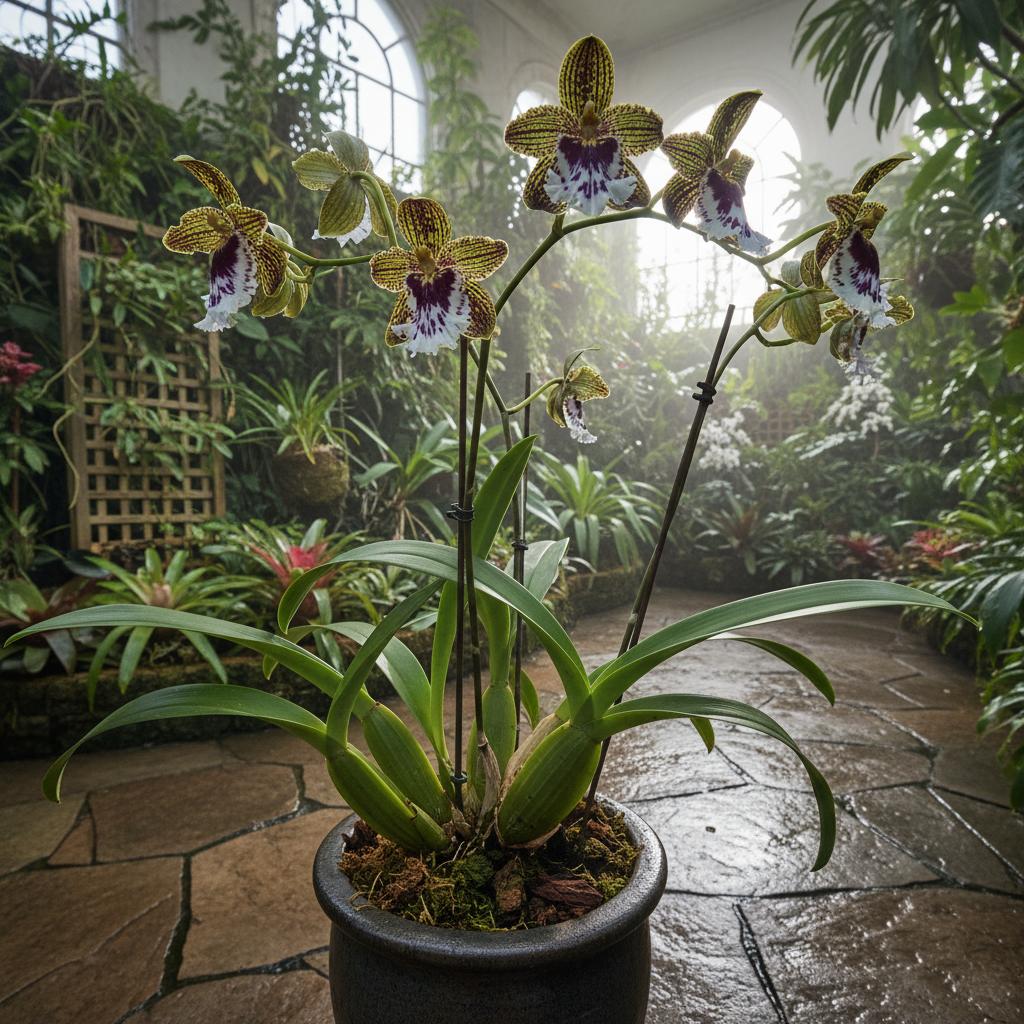
- Leaves: Long, glossy, lanceolate, plicate (pleated) leaves emerging from prominent pseudobulbs;
- Flowers: Fragrant, waxy flowers with green sepals and petals heavily blotched with brown or purple, featuring a broad white lip with striking purple-blue veining;
- Pseudobulbs: Ovoid to conical, clustered, light green, serving as water storage organs;
- Roots: Thick, fleshy, white velamen-covered roots adapted for epiphytic or terrestrial growth.
Care Guide
Watering
Water thoroughly when the top inch of the medium approaches dryness.
Fertilization
Apply a balanced, water-soluble orchid fertilizer at quarter strength.. Flush the pot with plain water once a month to prevent salt buildup.
Banana Peel Tea:Steep chopped banana peels in water for 24 hours, strain, and dilute 1:1 with fresh water. Provides potassium for robust blooms. Discard the solid peels in the compost; do not place raw peels in the orchid pot to avoid mold and root rot.Pruning
- Cut spent flower spikes down to the base using sterilized tools;
- Remove naturally yellowing or dead leaves to maintain hygiene and airflow;
- Repot every 1-2 years when the potting medium breaks down, trimming away any dead, hollow roots.
Toxicity
Warning: this plant may be toxic.
Pets & Humans
Pets: Non-toxic to cats per ASPCA guidelines for general orchids.
Humans: Generally considered non-toxic to humans.
Garden Uses & Culture
Culture: Highly prized in 19th-century European orchid collections for their intense, hyacinth-like fragrance and striking contrast of colors.
Usage: Cultivated as an ornamental houseplant, greenhouse specimen, and occasionally used in long-lasting cut flower arrangements.