 PlantFun
Plant Needs
Sunlight
Bright, indirect light; avoid direct midday sun which can scorch the thin leaves.
Watering
Keep the growing medium evenly moist but not waterlogged; do not allow it to dry out completely between waterings.
Temperature
Prefers intermediate to warm temperatures with a slight drop at night to initiate blooming.
Characteristics
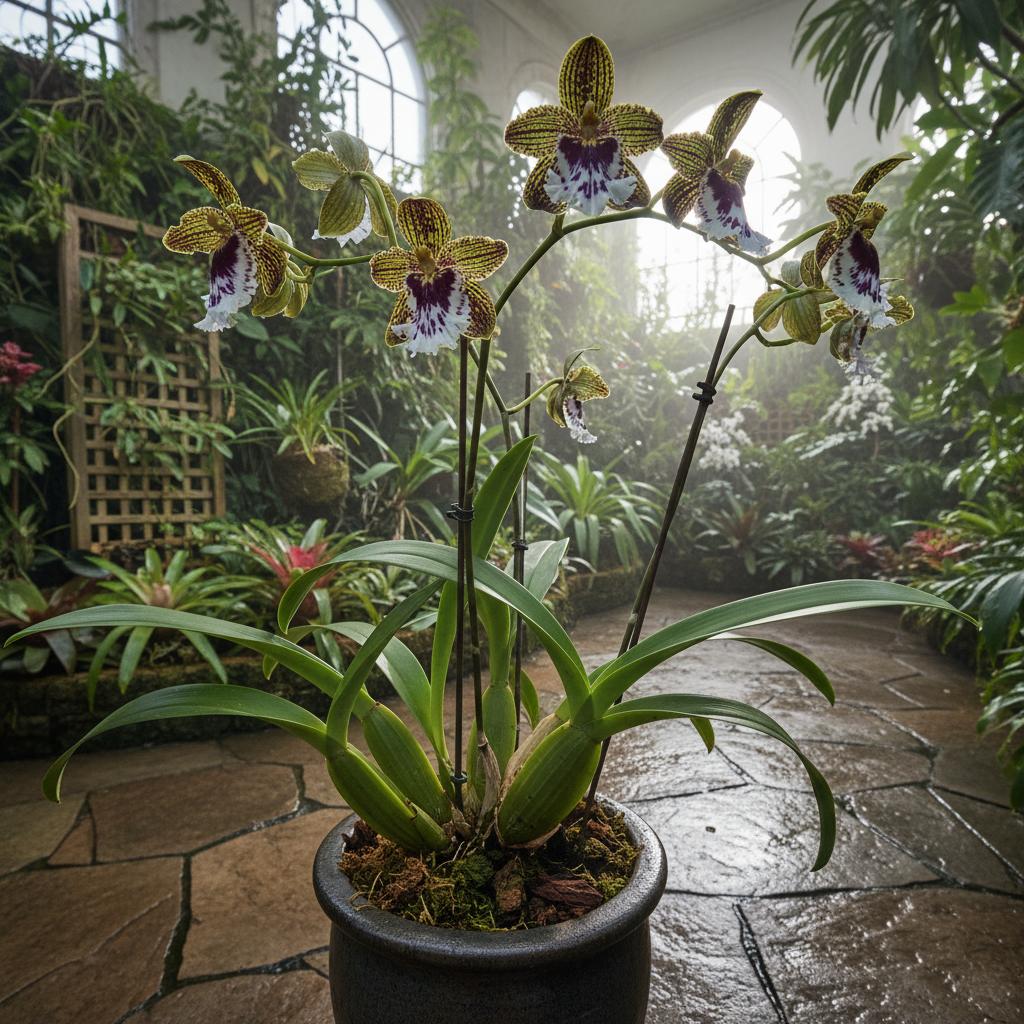
- Leaves: Long, glossy, strap-like, plicate (pleated) leaves emerging from the apex of pseudobulbs;
- Flowers: Waxy, highly fragrant flowers; sepals and petals typically green or yellowish-green heavily blotched with brown or purple; lip (labellum) broad, white with heavy purple or blue veining;
- Stem: Stout, ovoid pseudobulbs that serve as water and nutrient storage organs.
Care Guide
Watering
Water thoroughly when the top inch of the medium feels almost dry.
Fertilization
Apply a balanced, water-soluble orchid fertilizer diluted to quarter-strength.. Fertilization recommendations description
Banana Peel Tea:Soak chopped banana peels in water for 24-48 hours, strain, and dilute 1:1 with water. Use to promote blooming. Avoid leaving raw peels on the potting medium to prevent mold and fungus gnats.Pruning
- Flower Spikes: Cut spent flower spikes down to the base using sterilized pruning shears;
- Foliage: Trim away any naturally yellowing or dead leaves at the base to maintain hygiene;
- Roots: During repotting, carefully trim away any mushy, hollow, or dead roots, leaving the firm, white/green ones intact.
Toxicity
Warning: this plant may be toxic.
Pets & Humans
Pets: Non-toxic to cats per ASPCA guidelines.
Humans: Generally recognized as safe; no known toxicity to humans.
Garden Uses & Culture
Culture: Highly prized in 19th-century European orchid collections for their intense, hyacinth-like fragrance and striking, exotic appearance.
Usage: Cultivated primarily as an ornamental indoor plant and occasionally used in the cut flower industry due to the longevity of its blooms.