 PlantFun
Plant Needs
Sunlight
Partial shade to full shade; avoid direct afternoon sun which can scorch the leaves.
Watering
Keep soil consistently moist but not waterlogged during the growing season.
Temperature
Prefers warm environments; tubers will go dormant if temperatures drop below 15°C (60°F).
Characteristics
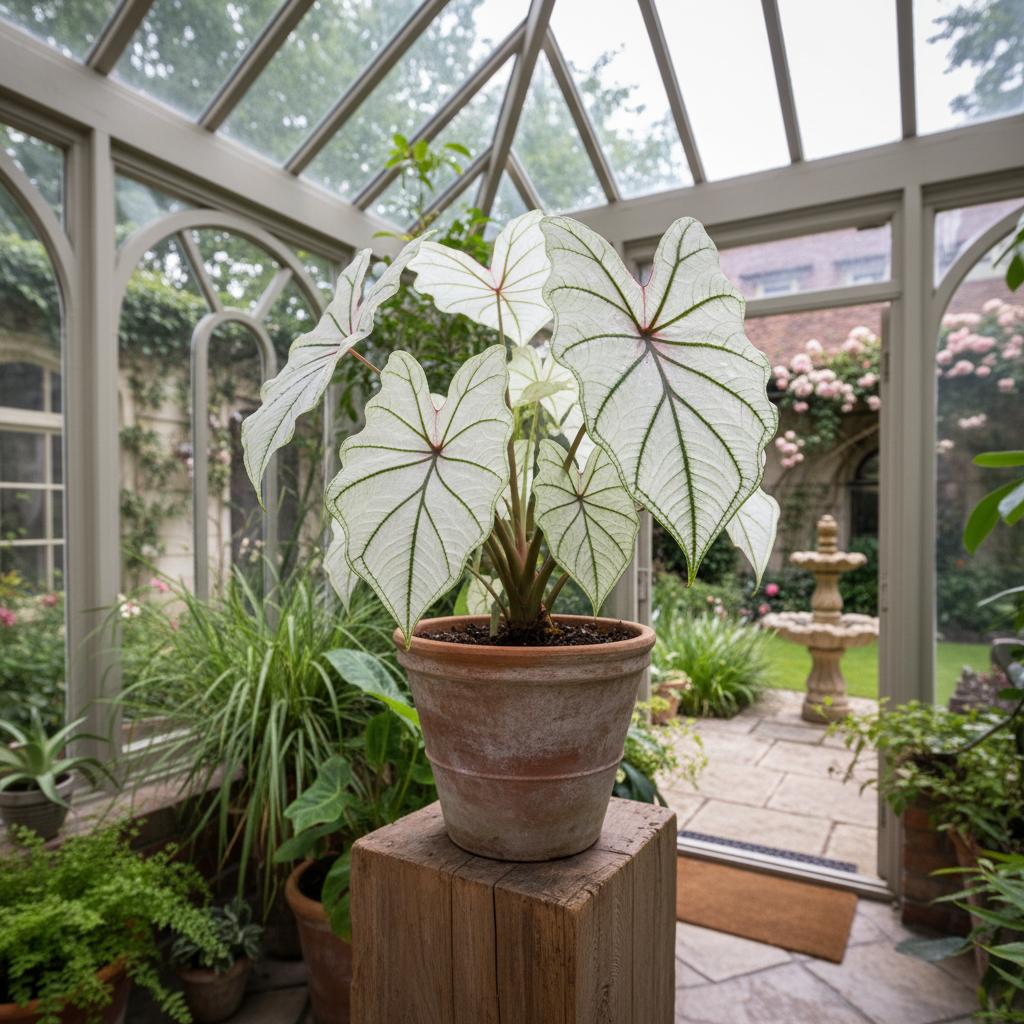
- Leaves: Large, heart-shaped (sagittate) to lanceolate, featuring a creamy white center, prominent white veins, and contrasting dark green margins; paper-thin texture.
- Flowers: Inflorescence is a typical aroid spadix surrounded by a greenish-white spathe, often hidden by the foliage.
- Stems: Petioles are long, slender, and attach directly to the underground tuber.
Care Guide
Watering
Water frequently to keep the soil evenly moist.
Fertilization
Apply a balanced liquid fertilizer every two weeks.. Use a diluted balanced fertilizer during the active growing season.
Banana Peel Tea:Steep chopped banana peels in water for 24-48 hours. Strain and dilute 1:1 with water. Apply to soil to support robust tuber and leaf development. Avoid leaving raw peels on the soil surface to prevent pests and mold.Pruning
- Remove yellowing or dead leaves at the base to maintain a tidy appearance.
- Cut back all foliage after it naturally dies back in autumn before winter storage.
- Snip off flower spathes if they appear, to direct the plant's energy back into foliage production.
Toxicity
Warning: this plant may be toxic.
Pets & Humans
Pets: Toxic (per ASPCA) due to insoluble calcium oxalate crystals.
Humans: Toxic if ingested due to insoluble calcium oxalate crystals.
Garden Uses & Culture
Culture: In Victorian England, Caladiums became highly prized conservatory plants, symbolizing fleeting beauty due to their dramatic summer displays and winter dormancy.
Usage: Popular as a shade garden bedding plant, container specimen, or striking indoor houseplant during the summer months.