 PlantFun
Plant Needs
Sunlight
Requires bright, indirect light; direct harsh sunlight can scorch the leaves.
Watering
Keep soil consistently moist but not waterlogged; allow the top inch of soil to dry out between waterings.
Temperature
Thrives in warm, humid environments; protect from cold drafts and temperatures below 15°C (60°F).
Characteristics
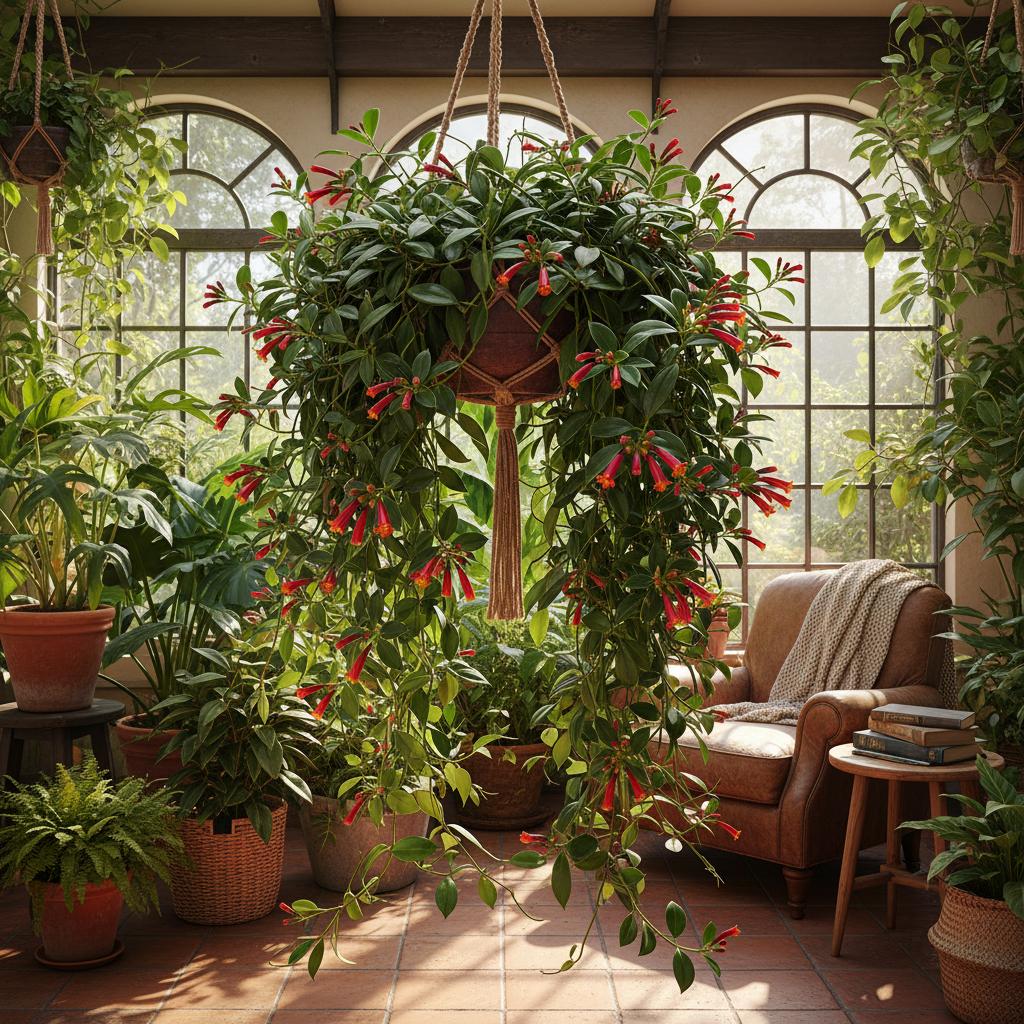
- Leaves: Opposite, fleshy, lanceolate to ovate, 4 - 8 cm long, glossy dark green above, lighter beneath, with entire margins;
- Flowers: Terminal clusters of tubular flowers; the corolla is bright red, emerging from a dark purplish-brown, tubular calyx resembling a lipstick tube;
- Stems: Slender, trailing or cascading, rooting at the nodes when in contact with moisture.
Care Guide
Watering
Water thoroughly when the top inch of soil feels dry, maintaining high ambient humidity.
Fertilization
Apply a balanced liquid fertilizer diluted to half strength.. Do not fertilize during the winter dormancy period.
Banana Peel Tea:Soak chopped banana peels in water for 24-48 hours, strain, and use the liquid to water the plant. This provides a gentle potassium boost to encourage blooming. Avoid leaving raw peels on the soil surface to prevent fruit flies and mold.Pruning
- Prune stems back by about one-third after flowering to encourage branching and a bushier appearance;
- Remove any dead, damaged, or leafless trailing stems to maintain plant health;
- Pinch back new growth tips in early spring to stimulate fuller foliage.
Toxicity
Warning: this plant may be toxic.
Pets & Humans
Pets: Non-toxic to cats (per ASPCA).
Humans: Non-toxic to humans; safe to handle.
Garden Uses & Culture
Culture: Popularized in Western indoor horticulture during the mid-20th century houseplant boom, it became a staple for hanging baskets in sunrooms and conservatories due to its striking floral display.
Usage: Cultivated primarily as an ornamental houseplant, especially suited for hanging baskets or elevated planters where its trailing stems can be displayed.