 PlantFun
Plant Needs
Characteristics
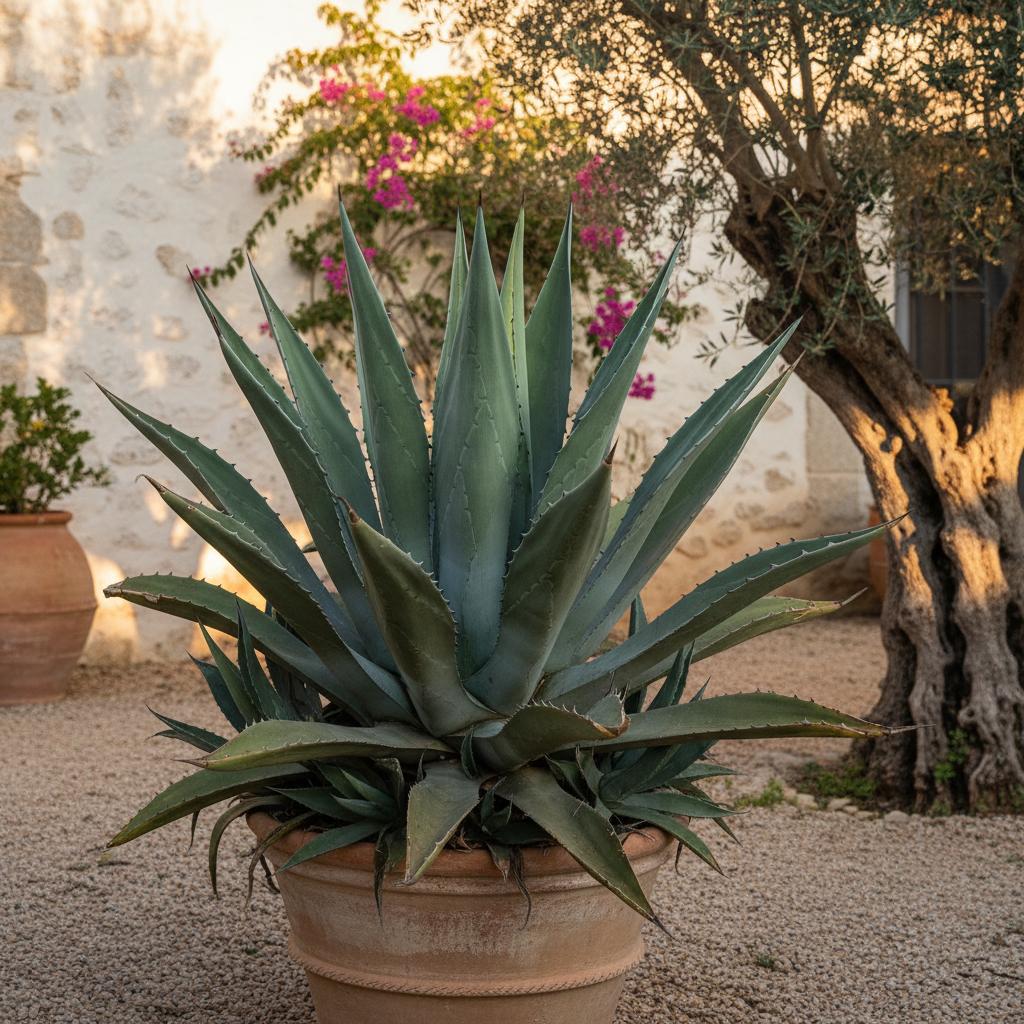
- Leaves: Large, thick, fleshy, gray-green to blue-green, up to 2 meters long, with sharp marginal teeth and a heavy, dark terminal spine;
- Flowers: Massive branching panicle bearing clusters of yellow-green tubular flowers;
- Stem: Acaulescent or very short-stemmed, forming a dense basal rosette;
- Roots: Shallow, wide-spreading fibrous root system adapted to capture minimal rainfall.
Care Guide
Water deeply but infrequently, allowing soil to dry out entirely between waterings.
Apply a diluted, low-nitrogen succulent fertilizer once.. Requires very little feeding; excess nutrients can cause weak, leggy growth.
Banana Peel Tea:Steep chopped banana peels in water for 24 hours, strain, and dilute 1:1 with water. Pour directly onto the soil. Discard the solid peels in compost to avoid attracting pests or causing fungal rot at the plant base.- Wear thick leather gloves and protective eyewear when pruning due to toxic sap and sharp spines;
- Use long-handled loppers to remove dead or dying basal leaves close to the stem;
- Snip off the sharp terminal spines if planted near walkways to prevent injury;
- After the plant flowers and dies, carefully cut down the massive flower stalk and remove the dead mother rosette, leaving the basal pups to grow.
Toxicity
Warning: this plant may be toxic.
Pets: Toxic per ASPCA; ingestion of leaves or sap causes oral and gastrointestinal irritation.
Humans: Sap contains calcium oxalate crystals and saponins that can cause severe contact dermatitis and eye irritation.
Garden Uses & Culture
Culture: A symbol of endurance, patience, and the harsh beauty of the desert in Western frontier lore, often representing the rugged landscapes of the American Southwest.
Usage: Architectural focal point in xeriscaping, barrier hedging, and historically a source of strong fibers (pita) for rope making.