 PlantFun
Plant Needs
Characteristics
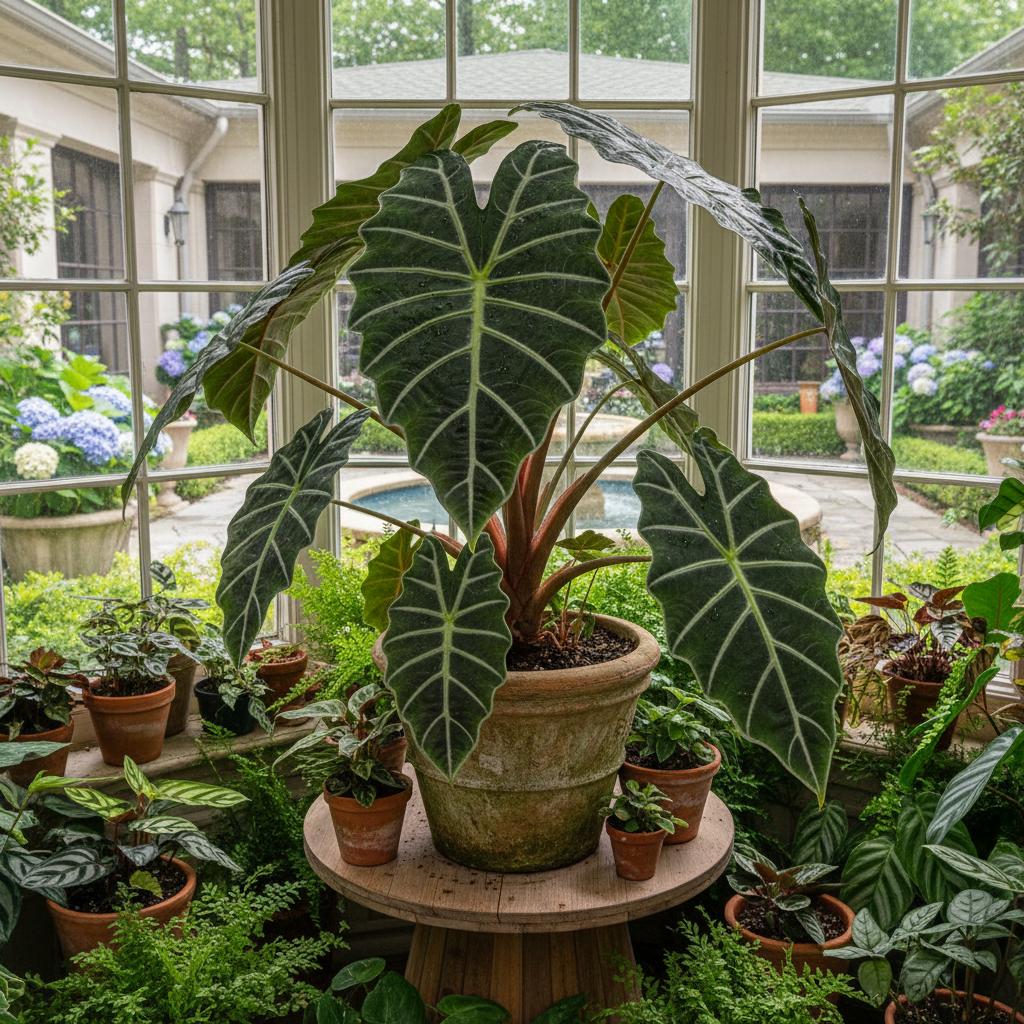
- Leaves: Large, sagittate (arrow-shaped), up to 40 cm long, dark green to almost black, with prominent silvery-white or pale green primary veins and deeply scalloped margins;
- Stems: Fleshy petioles arising from an underground corm, pale green with faint mottling;
- Flowers: Rarely produced indoors; consists of a pale green spathe and a white spadix typical of the Araceae family;
- Roots: Thick, fleshy roots emerging from a central tuberous corm.
Care Guide
Keep soil consistently moist, watering when the top inch feels dry.
Apply a balanced, diluted liquid fertilizer to support new leaf development.. Fertilize only when the plant is actively growing; withhold fertilizer during winter dormancy.
Banana Peel Tea:Steep chopped banana peels in water for 24 hours, strain, and use the liquid to water the plant. Avoid leaving raw peels on the soil to prevent fungus gnats and odors.- Remove yellowing or dying leaves at the base of the petiole using sterilized shears;
- Wipe leaves regularly with a damp cloth to remove dust and deter spider mites;
- Do not cut healthy green leaves, as the plant relies on them for energy storage in its corm.
Toxicity
Warning: this plant may be toxic.
Pets: Toxic to cats per ASPCA. Chewing leaves releases calcium oxalate crystals causing intense oral pain and gastrointestinal distress.
Humans: Contains insoluble calcium oxalate crystals that cause severe oral irritation and swelling if chewed or ingested.
Garden Uses & Culture
Culture: Popularized in Western houseplant culture during the mid-20th century, it is highly prized in modern interior design for its striking, architectural foliage that adds a dramatic, sculptural element to living spaces.
Usage: Primarily grown as an ornamental houseplant in temperate regions, or as a shaded landscape specimen in frost-free tropical climates.