 PlantFun
Plant Needs
Characteristics
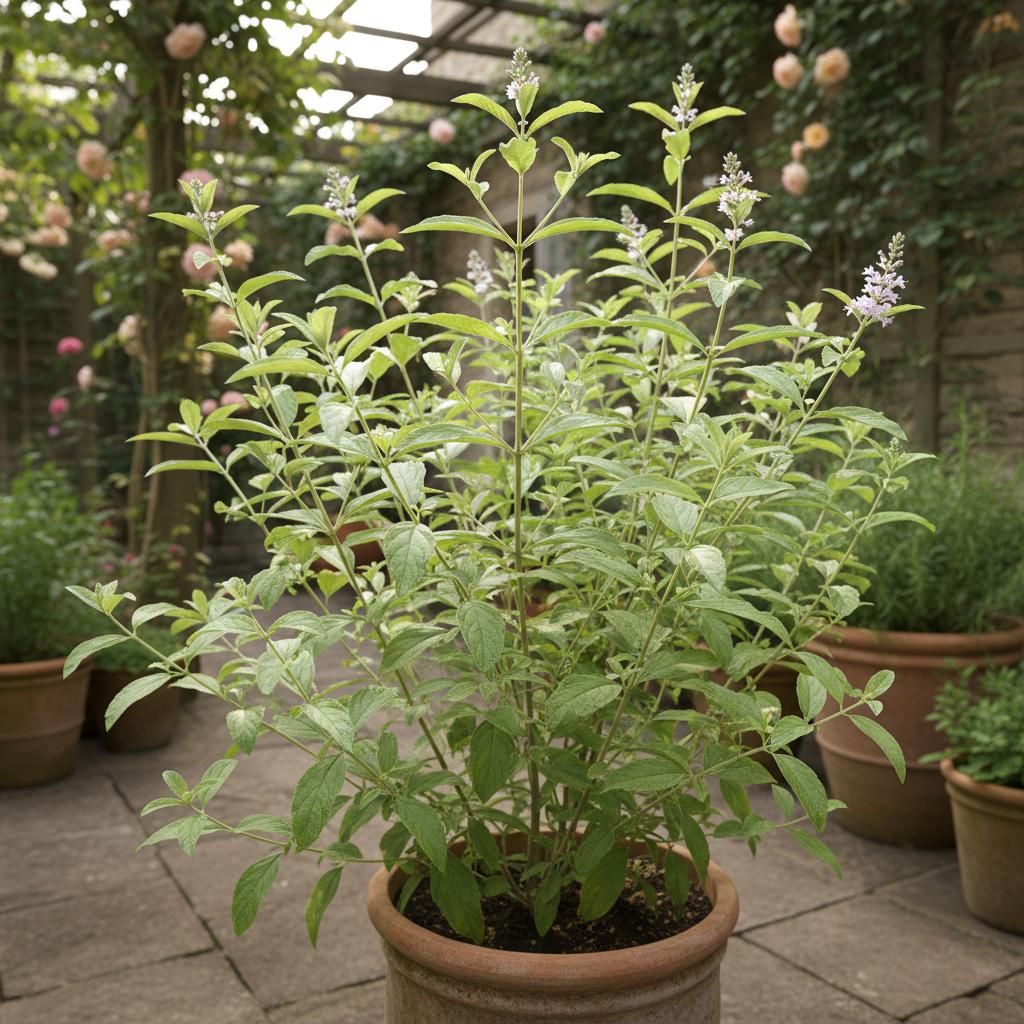
- Leaves: Lanceolate, 7 - 10 cm long, arranged in whorls of three or four, pale green with a rough, slightly bristly texture and a strong lemon scent when crushed;
- Flowers: Tiny, tubular, white to pale lilac, arranged in loose terminal panicles;
- Stem: Slender, woody, longitudinally striated, becoming sprawling and leggy if left unpruned.
Care Guide
Water deeply when the top inch of soil feels dry to the touch.
Apply a balanced liquid fertilizer to encourage leafy, aromatic growth.. Avoid over-fertilizing, which can diminish the concentration of essential oils in the leaves.
Banana Peel Tea:Soak chopped banana peels in water for 24 hours, strain, and use the liquid to water the plant. Discard the raw peels in a compost bin to avoid attracting pests or causing mold on the soil surface.- Prune heavily in early spring just as new growth begins to maintain a bushy shape;
- Remove dead, diseased, or crossing branches to improve air circulation;
- Pinch back growing tips during the summer to encourage branching and prevent leggy growth.
Toxicity
Warning: this plant may be toxic.
Pets: Toxic to cats per ASPCA; essential oils can cause gastrointestinal irritation.
Humans: Generally safe for human consumption; widely used as a culinary herb and in teas.
Garden Uses & Culture
Culture: Highly prized in Victorian England, it was a staple in potpourri and tussie-mussies (small flower bouquets), where it symbolized sensibility and discretion in the language of flowers.
Usage: Leaves are used to flavor teas, syrups, fruit salads, and poultry dishes; essential oils are extracted for perfumery, soaps, and cosmetics.