 PlantFun
Plant Needs
Characteristics
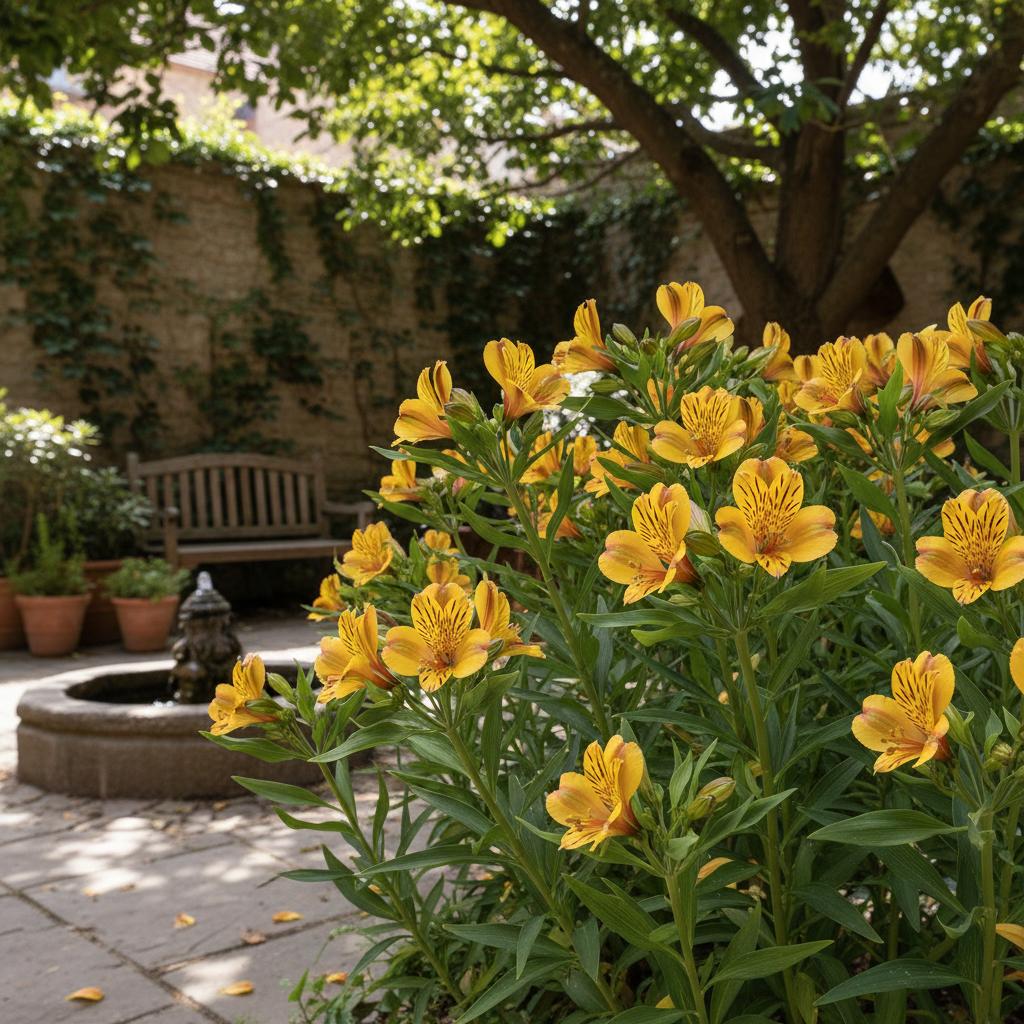
- Leaves: Lanceolate to elliptic, resupinate (twisted at the base so the upper surface faces down), mid-green with parallel venation;
- Flowers: Zygomorphic, funnel-shaped, featuring pink to salmon tepals with yellow throats and prominent dark burgundy streaks on the inner tepals;
- Stem: Upright, fleshy, unbranched stems emerging from a fleshy rhizomatous root system;
- Roots: Thick, fleshy rhizomes that store water and nutrients.
Care Guide
Water deeply when the top inch of soil feels dry, ensuring excellent drainage
Apply a balanced slow-release fertilizer as new growth appears. Regular feeding supports continuous blooming throughout the summer.
Banana Peel Tea:Soak chopped banana peels in water for 48 hours. Dilute 1:1 with water and apply to the base to promote blooming. Avoid foul odors by not letting it ferment too long.- Harvesting/Deadheading: Pull the stems firmly from the base rather than cutting them; this stimulates the rhizome to produce new shoots;
- Maintenance: Remove yellowing or damaged leaves to maintain airflow and prevent fungal diseases;
- Winter Prep: In cooler zones, mulch heavily over the crown in late autumn to protect rhizomes from freezing.
Toxicity
Warning: this plant may be toxic.
Pets: Non-toxic per ASPCA. Unlike true lilies (Lilium), Peruvian lilies do not cause acute kidney failure in cats.
Humans: Sap contains tulipalin A, which can cause allergic contact dermatitis (often called "tulip fingers" among florists).
Garden Uses & Culture
Culture: In Victorian floriography, the Alstroemeria symbolizes devotion, mutual support, and enduring friendship, with its twisted leaves representing the trials and tribulations of friendships.
Usage: Highly prized in the floral industry as a cut flower due to its exceptional vase life (up to two weeks); excellent for garden borders and patio containers.