 PlantFun
Plant Needs
Characteristics
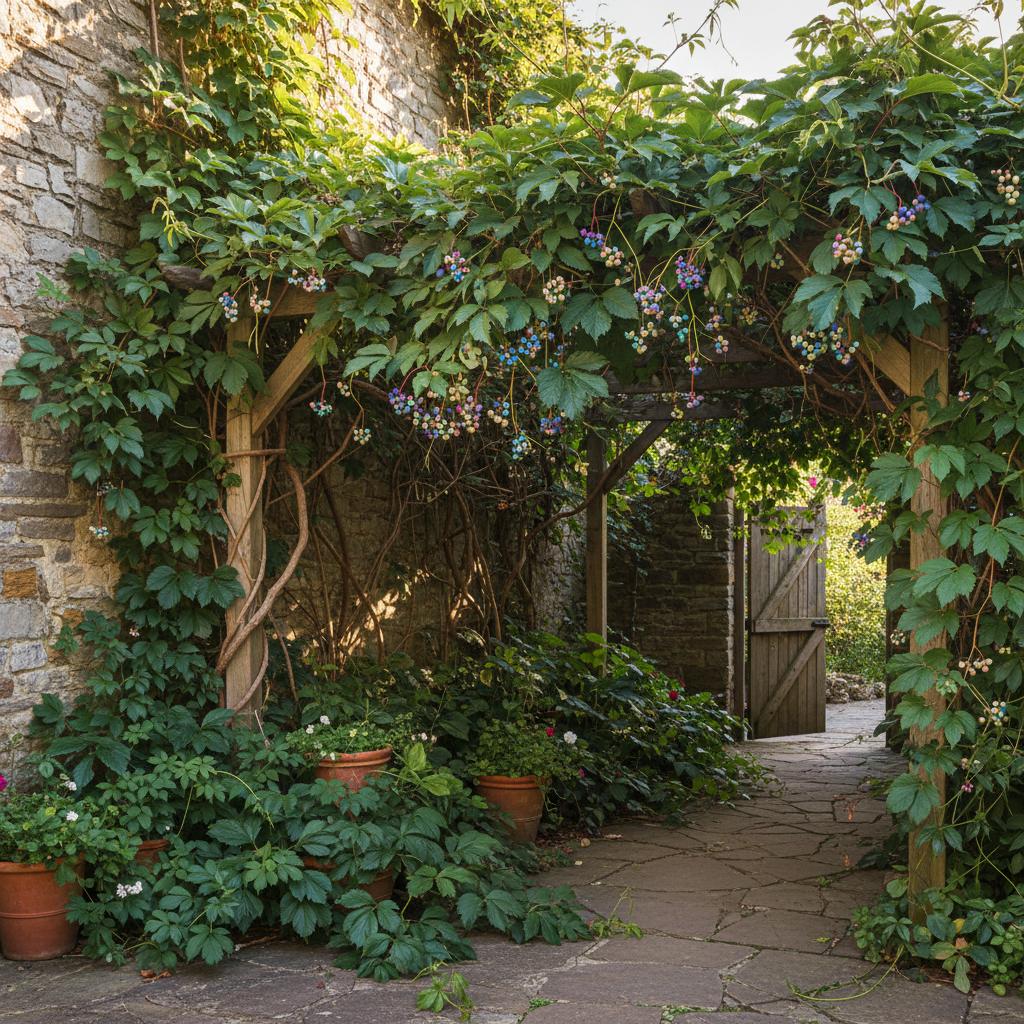
- Leaves: Alternate, simple, deeply 3 to 5-lobed with coarsely toothed margins and a heart-shaped base, often hairy beneath;
- Flowers: Inconspicuous, greenish-white, arranged in cymes that grow opposite the leaves;
- Fruit: Distinctive spherical berries (5-8 mm) that ripen through shades of green, white, pink, lilac, and finally bright porcelain blue with dark speckles;
- Stem: Woody climbing vine utilizing twining tendrils, featuring a continuous white pith (distinguishing it from Vitis species).
Care Guide
Water moderately, allowing the top inch of soil to dry out between waterings.
Apply a light layer of compost or a balanced organic fertilizer once as new growth begins.. Avoid heavy fertilization, particularly high nitrogen, which promotes foliage over fruit production.
Banana Peel Tea:Steep chopped banana peels in a jar of water for 24-48 hours. Strain and use the liquid to water the base of the vine. This provides potassium to support flowering and fruiting without encouraging excessive leafy growth. Discard peels in compost to avoid attracting pests.- Prune aggressively in late winter or early spring to control its rapid, potentially invasive growth;
- Remove dead, damaged, or diseased vines to maintain airflow and shape;
- Deadhead or remove berries before they are eaten by birds if you wish to prevent unwanted spread in non-native regions.
Toxicity
Warning: this plant may be toxic.
Pets: Not listed as toxic by ASPCA; unlike true grapes (Vitis), it does not contain the same toxic principles.
Humans: Berries are considered non-toxic but are highly unpalatable and bland.
Garden Uses & Culture
Culture: Valued in Western floral design and autumn wreath-making for its uniquely colored, porcelain-like berries that retain their color well into the fall.
Usage: Used as an ornamental climber for pergolas, trellises, and fences, though its use is strongly discouraged in areas where it has become an invasive ecological threat.