 PlantFun
Plant Needs
Characteristics
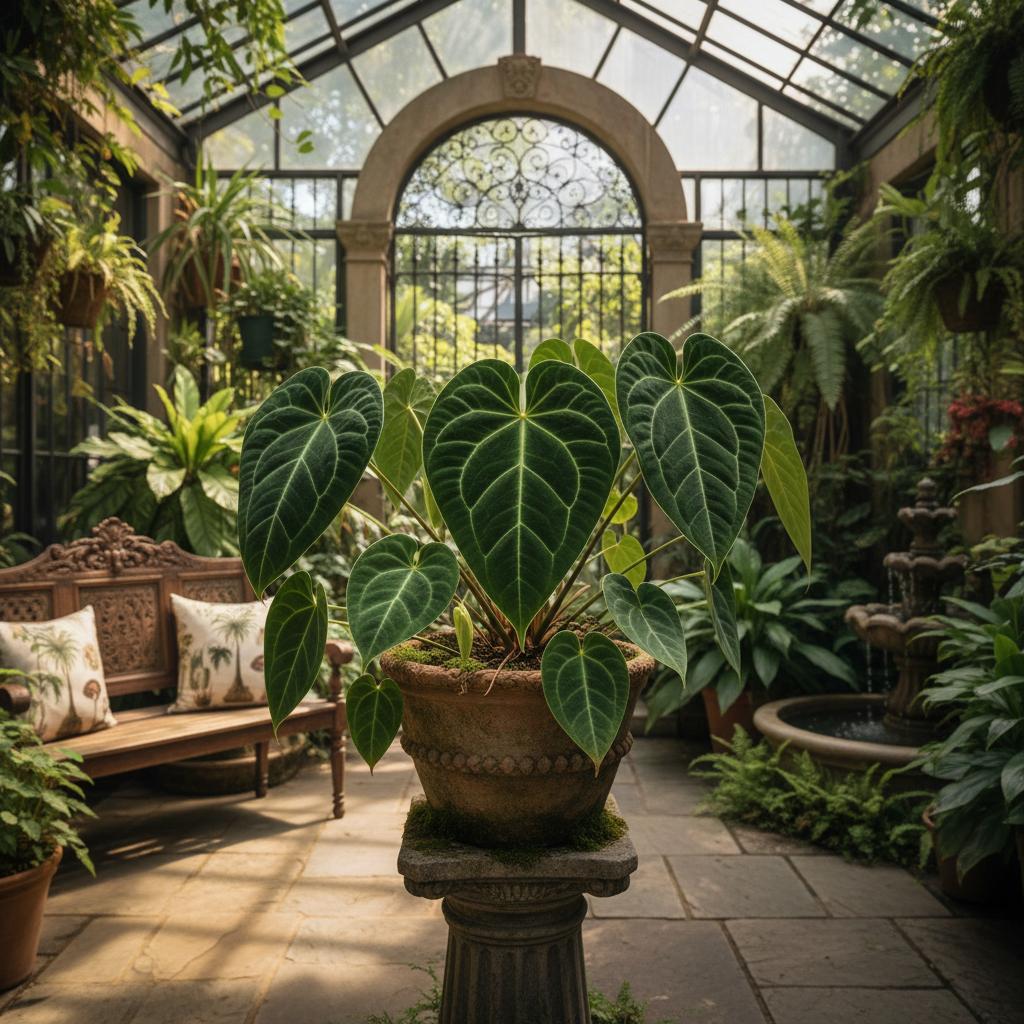
- Leaves: Velvety, dark green, peltate (completely round at the top without a sinus), with prominent silvery-white veins;
- Flowers: Inflorescence features a green to purplish spathe and a yellow-green to purple spadix;
- Stem: Short, epiphytic stem producing thick, fleshy aerial roots;
- Roots: Thick, adapted for epiphytic clinging and absorbing atmospheric moisture.
Care Guide
Water thoroughly when the top inch of soil feels dry.
Apply a diluted, balanced liquid fertilizer.. Feed regularly during the growing season, but flush the soil periodically to prevent mineral buildup.
Aquarium Water Fertilizer:Use untreated aquarium change water to water the plant. It provides a gentle, natural source of nitrogen and beneficial microbes. Ensure the water is at room temperature and free of aquarium medications or high salts.- Remove yellowing or dead leaves at the base of the petiole using sterilized shears;
- Trim away any rotting or dried aerial roots during repotting;
- Wipe the velvety leaves gently with a soft, damp cloth to remove dust and maintain photosynthesis.
Toxicity
Warning: this plant may be toxic.
Pets: Toxic per ASPCA; ingestion causes oral irritation, pain and swelling of mouth, tongue and lips, excessive drooling, vomiting, and difficulty swallowing.
Humans: Contains calcium oxalate crystals; ingestion causes severe mouth and throat irritation, swelling, and gastrointestinal upset.
Garden Uses & Culture
Culture: Highly coveted in the Western houseplant collector community for its unique peltate (shield-like) leaf shape, distinguishing it from other lobed Anthuriums.
Usage: Cultivated primarily as an ornamental indoor foliage plant and a prized specimen for tropical greenhouses and large terrariums.