 PlantFun
Plant Needs
Characteristics
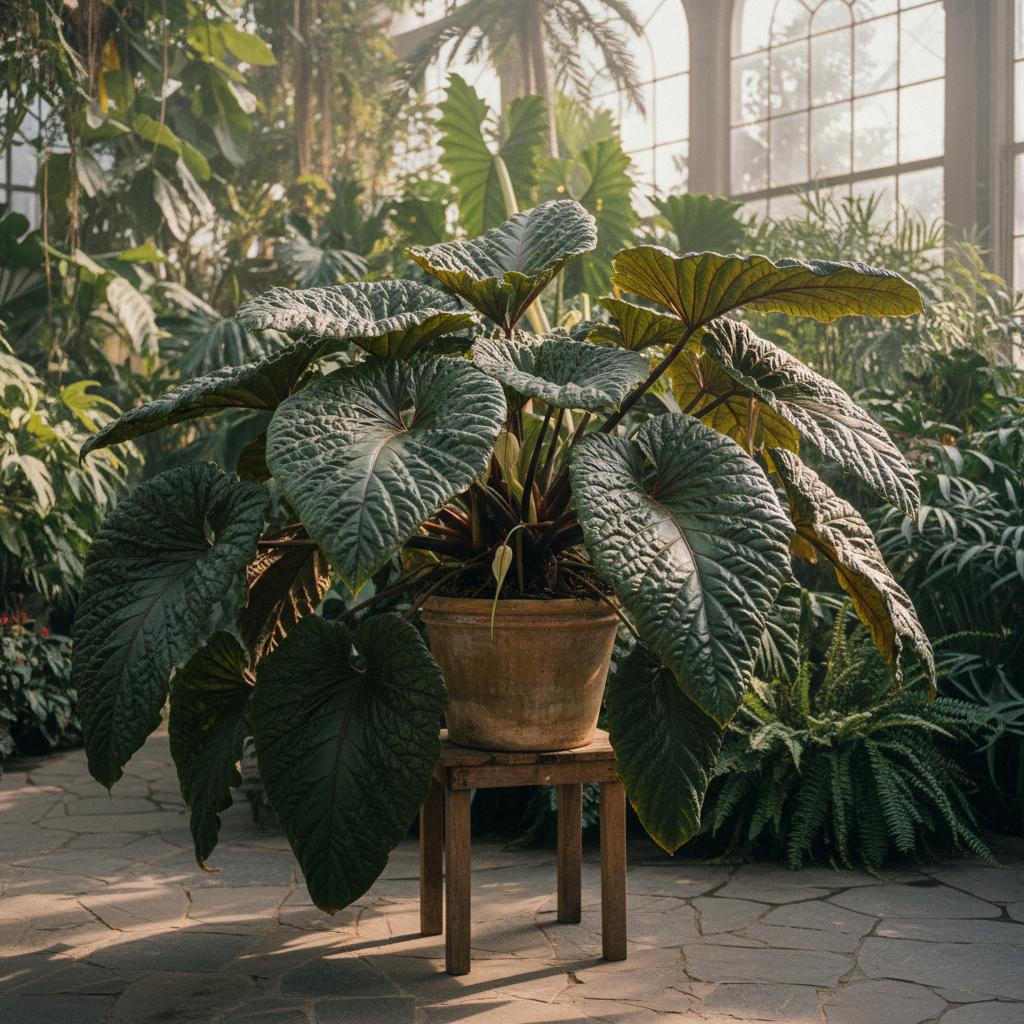
- Leaves: Large, stiff, elliptic to obovate, deeply corrugated (bullate) with prominent veins, dark green on top and often purplish underneath; arranged in a dense rosette.
- Flowers: Inflorescence consists of a purplish-green spathe and a stout, pale green to purplish spadix, typical of aroids.
- Stem: Short, thick, often obscured by the dense rosette of leaves and thick aerial roots.
Care Guide
Water thoroughly once a week, allowing excess water to drain completely.
Apply a balanced liquid fertilizer diluted to half strength.. Feed regularly during the active growing season, pausing in winter.
Aquarium Water:Use dirty aquarium water during routine water changes; it provides gentle, natural nitrogen without the risk of chemical burn. Ensure water is fresh and not overly salty.- Remove dead or yellowing older leaves at the base to maintain aesthetics and direct energy to new growth.
- Trim away any rotting or dried aerial roots during repotting.
- Wipe leaves regularly with a damp cloth to remove dust and deter pests like spider mites.
Toxicity
Warning: this plant may be toxic.
Pets: Toxic per ASPCA; chewing causes oral irritation, intense burning of the mouth, excessive drooling, and vomiting.
Humans: Contains insoluble calcium oxalate crystals; chewing or biting into the plant releases these crystals, causing severe mouth and throat pain.
Garden Uses & Culture
Culture: In Western indoor gardening, large-leaved Anthuriums are prized as architectural statement plants, bringing a touch of the prehistoric jungle into modern homes and conservatories.
Usage: Primarily grown as an ornamental foliage plant in interior landscaping and specialized aroid collections.