 PlantFun
Plant Needs
Characteristics
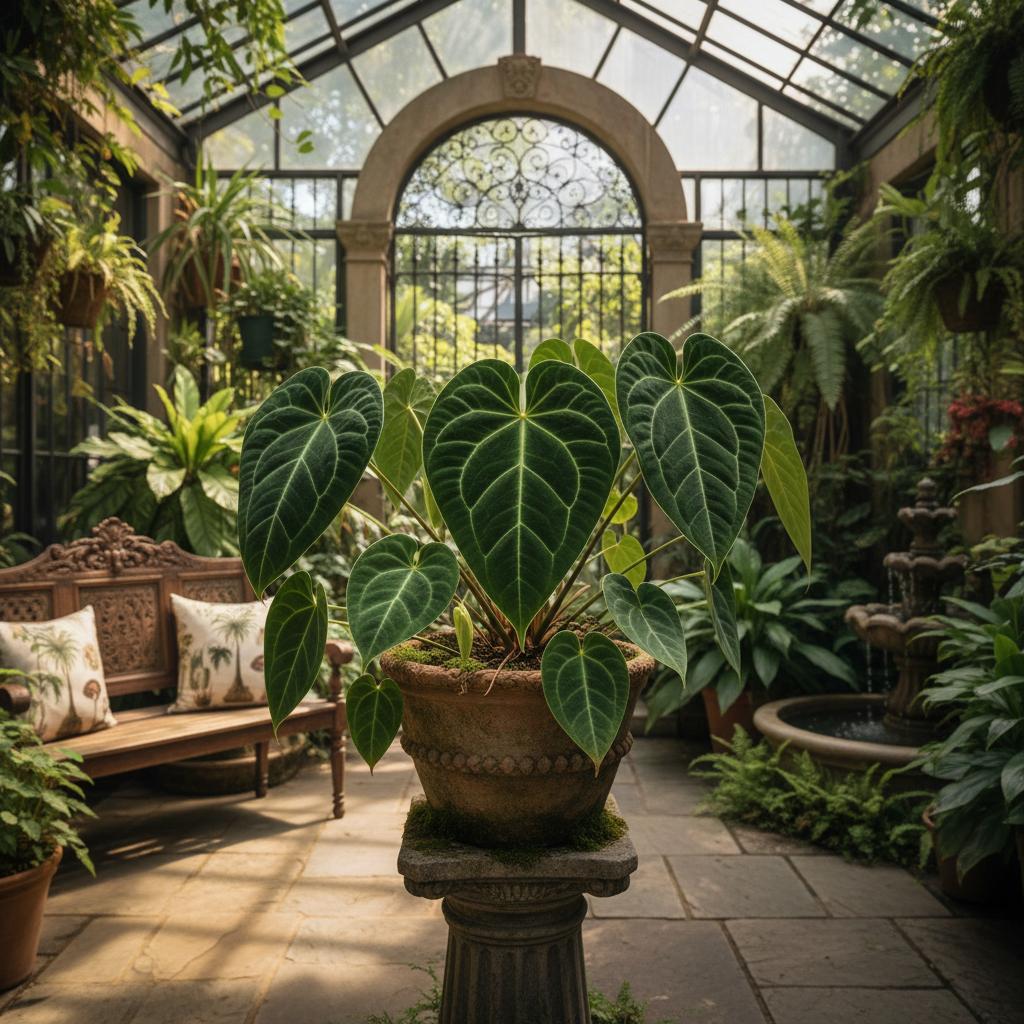
- Leaves: Velvety, dark green, peltate (completely round at the top without a sinus or lobes), featuring prominent silvery-white veins;
- Flowers: Inflorescence consists of a green to purplish spathe and a yellow-green to purple spadix;
- Stem: Short, thick stem, growing as an epiphyte or hemiepiphyte with thick aerial roots.
Care Guide
Water thoroughly when the top inch of soil feels dry, ensuring excellent drainage.
Apply a balanced liquid fertilizer diluted to half strength.. Fertilize regularly during the growing season, but flush the soil occasionally to prevent salt buildup.
Banana Peel Tea:Soak chopped banana peels in water for 24-48 hours. Strain and dilute 1:1 with water. Use as a soil drench. Avoid leaving solid peels on the soil surface to prevent fungus gnats and mold.- Remove yellowing or dead leaves at the base using sterilized shears;
- Trim spent inflorescences to redirect the plant's energy back to foliage production;
- Prune unruly aerial roots only if necessary, though it is better to guide them into the soil.
Toxicity
Warning: this plant may be toxic.
Pets: Toxic to cats per ASPCA; causes oral irritation, pain and swelling of mouth, tongue and lips, excessive drooling, vomiting, and difficulty swallowing.
Humans: Contains calcium oxalate crystals which can cause oral and gastrointestinal irritation if ingested.
Garden Uses & Culture
Culture: Highly sought after in the Western houseplant community for its unique peltate leaf shape, distinguishing it from other veined Anthuriums.
Usage: - Ornamental houseplant; - Greenhouse and terrarium specimen; - Collector's aroid.