 PlantFun
Plant Needs
Characteristics
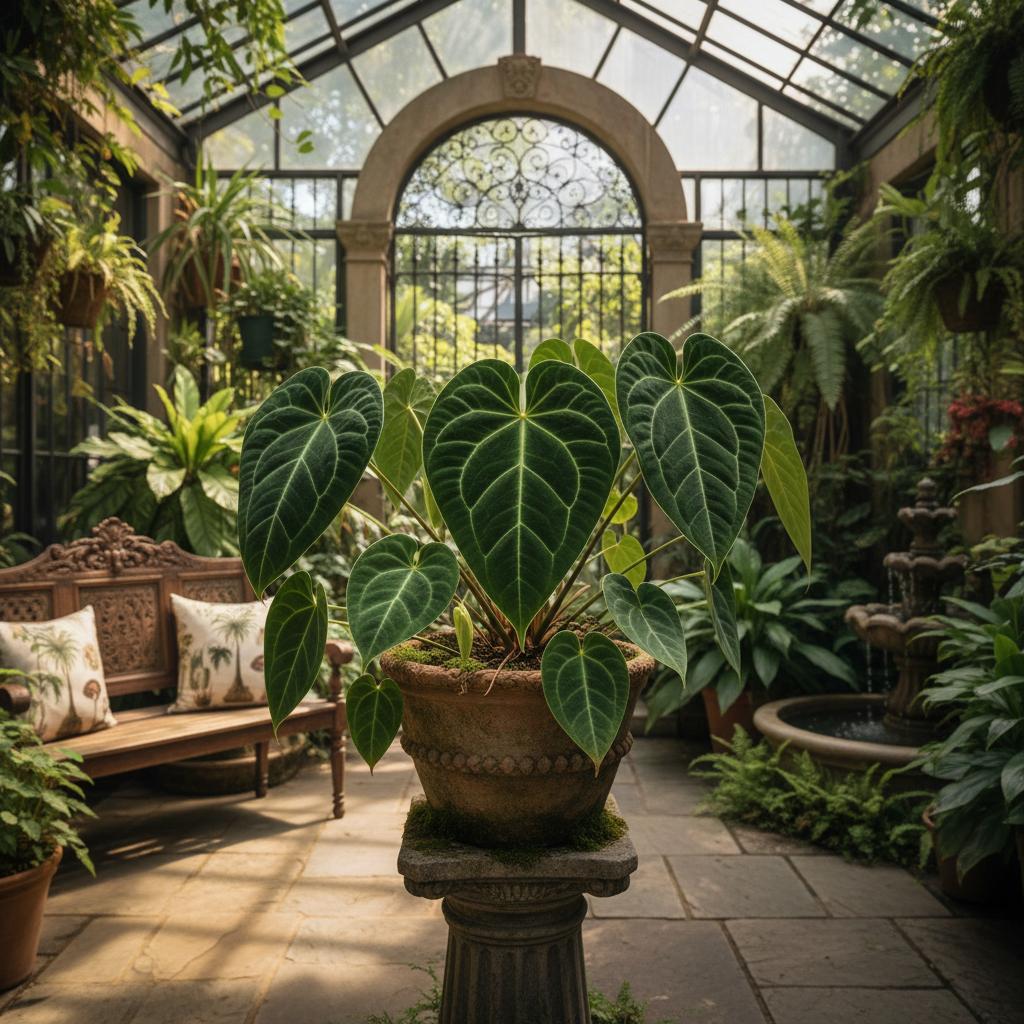
- Leaves: Dark green, velvety, peltate (completely round at the top without the typical sinus/lobes), featuring prominent, shimmering silvery-white venation.
- Flowers: Inflorescence consists of a green to purplish spathe and a yellowish-green to purple spadix, producing small berries when pollinated.
- Stem: Short, robust stem with thick aerial roots adapted for epiphytic clinging.
Care Guide
Water thoroughly when the top inch of the soil mix feels dry to the touch.
Apply a highly diluted, balanced liquid fertilizer to support active foliage growth.. Epiphytes are sensitive to heavy fertilization; always dilute to half or quarter strength.
Banana Peel Tea:Steep chopped banana peels in water for 24 hours. Strain the liquid and dilute 1:1 with fresh water before applying to the soil. Discard the solid peels in the compost to avoid attracting fungus gnats or causing mold on the chunky soil surface.- Foliage: Remove older, yellowing, or damaged leaves at the base of the petiole to maintain aesthetics.
- Inflorescence: Trim away spent flowers to redirect the plant's energy back into producing large leaves.
- Sanitation: Always use sterilized pruning shears to prevent the spread of bacterial or fungal infections.
Toxicity
Warning: this plant may be toxic.
Pets: Toxic per ASPCA; causes oral irritation, pain and swelling of mouth, tongue and lips, excessive drooling, vomiting, and difficulty swallowing.
Humans: Contains calcium oxalate crystals; ingestion causes oral irritation and swelling.
Garden Uses & Culture
Culture: Highly sought after in the Western houseplant collector community, it represents the modern exotic "indoor jungle" aesthetic, prized specifically for its unique, sinus-less leaf shape.
Usage: Cultivated primarily as an ornamental indoor specimen plant or a centerpiece in large terrariums and indoor greenhouses.