 PlantFun
Plant Needs
Characteristics
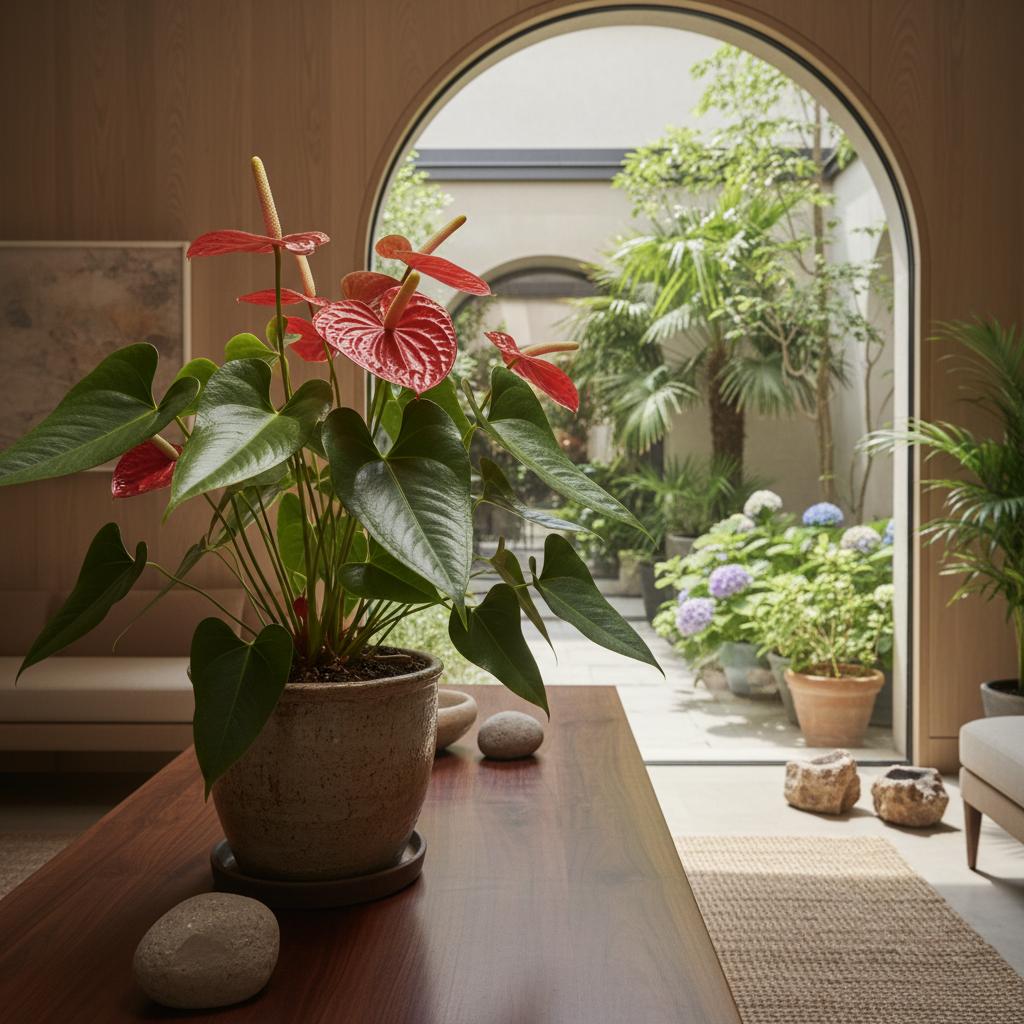
- Leaves: Dark green, highly glossy, deeply cordate (heart-shaped) leaves, 15-30 cm long, attached to long, stiff petioles;
- Flowers: Inflorescence consists of a brightly colored, waxy, heart-shaped spathe (typically red, pink, or white) and a straight, fleshy, protruding spadix (yellow or white) bearing tiny true flowers;
- Stem: Short, erect stem, frequently producing thick aerial roots at the nodes.
Care Guide
Water thoroughly when the top inch of soil feels dry, ensuring excellent drainage.
Apply a balanced, water-soluble fertilizer diluted to 1/4 strength to support new growth.. Avoid over-fertilizing, which can cause salt buildup and burn the sensitive roots.
Banana Peel Tea:Steep chopped banana peels in water for 24 hours. Strain and use the liquid to water the plant to promote blooming. Discard peels in compost to avoid fruit flies and mold.- Remove spent flowers by cutting the stem at the base to redirect the plant's energy;
- Trim away yellowing, damaged, or dead leaves with sterilized pruning shears;
- Wipe leaves regularly with a damp cloth to remove dust, enhance photosynthesis, and deter pests like spider mites.
Toxicity
Warning: this plant may be toxic.
Pets: Toxic to cats per ASPCA. Clinical signs include oral irritation, intense burning of mouth, tongue and lips, excessive drooling, vomiting, and difficulty swallowing.
Humans: Contains insoluble calcium oxalate crystals; chewing or biting can cause immediate pain and irritation of the mouth and throat.
Garden Uses & Culture
Culture: In Western floristry, the heart-shaped spathe is often associated with hospitality, abundance, and exotic beauty, making it a staple in high-end tropical floral arrangements and modern interior design.
Usage: Widely cultivated as an indoor ornamental houseplant and highly valued in the commercial cut-flower industry for its exceptionally long vase life (up to 4-6 weeks).