 PlantFun
Plant Needs
Characteristics
- Leaves: Mid-green, simple or pinnate, lacking twining petioles, meaning it cannot cling to supports on its own;
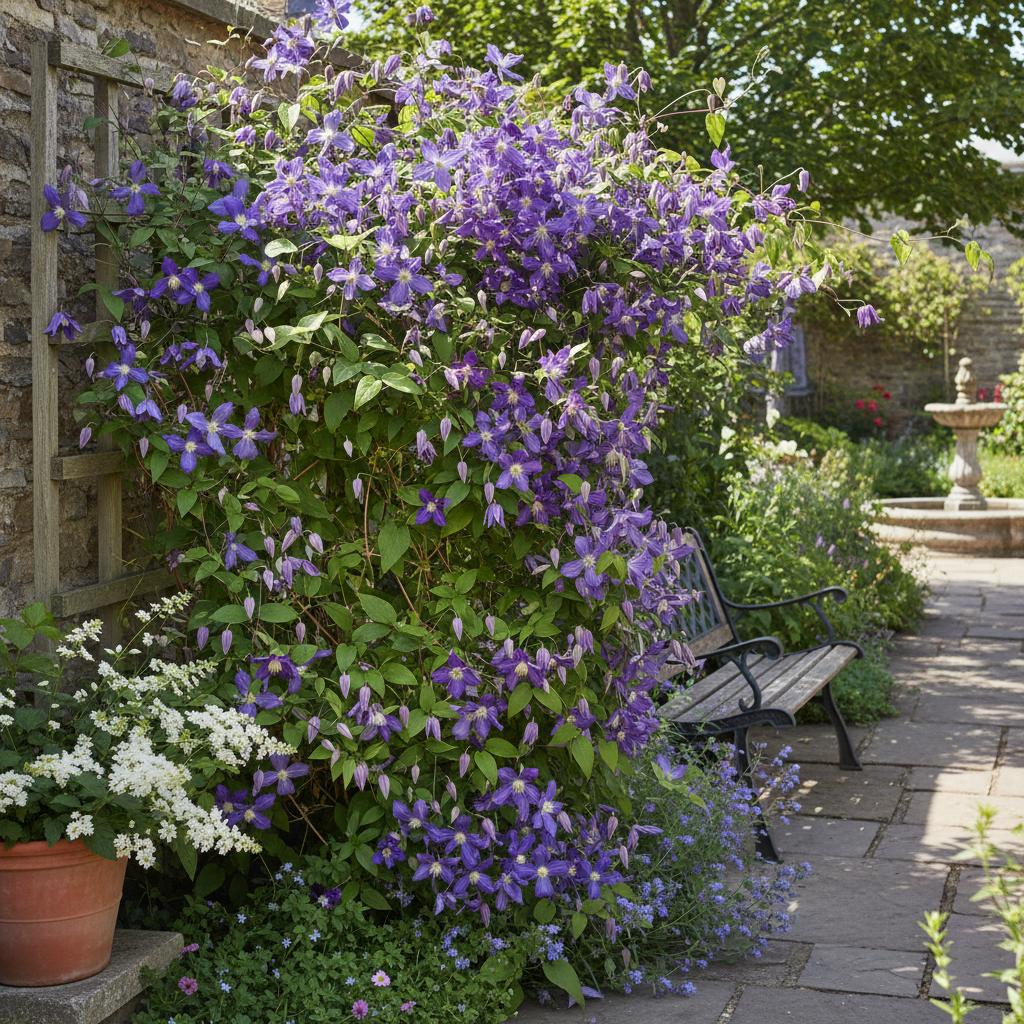
- Flowers: Mauve-blue to rosy-purple, 5-9 cm across, typically with 4-6 tepals that fade to light blue as they age, contrasting with creamy-yellow stamens;
- Stems: Herbaceous to semi-woody, scrambling or trailing habit, dying back to the ground in winter.
Care Guide
Keep consistently moist, watering deeply once or twice a week depending on rainfall.
Apply a balanced slow-release fertilizer as new shoots emerge from the ground.. Clematis are heavy feeders; regular feeding ensures vigorous growth and prolific flowering.
Banana Peel Tea:Steep chopped banana peels in water for 24-48 hours, dilute 1:1 with water, and apply to the base to boost flowering. Avoid leaving the mixture out too long to prevent strong odors and pests.- Belongs to Pruning Group 3 (Hard Pruning);
- Cut back all stems to strong buds about 15-20 cm (6-8 inches) above ground level in late winter or early spring;
- Remove any dead or damaged stems during the growing season to maintain tidiness.
Toxicity
Warning: this plant may be toxic.
Pets: Toxic per ASPCA. Ingestion can cause oral irritation and gastrointestinal upset.
Humans: Contains protoanemonin, which can cause skin irritation upon contact and mild gastrointestinal upset if ingested.
Garden Uses & Culture
Culture: In Victorian flower language, the Clematis symbolizes mental beauty and artifice, often planted around English cottage doors to welcome guests with its sprawling charm.
Usage: Excellent as a ground cover, scrambling through small shrubs or roses, or grown in large containers with an obelisk for support.