 PlantFun
Plant Needs
Characteristics
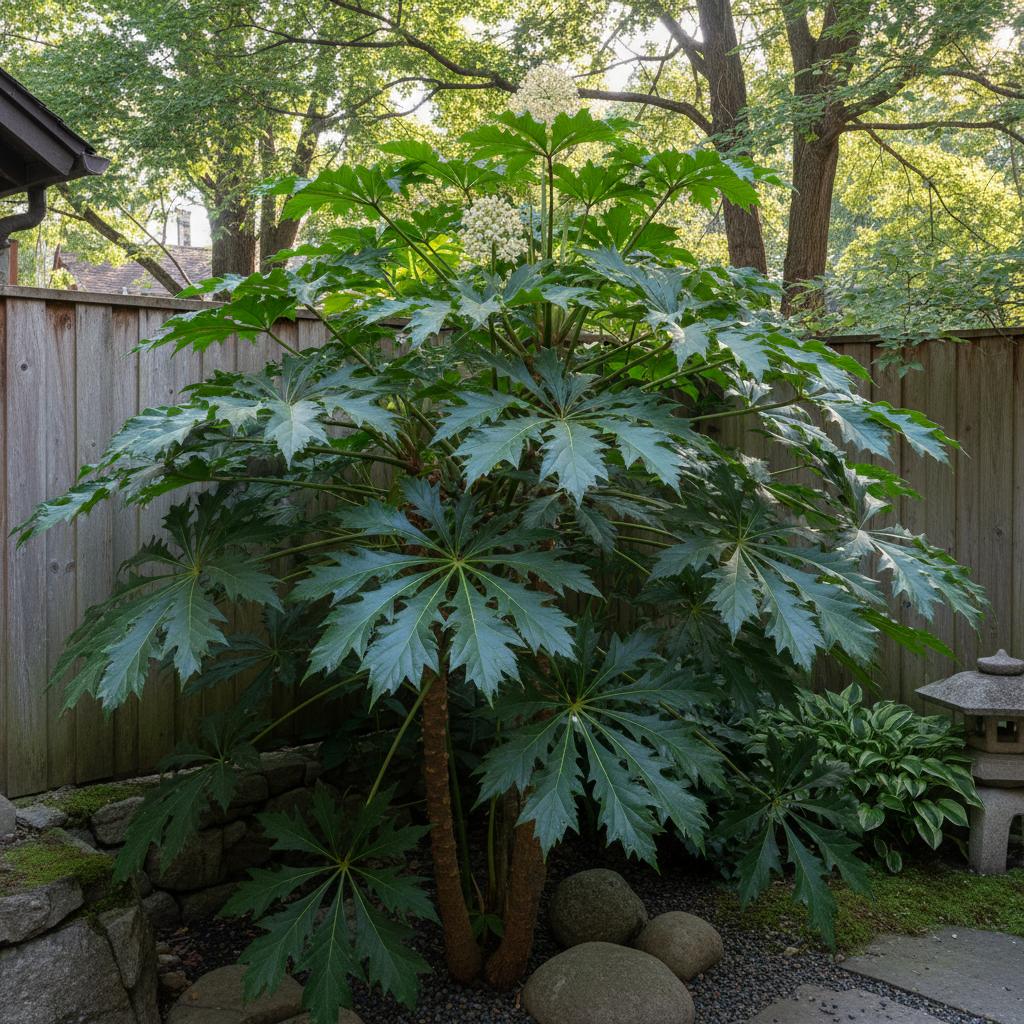
- Leaves: Large, bipinnate or tripinnate, up to 1 meter long, with ovate leaflets and serrated margins;
- Flowers: Small, whitish-cream, arranged in large, showy terminal panicles made of numerous umbels;
- Stems: Stout, usually unbranched or sparsely branched, covered with sharp, stout prickles;
- Fruit: Small, globose, purplish-black drupes appearing in autumn.
Care Guide
Water deeply when the top inch of soil feels dry to maintain even moisture.
Apply a balanced, slow-release organic fertilizer as new leaf buds begin to swell.. A single spring feeding is usually sufficient for healthy foliage and structural growth.
Banana Peel and Coffee Ground Tea:Steep banana peels and a small amount of used coffee grounds in water for 3 days. Dilute 1:3 with water and apply to the soil base. Avoid using uncomposted grounds directly on the soil to prevent mold and high acidity.- Remove dead, damaged, or diseased branches in late winter or early spring before new growth starts;
- Cut back root suckers promptly at the base if you wish to prevent the plant from forming a dense thicket;
- Always wear heavy leather gloves when pruning due to the sharp, stout spines on the stems.
Toxicity
Warning: this plant may be toxic.
Pets: Toxic per ASPCA; ingestion can cause mild gastrointestinal irritation.
Humans: Raw bark, roots, and leaves contain saponins which can cause gastrointestinal upset if ingested in large quantities.
Garden Uses & Culture
Culture: In Western landscaping, it is prized as an architectural specimen plant, bringing a bold, tropical look to temperate gardens in Europe and North America.
Usage: Used in ornamental landscaping as a focal point, in woodland gardens, and as a barrier planting due to its formidable spiny stems.