 PlantFun
Plant Needs
Characteristics
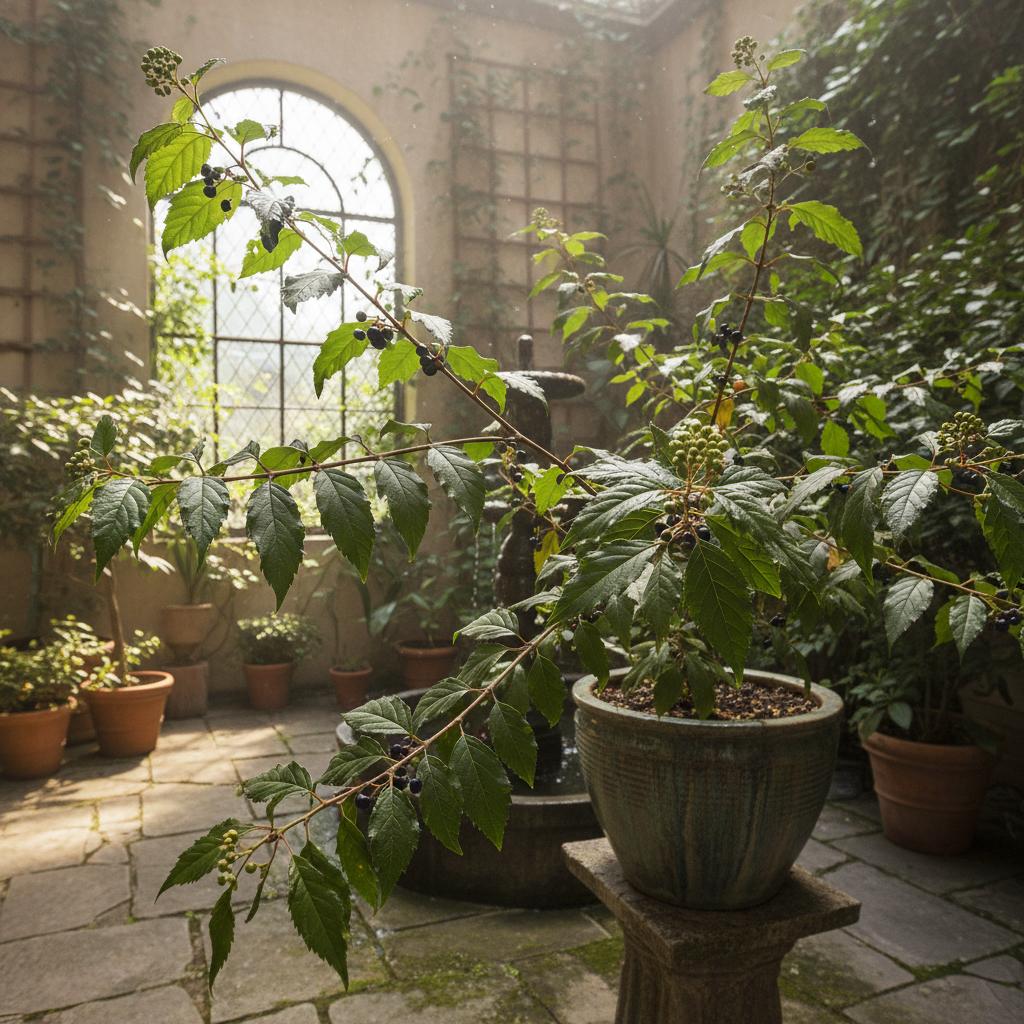
- Leaves: Evergreen, opposite, oval-lanceolate, 3 - 8 cm long, with serrated margins and a glossy dark green surface;
- Flowers: Small, white to yellowish-green, unisexual (dioecious), borne in small axillary panicles;
- Fruit: Small, spherical, dark purple to black berries, approximately 4 - 6 mm in diameter;
- Stems: Slender, flexible branches that are often reddish or purplish when young.
Care Guide
Water deeply when the top inch of soil feels dry to maintain consistent moisture during the growing and fruiting season.
Apply a balanced organic fertilizer at the start of the growing season to support foliage and flower development.. Avoid over-fertilizing, which can promote excessive foliage growth at the expense of fruit production.
Banana Peel Tea:Steep chopped banana peels in water for 24-48 hours, strain, and use the liquid to water the base of the plant. This boosts potassium for better fruiting. Discard the peels in an outdoor compost bin to avoid attracting pests.- Prune in late winter or early spring before new growth begins;
- Remove dead, damaged, or crossing branches to improve air circulation;
- Thin out older stems to encourage the growth of vigorous new shoots, which bear more fruit;
- Shape the canopy to maintain a manageable height for harvesting.
Toxicity
Warning: this plant may be toxic.
Pets: Non-toxic to cats; no adverse effects expected from incidental nibbling.
Humans: Berries are highly nutritious and edible; no toxic effects reported for general handling or consumption.
Garden Uses & Culture
Culture: Deeply rooted in the culture of the indigenous Mapuche people of Chile, the maqui berry has been traditionally consumed as a fermented beverage and food source to impart strength and stamina.
Usage: - **Culinary**: Berries are eaten fresh, dried, or made into jams, juices, and fermented beverages; - **Commercial**: Widely processed into freeze-dried powders for dietary supplements due to high anthocyanin (antioxidant) content; - **Dye**: The dark purple juice is used as a natural food coloring and traditional dye.