 PlantFun
Plant Needs
Sunlight
Requires full sun for optimal blooming and sturdy growth.
Watering
Drought-tolerant once established; prefers dry to medium moisture and infrequent watering.
Temperature
Highly cold hardy (USDA zones 3-9) and exceptionally heat tolerant.
Characteristics
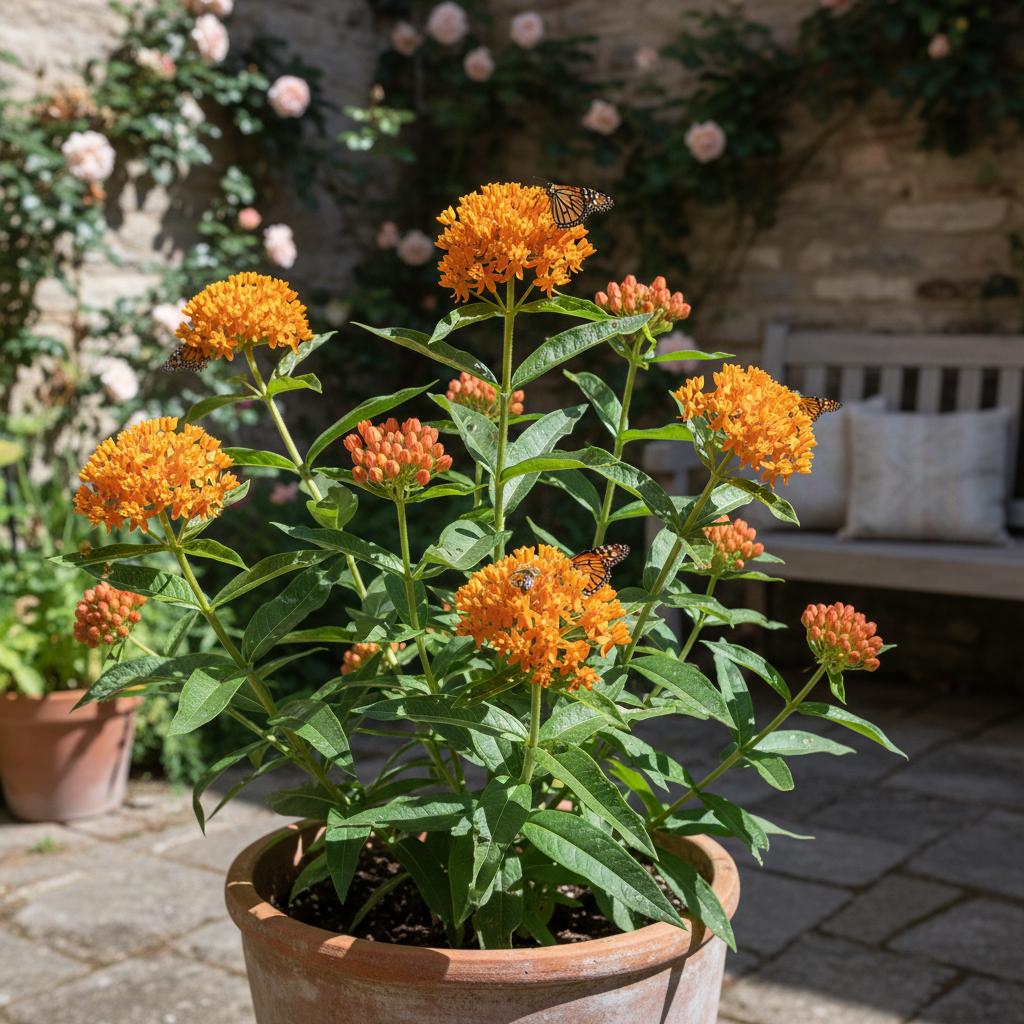
- Leaves: Alternate, lanceolate to oblong, hairy, notably lacking the milky sap typical of most milkweeds;
- Flowers: Bright orange to yellow-orange, arranged in flat-topped umbels (corymbs), featuring 5 reflexed petals and a central corona;
- Fruit: Spindle-shaped follicles that split open to release seeds attached to long, silvery, silky hairs (coma);
- Stem: Erect, hairy, branching near the top, containing clear sap rather than milky latex.
Care Guide
Watering
Water deeply but infrequently, allowing soil to dry out completely between waterings
Fertilization
Apply a light layer of compost if soil is extremely poor. Rarely requires fertilizer; overly rich soil can cause weak, floppy stems.
Banana peel tea:Steep banana peels in water for 24 hours, dilute 1:1 with water, and apply to the base to support blooming. Avoid high salts and do not use uncomposted raw materials directly on the crown.Pruning
- Deadhead spent flowers to encourage a second flush of blooms and prevent aggressive self-seeding;
- Leave some late-season seed pods if you wish to attract birds or harvest seeds;
- Cut back dead stems to the ground in late fall or early spring before new growth emerges.
Toxicity
Warning: this plant may be toxic.
Pets & Humans
Pets: Toxic per ASPCA; ingestion can cause vomiting, profound depression, weakness, and cardiac arrhythmias.
Humans: Contains cardiac glycosides; ingestion of large amounts can cause gastrointestinal and cardiac distress.
Garden Uses & Culture
Culture: A staple in North American pollinator gardens, deeply associated with the conservation of the Monarch butterfly.
Usage: Used in ornamental landscaping, meadow gardens, and as a crucial host plant for Monarch butterfly caterpillars.