 PlantFun
Plant Needs
Characteristics
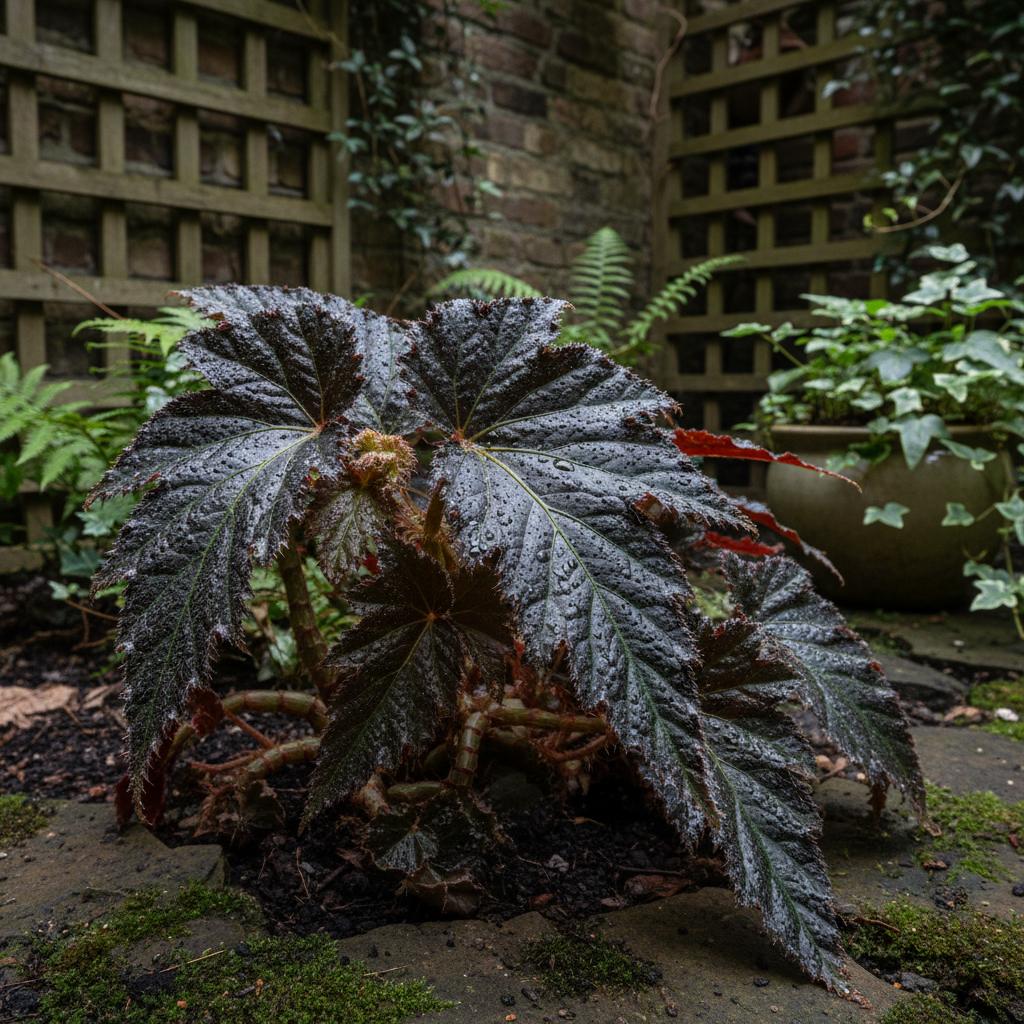
- Leaves: Deeply lobed, star-shaped, velvety texture, dark burgundy to almost black with contrasting pale green or yellowish veins;
- Flowers: Small, pale pink to white, borne on tall stalks extending above the foliage;
- Stems: Creeping rhizomes that grow horizontally along the soil surface, often covered with fine hairs.
Care Guide
Water thoroughly when the top inch of soil feels dry, ensuring good drainage.
Apply a diluted balanced fertilizer to support new foliage growth.. Do not fertilize during the winter dormancy period.
Banana Peel Tea:Steep chopped banana peels in water for 24-48 hours, strain, and dilute 1:1 with fresh water. Apply to the soil to support strong rhizome development. Avoid leaving raw peels on the soil surface to prevent fungus gnats.- Remove dead or fading leaves at the base to maintain a tidy appearance and prevent fungal issues;
- Pinch back leggy growth to encourage a fuller, more compact shape;
- Keep the soil surface clear of fallen debris.
Toxicity
Warning: this plant may be toxic.
Pets: Toxic per ASPCA. Contains soluble calcium oxalates causing oral irritation and gastrointestinal distress. The most toxic part is the underground rhizome/tuber.
Humans: Contains soluble calcium oxalates which can cause minor skin irritation or mild gastrointestinal upset if ingested.
Garden Uses & Culture
Culture: During the Victorian era in Europe, a craze known as "Begoniamania" swept through the upper classes, leading to the extensive cultivation and hybridization of exotic begonia species for indoor display.
Usage: Primarily grown as an ornamental foliage houseplant; excellent for terrariums due to its love for high humidity.