 PlantFun
Plant Needs
Characteristics
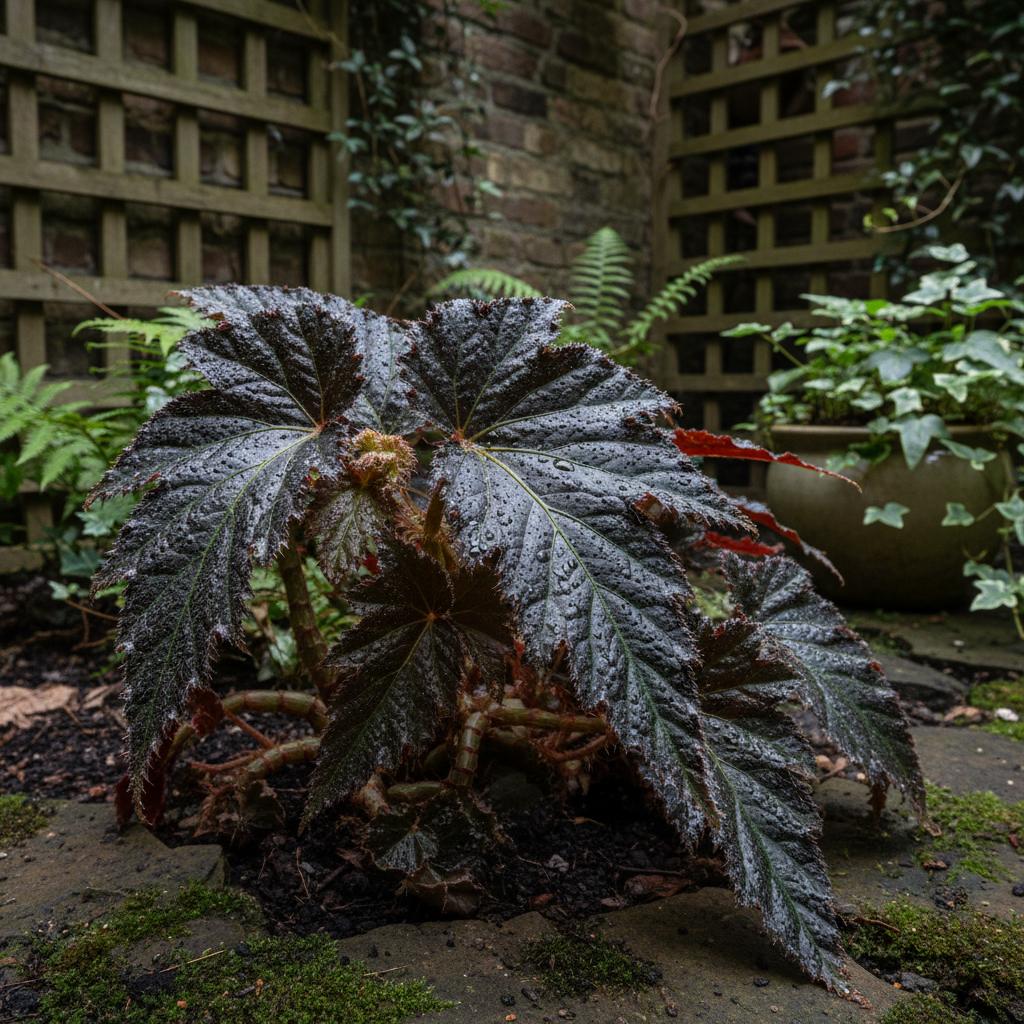
- Leaves: Deep purple-black to almost black, deeply lobed or star-shaped, velvety texture with striking pale green or yellowish radiating veins;
- Flowers: Small, pale pink to white, borne on tall, delicate stalks rising above the foliage;
- Stem: Thick, creeping rhizomes that grow along or just below the soil surface, often covered in fine hairs.
Care Guide
Water thoroughly when the top inch of soil is dry, avoiding splashing water on the leaves.
Apply a balanced, water-soluble fertilizer diluted to half strength.. Do not fertilize during the winter dormancy period.
Banana Peel Tea:Soak chopped banana peels in water for 24 hours, strain, and use the liquid to water the soil. Avoid leaving raw peels on the soil surface to prevent fungus gnats and mold.- Remove dead or yellowing leaves at the base to maintain appearance and prevent fungal issues;
- Snip off spent flower stalks at their base to redirect energy to foliage growth;
- Ensure good air circulation around the rhizomes by thinning out overly dense central growth.
Toxicity
Warning: this plant may be toxic.
Pets: Toxic per ASPCA. Ingestion causes oral irritation, excessive drooling, vomiting, and difficulty swallowing. Rhizomes contain the highest concentration of oxalates.
Humans: Ingestion may cause irritation of the mouth, lips, and throat due to insoluble calcium oxalate crystals.
Garden Uses & Culture
Culture: Begonias have been cherished in Victorian glasshouses and modern indoor gardens alike for their dramatic foliage and excellent shade tolerance.
Usage: Primarily grown as an ornamental houseplant, in shaded terrariums, or as a striking focal point in greenhouse collections.