 PlantFun
Plant Needs
Characteristics
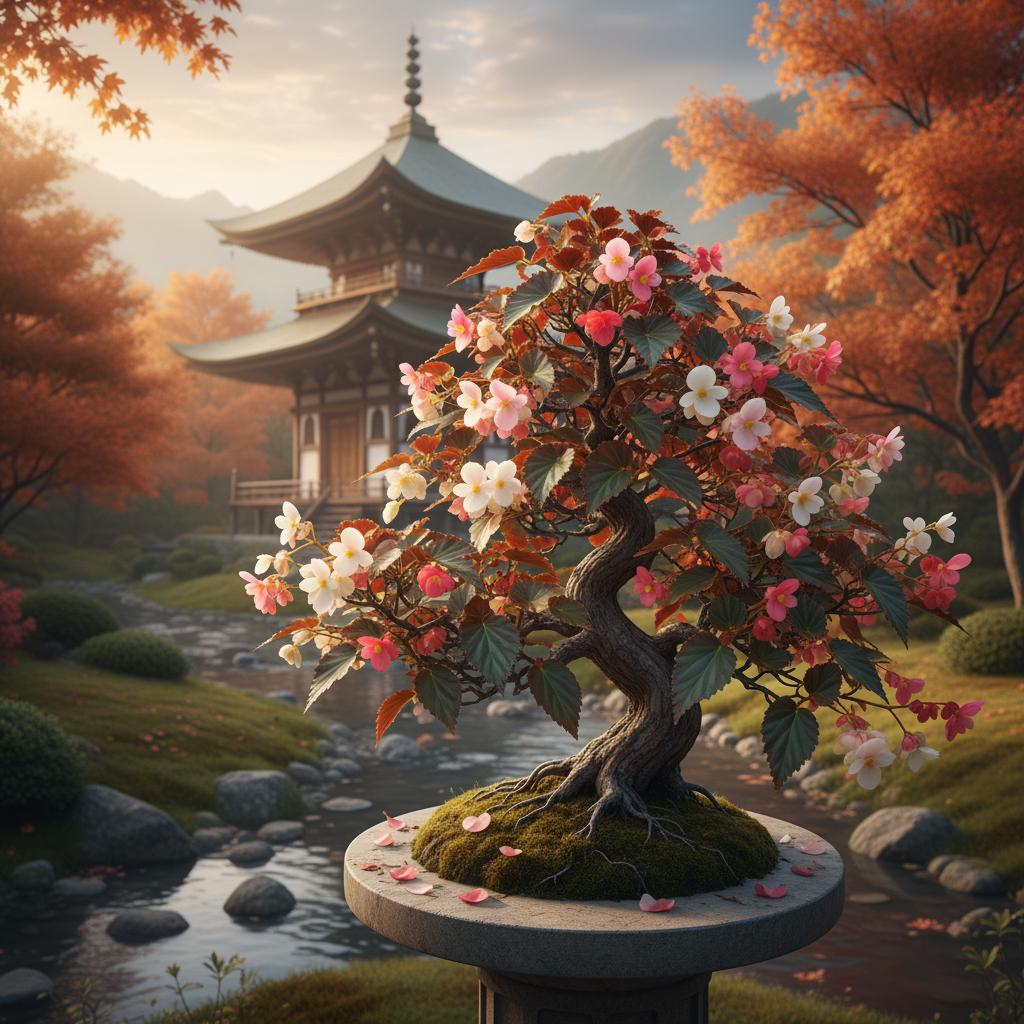
- Leaves: Fleshy, waxy, ovate to rounded, green or bronze-red, with an asymmetrical base typical of the genus;
- Flowers: Small, single or double, borne in axillary clusters, colors range from white and pink to deep red; monoecious with distinct male and female flowers;
- Stem: Succulent, fleshy, highly branched, forming a compact mound, often trained into a miniature bonsai-like shape in pots;
- Roots: Fibrous root system, lacking the large tubers found in some other begonia species.
Care Guide
Water thoroughly when the top inch of soil feels dry, ensuring good drainage.
Apply a balanced liquid fertilizer to support new growth and blooms.. Do not over-fertilize, as this can cause excessive foliage growth at the expense of flowers.
Banana Peel Tea:Soak chopped banana peels in water for 24-48 hours. Strain and dilute 1:1 with water. Apply to soil to promote continuous blooming. Discard the solid peels in compost to avoid attracting fungus gnats.- Pinch back the growing tips regularly to encourage a bushier, bonsai-like compact form;
- Remove spent flowers (deadheading) to redirect energy into new blooms;
- Trim away any yellowing or damaged leaves at the base to improve air circulation.
Toxicity
Warning: this plant may be toxic.
Pets: Toxic per ASPCA. Ingestion causes oral irritation, excessive drooling, vomiting, and difficulty swallowing.
Humans: Contains soluble calcium oxalates; ingestion can cause mild mouth and stomach irritation.
Garden Uses & Culture
Culture: In Victorian flower language, begonias symbolize caution, deep thoughts, or a fanciful nature, often gifted to signify a watchful eye.
Usage: Widely used as an ornamental bedding plant, in hanging baskets, window boxes, and as a compact indoor potted plant (sometimes styled as a pseudo-bonsai).