 PlantFun
Plant Needs
Characteristics
- Leaves: Ovate to heart-shaped, dark green, alternate, with slightly wavy margins;
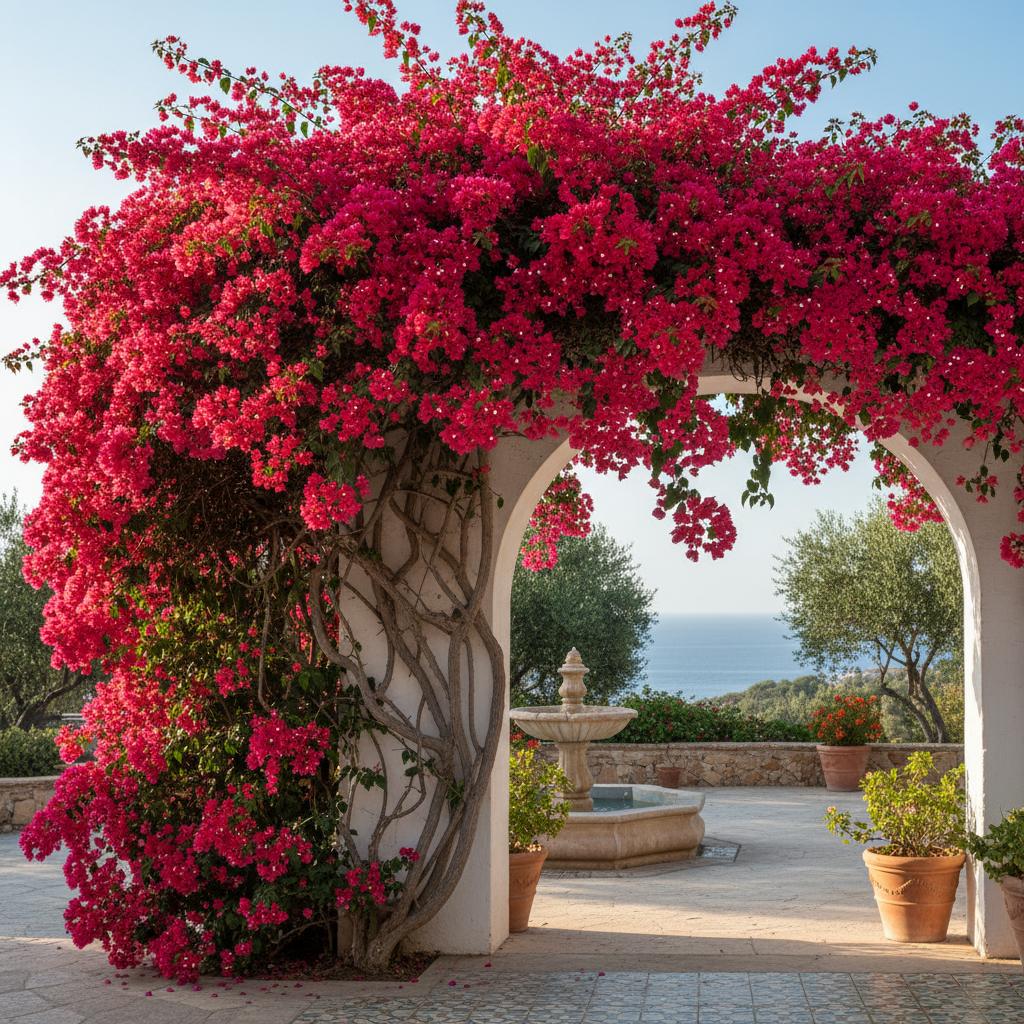
- Flowers: True flowers are small, tubular, and white to cream-colored, surrounded by three large, showy, papery magenta-red bracts;
- Stems: Woody, vigorous, armed with sharp thorns that aid in scrambling over supports;
- Bark: Pale brown and deeply furrowed on older, mature trunks.
Care Guide
Water deeply once a week, allowing soil to dry out between waterings to encourage blooming
Apply a balanced organic feed to promote blooming. Requires regular feeding during the growing season to support its rapid growth and heavy blooming.
Banana Peel Tea:Steep chopped banana peels in water for 24-48 hours. Strain and use the liquid to water the plant. High potassium encourages vibrant bract production. Discard peels in compost to avoid attracting pests.- Prune heavily in late winter or early spring before new growth begins to shape the plant and encourage branching;
- Wear thick gloves to protect against sharp thorns;
- Pinch off the tips of new growth during the growing season to promote bushiness and more blooms;
- Remove dead or diseased wood promptly.
Toxicity
Warning: this plant may be toxic.
Pets: Mildly toxic per ASPCA; ingestion of leaves or bracts can cause vomiting and diarrhea.
Humans: Sap may cause skin irritation; thorns can cause mechanical injury and dermatitis. Ingestion may cause mild gastrointestinal upset.
Garden Uses & Culture
Culture: In Mediterranean and Southern Californian landscapes, Bougainvillea is a staple of Spanish Colonial Revival architecture, often seen cascading over white stucco walls.
Usage: Used as a climbing vine for trellises, pergolas, and walls; excellent as a barrier hedge due to thorns; adapts well to container gardening and bonsai.