 PlantFun
Plant Needs
Characteristics
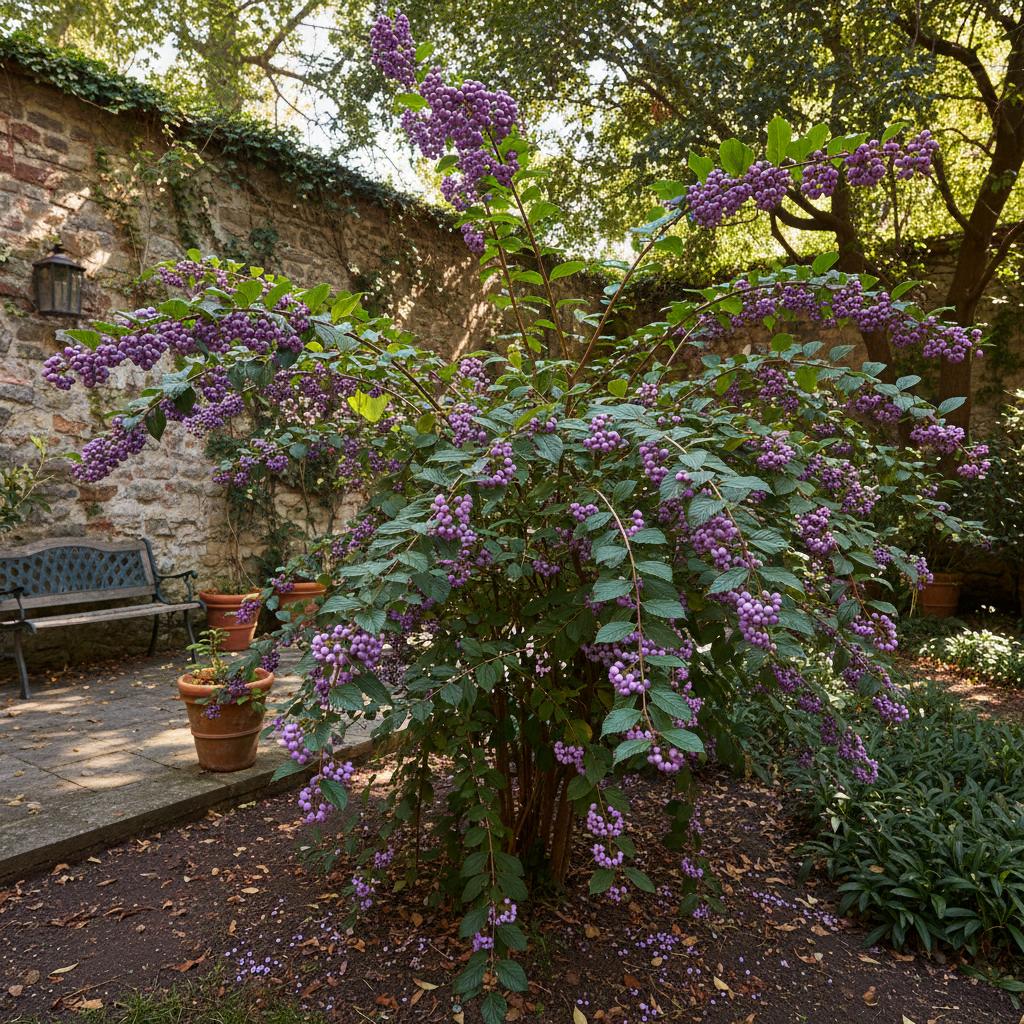
- Leaves: Opposite, simple, elliptical to ovate, 5-15 cm long, with serrated margins and a fuzzy, pubescent underside;
- Flowers: Small, inconspicuous, pale pink, white, or light purple, borne in dense axillary cymes along the stems;
- Fruit: Striking, bright magenta or metallic purple berry-like drupes, 3-6 mm in diameter, tightly clustered around the stems in autumn;
- Stems: Slender, arching branches with light brown to grayish bark and prominent lenticels.
Care Guide
Water deeply once a week, increasing frequency during prolonged dry spells or extreme heat.
Apply a balanced, slow-release organic fertilizer just as new growth emerges.. Do not over-fertilize, as this plant naturally thrives in relatively poor soils.
Banana Peel Tea:Soak chopped banana peels in water for 24-48 hours. Dilute 1:1 with water and apply to the base to promote prolific fruiting. Discard solids in compost to avoid attracting pests.- Prune in late winter or early spring before new growth begins;
- Flowers and fruits develop on new wood, so hard pruning (down to 12-24 inches) encourages a compact, bushy shape and better fruiting;
- Remove dead, diseased, or crossing branches to improve air circulation.
Toxicity
Warning: this plant may be toxic.
Pets: Considered non-toxic to cats per ASPCA guidelines.
Humans: Berries are edible but highly astringent raw; often used to make jellies.
Garden Uses & Culture
Culture: In Southern United States folklore, farmers and woodsmen traditionally crushed the leaves and rubbed them on their skin or placed them under the harnesses of draft animals to ward off mosquitoes, horseflies, and ticks.
Usage: - **Ornamental**: Highly valued in autumn and winter landscapes for its persistent, brightly colored berries; - **Wildlife**: Berries are a crucial late-season food source for songbirds (like mockingbirds and robins) and small mammals; - **Practical**: Scientific studies have confirmed that the leaves contain callicarpenal, a compound proven to repel mosquitoes and ticks.