 PlantFun
Plant Needs
Sunlight
Prefers partial shade to dappled sunlight, especially in hot afternoon climates.
Watering
Requires consistently moist, well-drained soil; do not let it dry out completely.
Temperature
Highly cold tolerant, thrives in temperate climates but struggles in extreme heat.
Characteristics
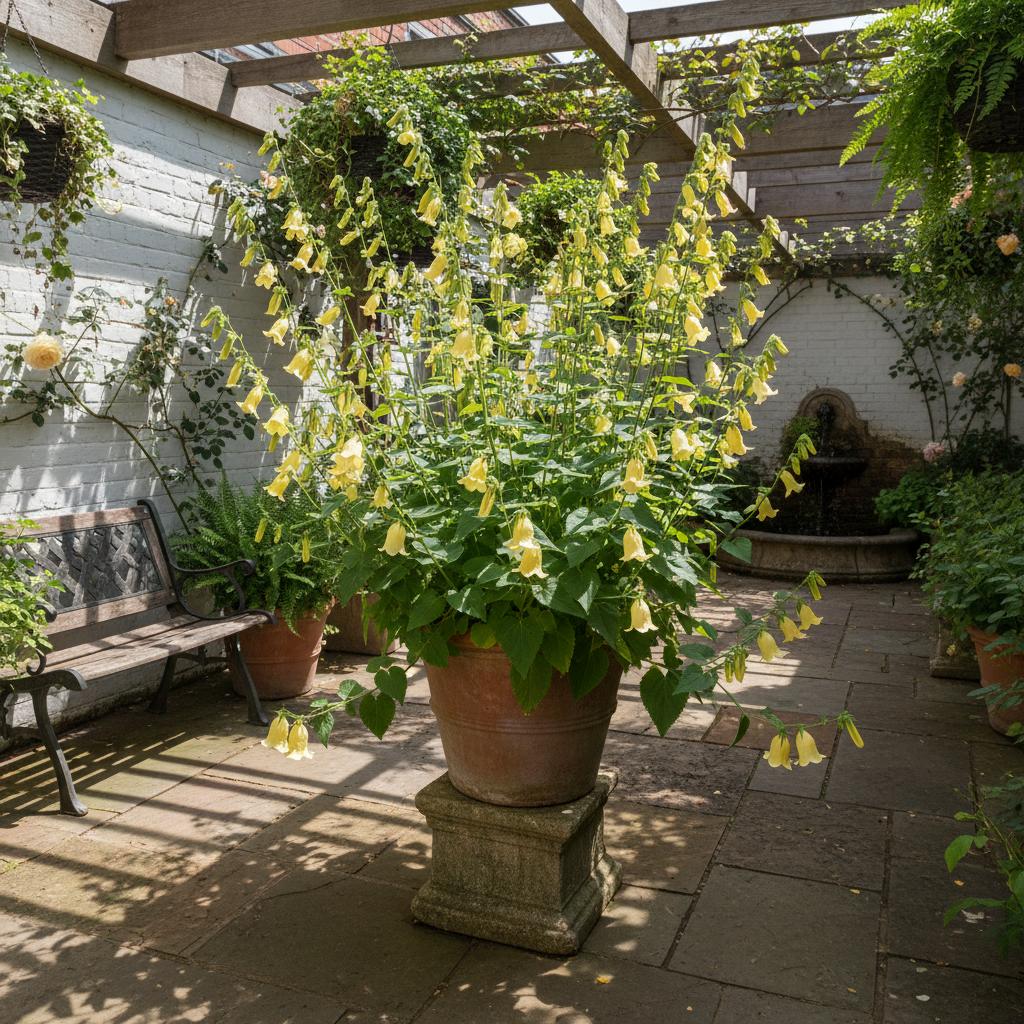
- Leaves: Broadly ovate to lanceolate, up to 15 cm long, with coarsely serrated margins and a slightly rough, pubescent texture;
- Flowers: Large, bell-shaped (campanulate) flowers, pale yellow to creamy-yellow, arranged in a tall, leafy terminal raceme;
- Stem: Erect, sturdy, unbranched, and often slightly angled or hairy.
Care Guide
Watering
Keep soil evenly moist, watering deeply when the top inch feels dry.
Fertilization
Apply a balanced slow-release fertilizer as new growth emerges.. Fertilization recommendations description
Banana Peel Tea:Steep chopped banana peels in water for 24 hours, strain, and use the liquid to promote robust flower development. Avoid leaving raw peels on the soil surface to prevent pests.Pruning
- Deadhead spent flowers to encourage a potential second, smaller flush of blooms;
- Cut back the entire stem to the basal rosette in late autumn after foliage dies back;
- Divide clumps every 3-5 years in early spring to maintain vigor.
Toxicity
Warning: this plant may be toxic.
Pets & Humans
Pets: Non-toxic to cats per ASPCA guidelines for the Campanula genus.
Humans: No known toxicity; generally considered safe for humans.
Garden Uses & Culture
Culture: Bellflowers have long been associated with gratitude and constancy in Victorian floriography, often planted in European cottage gardens as a symbol of unwavering affection.
Usage: Excellent architectural plant for the back of shaded borders, woodland gardens, and cottage-style landscapes.