 PlantFun
Plant Needs
Characteristics
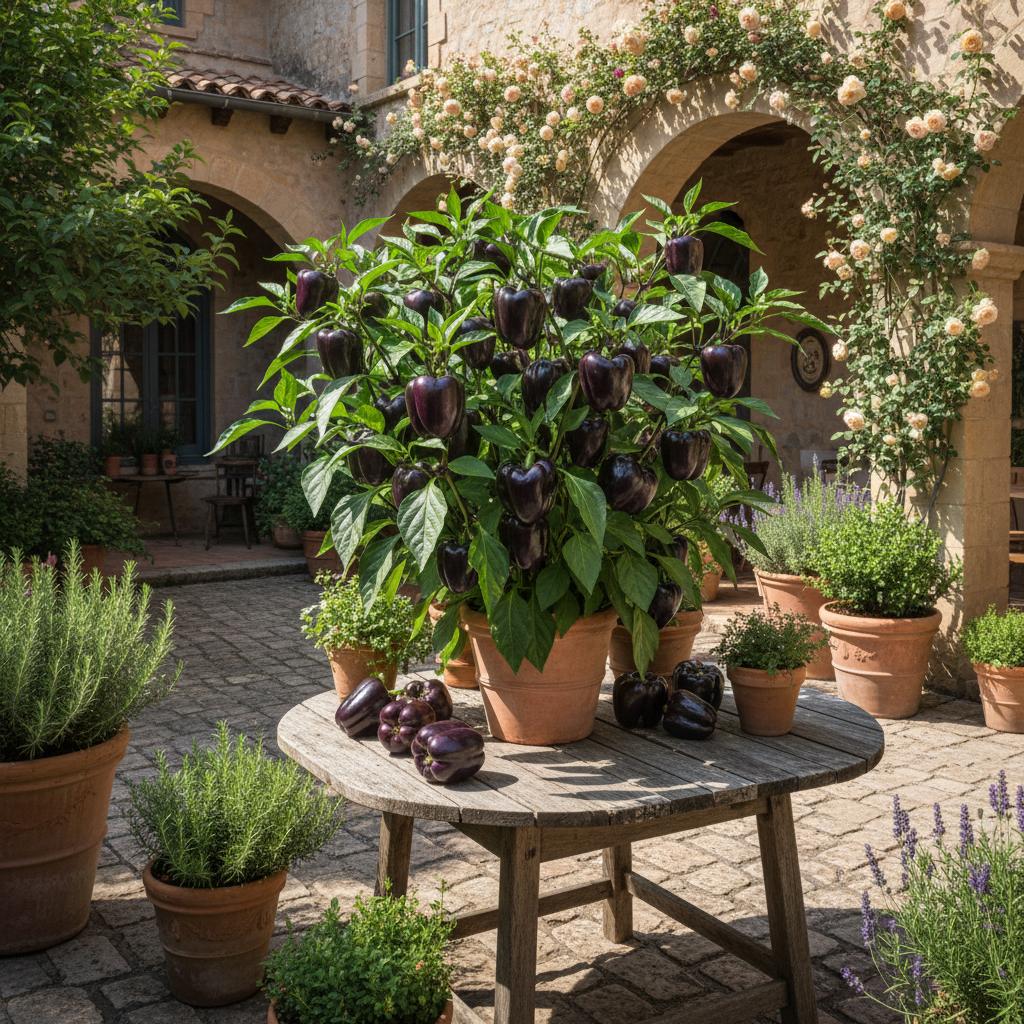
- Leaves: Alternate, ovate to lanceolate, smooth margins, vibrant green, occasionally with slight purplish tinges on the veins;
- Flowers: Small, star-shaped, typically white or greenish-white with 5 to 6 petals, solitary or in small clusters at the nodes;
- Fruit: Blocky, thick-walled berry (bell pepper) that develops a deep, glossy purple color before eventually ripening to red if left on the plant;
- Stem: Upright, branching, green but often exhibiting purplish nodes.
Care Guide
Water deeply and regularly to support rapid growth and fruit development, avoiding waterlogging.
Apply a balanced fertilizer to encourage strong vegetative growth.. Regular feeding is essential for heavy-yielding pepper varieties.
Banana Peel Tea:Soak chopped banana peels in water for 24-48 hours. Dilute 1:1 with water and apply to the soil to promote flowering and fruiting. Discard peels in compost to avoid attracting pests.- Pinch off the first early flowers to encourage the plant to put energy into growing a stronger root system and canopy;
- Remove lower leaves touching the soil to improve airflow and prevent fungal diseases;
- Stake or cage the plant early to support the weight of the developing peppers.
Toxicity
Warning: this plant may be toxic.
Pets: Toxic (per ASPCA) if foliage or unripe green parts are ingested due to solanine-like glycoalkaloids.
Humans: Fruits are completely safe and widely consumed; foliage is generally not eaten but poses no severe risk.
Garden Uses & Culture
Culture: Peppers are a staple in Western culinary traditions. The 'Holland' varieties represent the pinnacle of Dutch greenhouse breeding, which revolutionized the global market by producing thick-walled, vibrantly colored, and perfectly blocky sweet peppers.
Usage: - **Culinary**: Eaten raw in salads for a crisp texture and color contrast, or lightly sautéed, roasted, and stuffed; - **Ornamental**: Grown in patio containers for the striking visual appeal of its deep purple fruits against green foliage.