 PlantFun
Plant Needs
Characteristics
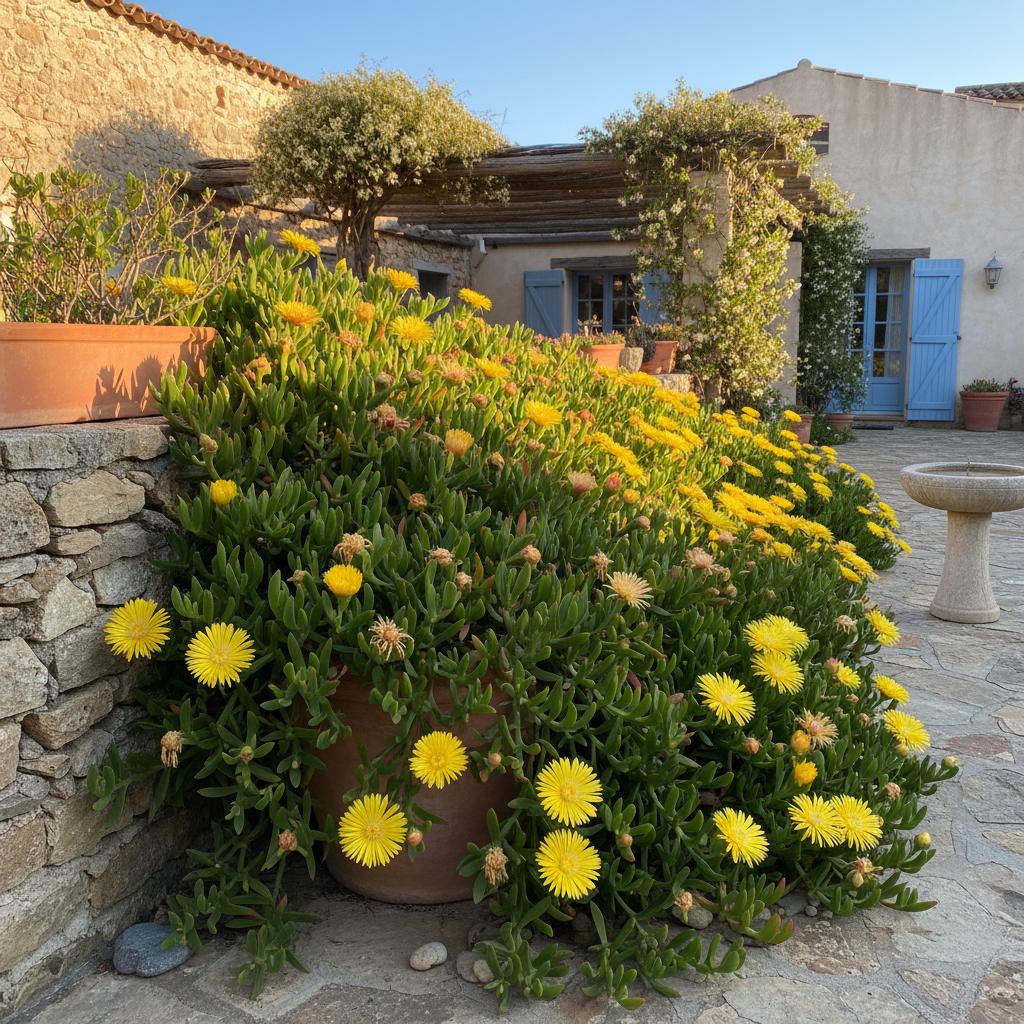
- Leaves: Succulent, sharply three-angled (triangular cross-section), yellowish-green to green, often tinged red at the edges, up to 13 cm long;
- Flowers: Large, solitary, daisy-like, 8-10 cm in diameter, yellow fading to pale pink or magenta, with numerous linear petals;
- Stems: Trailing, rooting at nodes, forming dense mats that can spread several meters;
- Fruit: Fleshy, indehiscent, fig-like, yellowish when ripe and edible.
Care Guide
Water deeply but infrequently, allowing the soil to dry out completely between waterings.
Apply a light, low-nitrogen organic fertilizer if grown in poor soil.. Generally does not require supplemental feeding in its natural or garden habitat.
Banana Peel Tea:Soak chopped banana peels in water for 24-48 hours, strain, and dilute 1:1 with water. Apply during the spring to encourage robust blooming. Avoid leaving raw peels on the soil to prevent pests.- Prune back aggressively after flowering to control its rapid spread;
- Remove dead or rotting undergrowth to improve air circulation;
- Cuttings can be easily rooted to propagate new plants.
Toxicity
Warning: this plant may be toxic.
Pets: Non-toxic per ASPCA guidelines for Ice Plant.
Humans: Non-toxic; the fruits are edible and leaves are sometimes used in traditional remedies.
Garden Uses & Culture
Culture: Widely introduced to California, Australia, and the Mediterranean for soil stabilization along highways and coasts, though it is now often managed as an invasive species due to its aggressive mat-forming habit.
Usage: - **Culinary**: Ripe fruits are used to make a tart, traditional jam; - **Landscaping**: Excellent ground cover for erosion control on steep, sandy slopes; - **Safety**: Used in fire-resistant landscaping due to its high water content.