 PlantFun
Plant Needs
Sunlight
Requires full sun for best blooming and compact growth.
Watering
Drought tolerant once established; water deeply but infrequently.
Temperature
Hardy in USDA zones 5-9; tolerates summer heat well.
Characteristics
- Leaves: Opposite, ovate to lanceolate, 3 - 5 cm long, silvery-green to gray-green, aromatic when crushed, margins entire or slightly toothed;
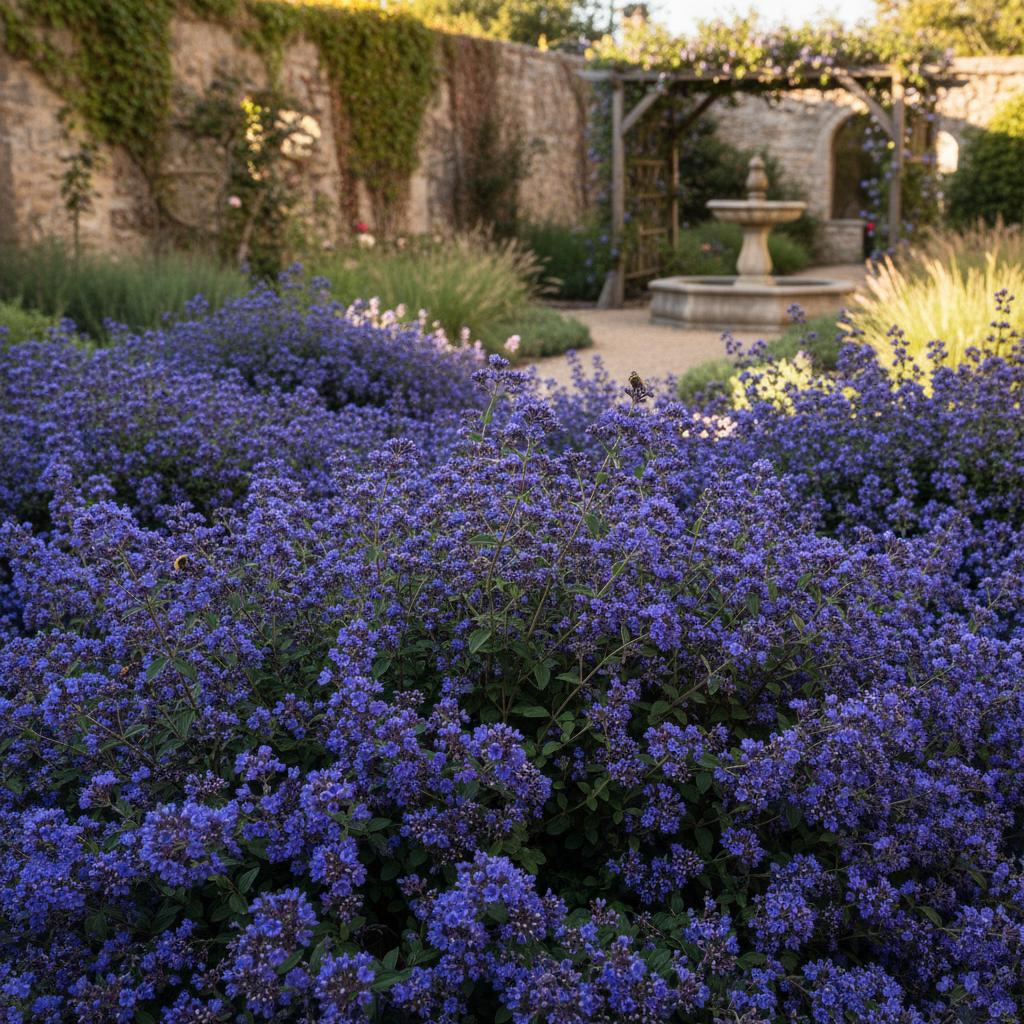
- Flowers: Deep purple-blue, tubular, arranged in dense cymes in the upper leaf axils and stem tips;
- Stems: Slender, woody at the base, grayish-brown, often dying back in colder climates.
Care Guide
Watering
Water deeply once a week during active growth
Fertilization
Apply a light layer of compost or balanced organic fertilizer. Requires minimal feeding; over-fertilization leads to floppy stems and fewer blooms.
Banana Peel Tea:Steep chopped banana peels in water for 24-48 hours. Dilute 1:1 with water and apply to the base in spring to encourage robust late-summer blooming. Discard peels in compost to avoid attracting pests.Pruning
- Cut back hard to 15-20 cm (6-8 inches) above the ground in late winter or early spring;
- Pruning is essential as it blooms vigorously on new wood;
- Remove dead or damaged stems to maintain a rounded, compact shape.
Toxicity
Warning: this plant may be toxic.
Pets & Humans
Pets: Non-toxic to cats (per ASPCA guidelines for the genus).
Humans: Non-toxic to humans.
Garden Uses & Culture
Culture: Highly valued in Western European and North American pollinator gardens for providing crucial late-season nectar for bees and butterflies when other flowers have faded.
Usage: - Shrub borders; - Mass plantings; - Pollinator and butterfly gardens; - Drought-tolerant and xeriscape landscaping.