 PlantFun
Plant Needs
Sunlight
Requires full sun for best blooming and compact growth.
Watering
Drought tolerant once established; requires well-drained soil to prevent root rot.
Temperature
Hardy in USDA zones 5-9; tolerates summer heat well.
Characteristics
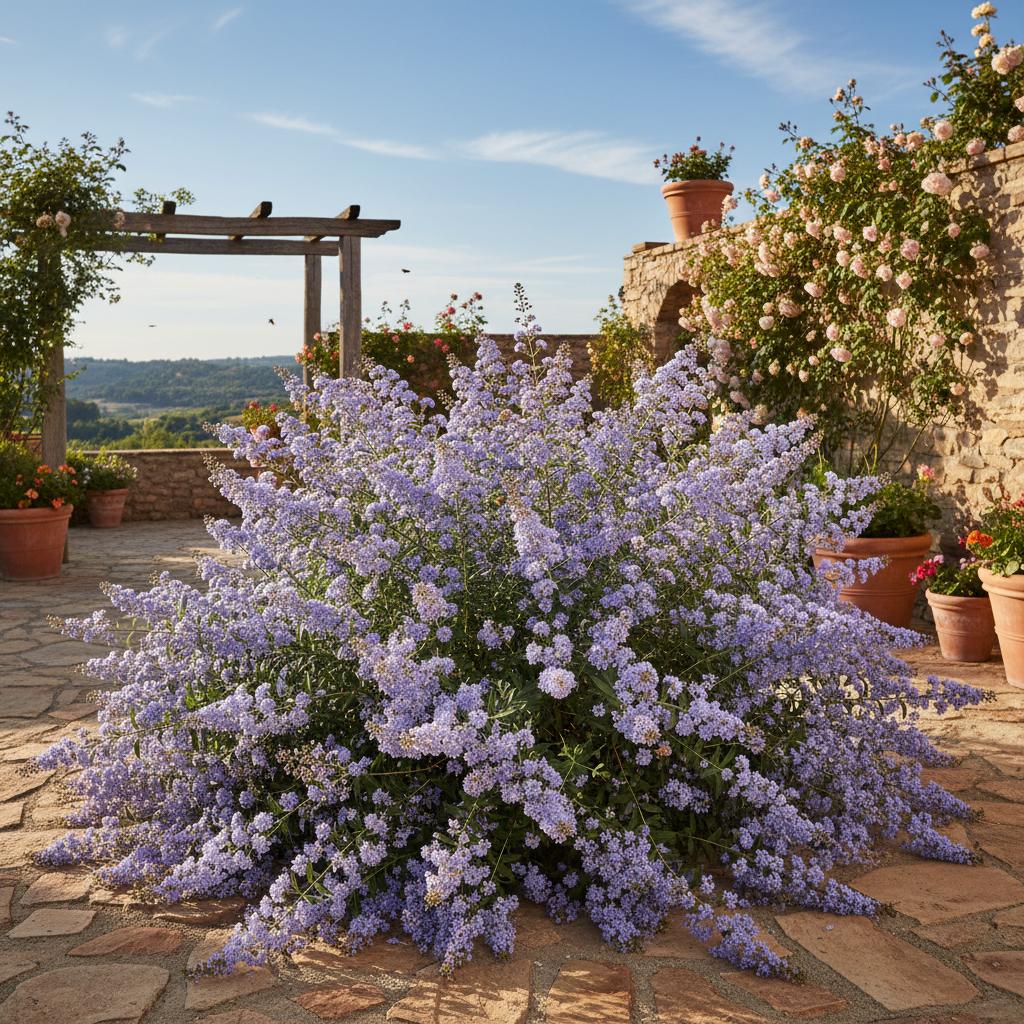
- Leaves: Opposite, ovate to lanceolate, grayish-green above and silvery below, aromatic when crushed, margins irregularly toothed;
- Flowers: Small, tubular, bright blue to purplish-blue, arranged in dense axillary and terminal cymes; prominent stamens extending beyond the corolla;
- Stems: Slender, upright, woody at the base, often dying back to the ground in colder winter climates.
Care Guide
Watering
Water deeply but infrequently, allowing the top few inches of soil to dry out completely between waterings.
Fertilization
Apply a light layer of compost or a balanced organic fertilizer as new growth emerges.. Requires minimal feeding; over-fertilization leads to floppy stems.
Banana Peel Tea:Steep chopped banana peels in water for 24-48 hours. Strain and use the liquid to water the base of the plant to encourage prolific late-summer blooming. Discard solids in compost to avoid attracting pests.Pruning
- Cut back all stems to about 6-8 inches from the ground in late winter or early spring;
- Blooms on new wood, so hard pruning encourages vigorous growth and better shape;
- Remove any dead or damaged wood after the last frost.
Toxicity
Warning: this plant may be toxic.
Pets & Humans
Pets: Non-toxic to cats (per ASPCA general guidelines).
Humans: Generally considered non-toxic to humans.
Garden Uses & Culture
Culture: Originated in the 1930s in the garden of Arthur Simmonds in Clandon, Surrey, England, quickly becoming a staple in British and American late-summer borders for its striking color.
Usage: Excellent for perennial borders, pollinator gardens, xeriscaping, and as a low hedge.