 PlantFun
Plant Needs
Characteristics
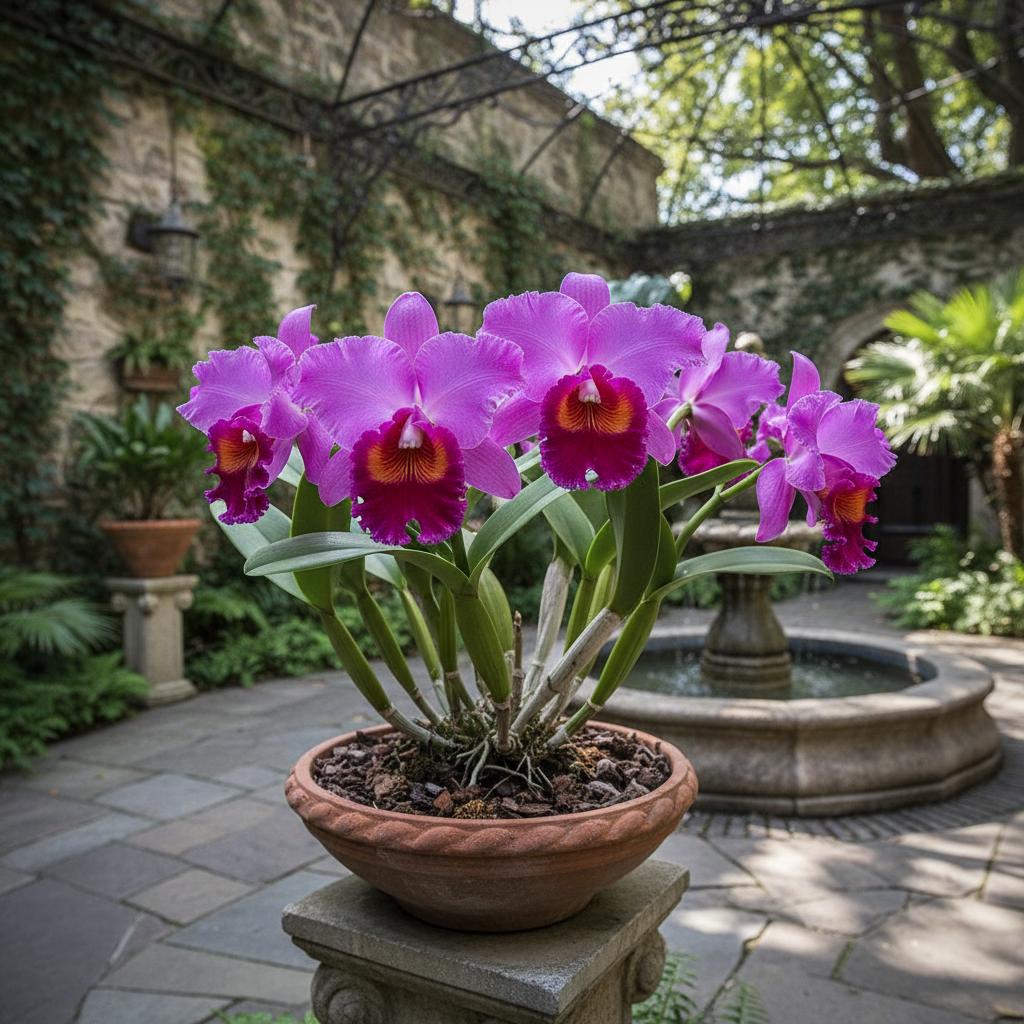
- Leaves: Leathery, oblong to elliptic, typically one per pseudobulb (unifoliate), dark green and rigid;
- Flowers: Large, showy, 15-20 cm across, petals and sepals usually lilac or pink, with a prominent, ruffled, deep magenta-crimson lip (labellum) featuring a yellow throat;
- Stems: Clavate (club-shaped) pseudobulbs that store water and nutrients, covered in papery sheaths when young;
- Roots: Thick, fleshy epiphytic roots covered in a silvery, spongy velamen layer for moisture absorption.
Care Guide
Water thoroughly, allowing water to flush through the pot, then let the medium dry out before watering again.
Apply a balanced, water-soluble orchid fertilizer diluted to 1/4 strength.. Flush the pot with plain water once a month to prevent salt buildup from fertilizers.
Banana Peel Tea:Soak chopped banana peels in water for 24-48 hours, strain, and dilute 1:1 with fresh water. Use this to water the orchid to encourage strong blooming. Avoid leaving solid peel pieces in the pot to prevent mold and fungus gnats.- Flower Spikes: Cut spent flower spikes down to the base of the sheath using sterilized pruning shears;
- Pseudobulbs: Never remove green, healthy pseudobulbs, even if leafless, as they store vital energy and water;
- Roots: Trim only dead, hollow, or mushy brown roots during repotting; leave firm, white or green roots intact.
Toxicity
Warning: this plant may be toxic.
Pets: Non-toxic to cats (per ASPCA).
Humans: Non-toxic to humans; safe to handle.
Garden Uses & Culture
Culture: Often referred to as the "Queen of Orchids," the Cattleya became the ultimate symbol of luxury, wealth, and high society in Victorian England. It was the classic "corsage orchid" worn by women to formal events in the mid-20th century.
Usage: Highly prized ornamental houseplant, greenhouse specimen, and a foundational species in the creation of thousands of complex orchid hybrids.