 PlantFun
Plant Needs
Characteristics
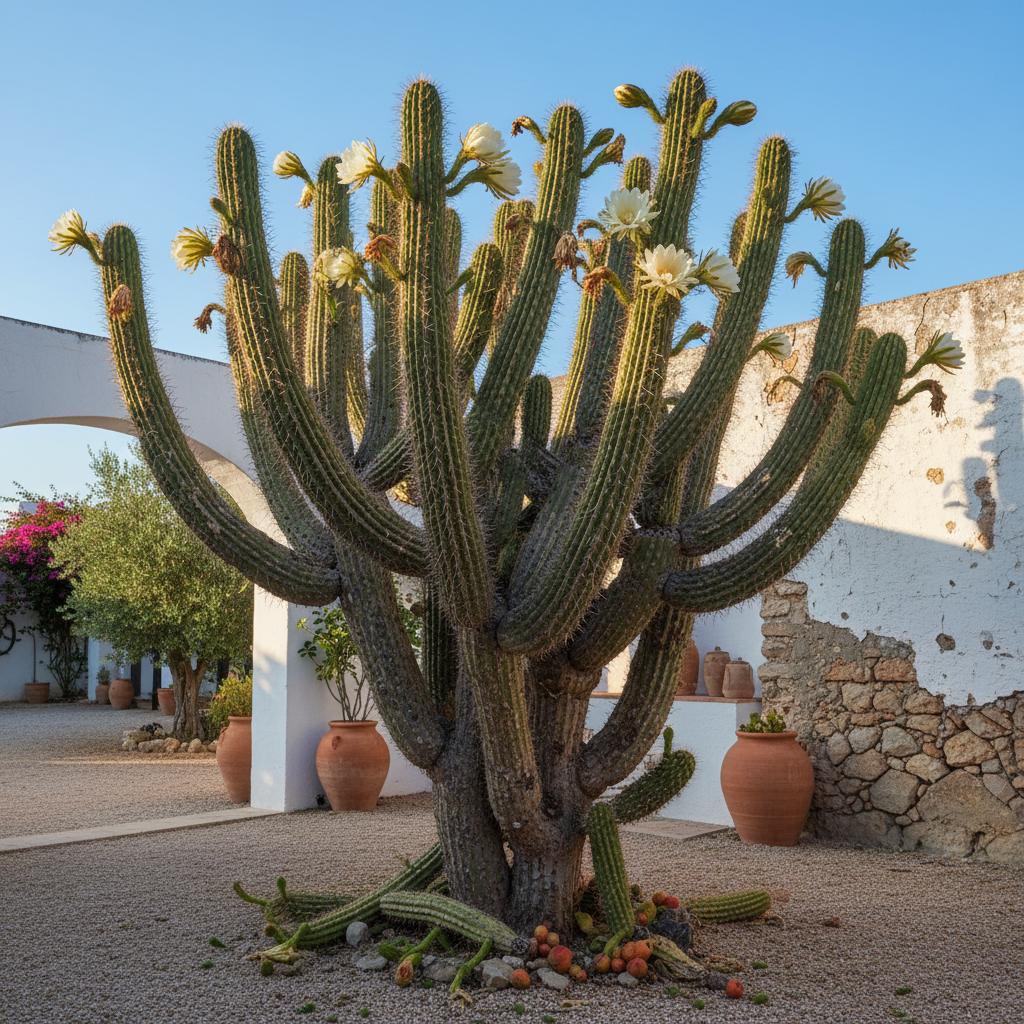
- Stems: Cylindrical, gray-green to blue-green, ribbed (usually 5-9 ribs), with areoles bearing small brown or gray spines;
- Flowers: Large, nocturnal, white to cream-colored, up to 15 cm in diameter, blooming for a single night;
- Fruits: Edible, thornless, apple-red to yellow exterior with white, seed-speckled flesh;
- Roots: Shallow but extensive fibrous root system adapted to quickly absorb rare rainfall.
Care Guide
Water thoroughly when the soil is completely dry.
Apply a light dose of fertilizer to support new growth.. Use a low-nitrogen, high-potassium fertilizer during the active growing season.
Banana Peel Tea:Soak chopped banana peels in water for 24-48 hours, strain, and dilute 1:1 with water. Use during the summer to encourage blooming. Discard the solid peels in the compost; do not leave raw peels on the soil surface to avoid attracting pests.- Height Control: Cut the top off with a sterilized saw or knife if it grows too tall for your space;
- Propagation: Allow any cut sections to callus over in a dry, shaded area for 1-2 weeks before planting in dry soil;
- Aesthetics: Remove any dead or severely scarred tissue to maintain a clean appearance.
Toxicity
Warning: this plant may be toxic.
Pets: Non-toxic to cats per ASPCA.
Humans: Non-toxic; the fruits are edible and commonly consumed.
Garden Uses & Culture
Culture: In Western horticulture and landscaping, large columnar cacti like the Peruvian Apple Cactus are iconic symbols of the desert aesthetic, often representing resilience, endurance, and architectural beauty in arid environments.
Usage: - **Ornamental**: Popular as a striking architectural landscape plant or a large indoor specimen; - **Culinary**: Cultivated for its sweet, edible fruits known as "pitaya" or "Peruvian apples"; - **Boundary**: Historically used as a living fence or hedge in its native range.