 PlantFun
Plant Needs
Characteristics
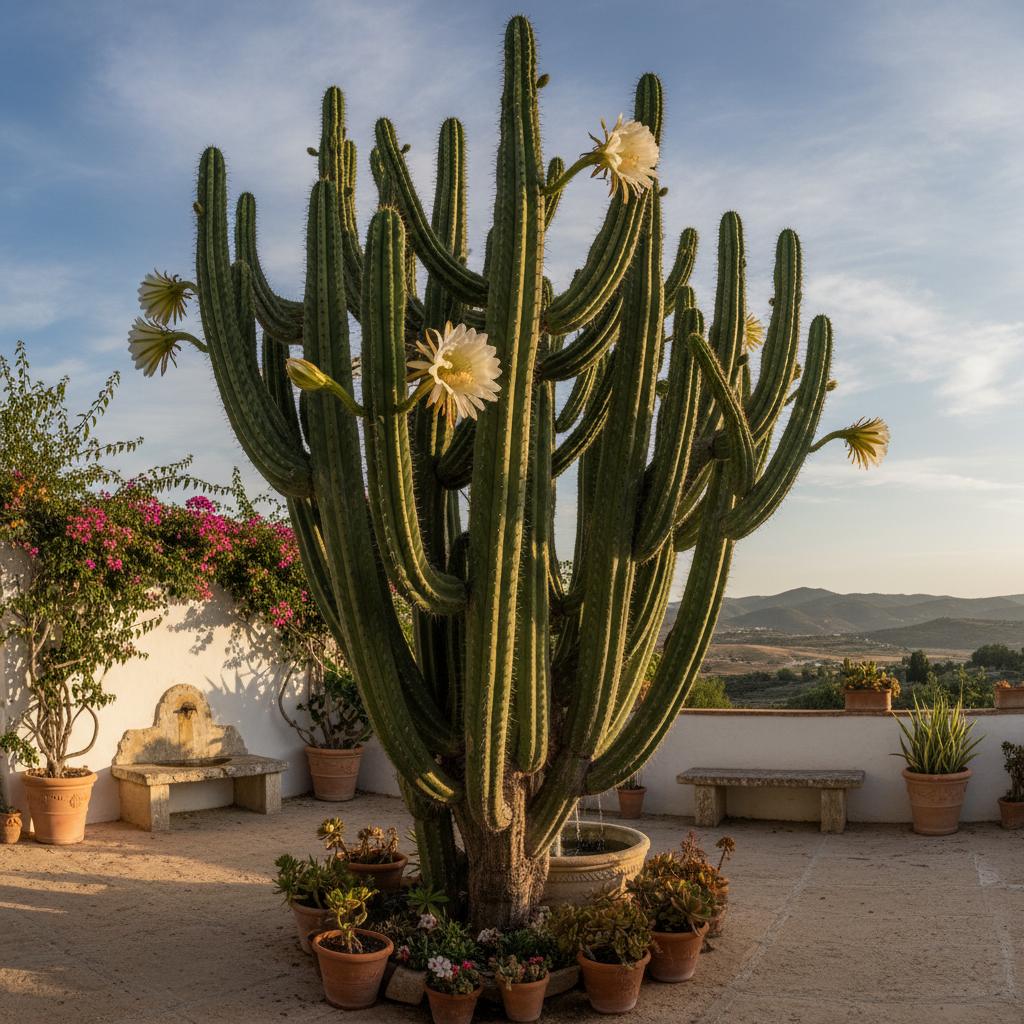
- Stems: Cylindrical, gray-green to blue-green, ribbed (usually 9-10 ribs), with areoles bearing small brown or gray spines;
- Flowers: Large, nocturnal, white to cream-colored, up to 15 cm long, blooming for a single night;
- Fruits: Globose to ovoid, thornless, red to yellow exterior with white, seed-speckled edible flesh;
- Roots: Shallow but extensive fibrous root system adapted to quickly absorb rare rainfall.
Care Guide
Water deeply but infrequently, allowing soil to dry completely.
Apply a diluted, low-nitrogen fertilizer.. Fertilize only during the active growing season to support blooming and fruiting.
Banana Peel Tea:Steep chopped banana peels in water for 24 hours, strain, and use the liquid to water the cactus. This provides potassium to encourage large nocturnal blooms. Avoid leaving solid peels on the soil to prevent fruit flies and rot.- Height Control: Cut the top off with a sterile saw if the cactus grows too tall;
- Propagation: Allow any cut sections to callus over in a dry, shaded spot for 1-2 weeks before planting in dry soil;
- Aesthetic: Remove any dead or severely scarred lower branches to maintain a clean appearance.
Toxicity
Warning: this plant may be toxic.
Pets: Non-toxic per ASPCA, but sharp spines pose a physical hazard to eyes and skin.
Humans: Non-toxic; fruits are edible and widely consumed, though spines can cause mechanical injury.
Garden Uses & Culture
Culture: In South America and parts of the Caribbean, these towering cacti are frequently planted close together to form impenetrable living fences around properties.
Usage: - **Ornamental**: Striking architectural plant for xeriscaping and desert gardens; - **Culinary**: The thornless fruits (often called "pitaya de cardón") are sweet, refreshing, and eaten fresh; - **Wood**: The dried woody skeletons of dead stems are sometimes used in rustic furniture or crafts.