 PlantFun
Plant Needs
Sunlight
Requires bright, indirect light; direct sun can scorch the delicate leaves.
Watering
Keep the soil consistently moist but not waterlogged; requires high ambient humidity.
Temperature
Thrives in warm temperatures; highly sensitive to cold drafts and temperatures below 15°C.
Characteristics
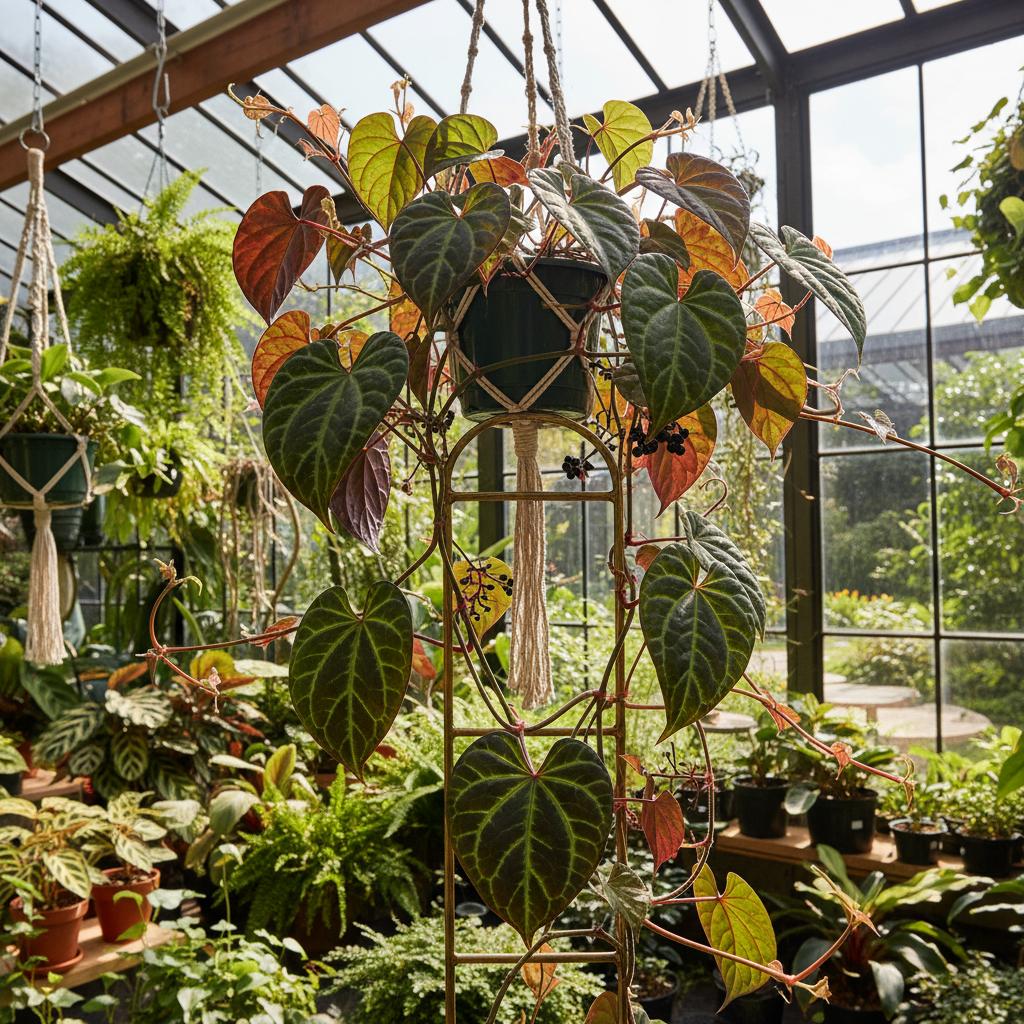
- Leaves: Elongated, cordate (heart-shaped) leaves, dark green with prominent silvery-white mottling between the veins, and deep burgundy-red undersides;
- Stems: Slender, reddish-purple, climbing stems equipped with tendrils for attachment;
- Flowers: Inconspicuous, small, pale yellow to greenish flowers arranged in cymes, rarely blooming indoors;
- Roots: Fibrous root system, occasionally forming small tubers.
Care Guide
Watering
Water thoroughly when the top inch of soil feels dry, maintaining even moisture.
Fertilization
Apply a balanced, diluted fertilizer to support active foliage growth.. Fertilize only during the active growing season; halt feeding in winter.
Banana Peel Tea:Soak chopped banana peels in water for 24-48 hours. Strain and dilute 1:1 with water before applying to the soil. Discard the solid peels in compost to avoid attracting fungus gnats or causing mold indoors.Pruning
- Pinch back the growing tips regularly to encourage a bushier, fuller plant;
- Remove any yellowing, dead, or damaged leaves to maintain plant hygiene;
- Provide a trellis or moss pole early on to guide the climbing tendrils and prevent tangling.
Toxicity
Warning: this plant may be toxic.
Pets & Humans
Pets: Non-toxic to cats per ASPCA guidelines for Cissus species.
Humans: Generally considered non-toxic to humans, though not meant for consumption.
Garden Uses & Culture
Culture: Popularized in Victorian-era glasshouses, it was highly sought after by European collectors for its exotic, tapestry-like foliage.
Usage: Excellent for hanging baskets, climbing up indoor trellises, or as a striking feature plant in large terrariums.