 PlantFun
Plant Needs
Characteristics
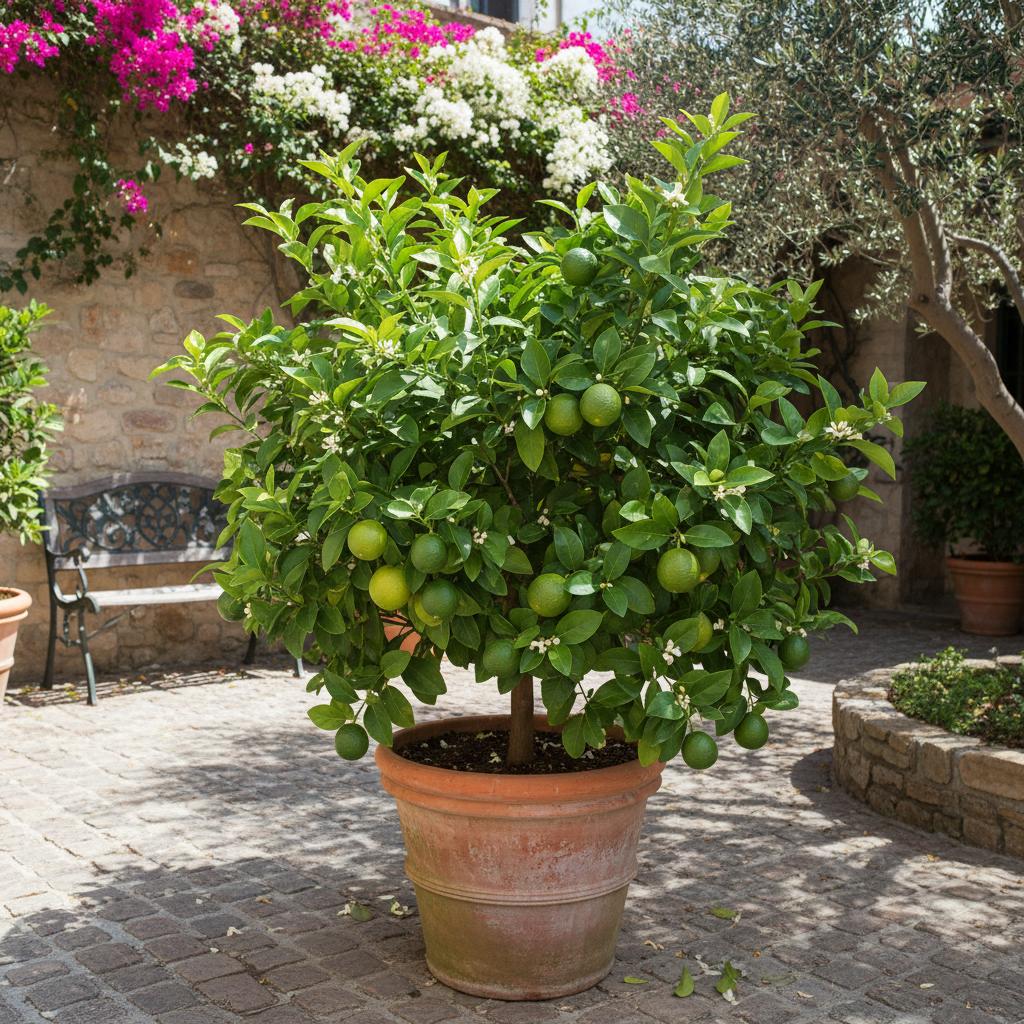
- Leaves: Evergreen, glossy, dark green, ovate to elliptical with slightly winged petioles and a leathery texture;
- Flowers: Small, star-shaped, white with 5 petals, highly fragrant, borne singly or in small clusters;
- Fruit: Oval to spherical, 4-6 cm in diameter, green turning pale yellow when fully ripe, seedless, with thin skin and acidic, juicy flesh;
- Bark: Grayish-brown, relatively smooth, with branches that are nearly thornless compared to other citrus varieties.
Care Guide
Water deeply once a week, or more frequently during extreme heat waves.
Apply a nitrogen-rich citrus fertilizer as new growth appears.. Use a fertilizer specifically formulated for citrus trees, which includes essential micronutrients like iron, zinc, and magnesium.
Coffee Grounds and Banana Peel Mix:Mix a small amount of used coffee grounds into the topsoil to provide a gentle nitrogen boost and maintain slight acidity. Supplement with banana peel water (steep chopped peels in water for 48 hours) for potassium. Avoid thick layers of uncomposted coffee grounds to prevent mold and water blockage.- Prune in late winter or early spring before the main flush of new growth;
- Remove any dead, diseased, or crossing branches to improve air circulation and light penetration;
- Trim back overly long shoots to maintain a compact, rounded shape;
- Remove any suckers growing from below the graft union immediately, as they will drain energy from the fruiting canopy.
Toxicity
Warning: this plant may be toxic.
Pets: Toxic per ASPCA. Contains essential oils (limonene, linalool) and psoralens which can cause gastrointestinal upset and neurological signs.
Humans: Fruit is perfectly safe and edible. However, contact with sap or peel oils followed by sunlight exposure can cause phytophotodermatitis (skin irritation and blistering).
Garden Uses & Culture
Culture: In Western maritime history, limes were famously carried on British naval ships to prevent scurvy, earning the sailors the nickname "Limeys." Today, the Persian lime is a staple in Western culinary and cocktail culture, particularly in the Americas.
Usage: - **Culinary**: Juice and zest are widely used in beverages, marinades, dressings, and desserts; - **Ornamental**: Excellent patio or container plant, providing year-round evergreen foliage and fragrant blooms.